Three weeks in and another country to explore. Arrived at Phnom Penh International Airport in the…… sunshine (well, bit hazy, but NOT raining!), but felt very hot (c.32C) after the last couple of days in Seoul, which were more like a nice UK September!!
Customs and immigration passed by without incident and the first hurdle was negotiating a Tuktuk fare from airport to hotel. We agreed on $10 (£8) for a journey that was about 40 minutes – our first confirmation that our budget will stretch much further here.
We had forgotten how busy and bonkers roads in SE Asia can be.
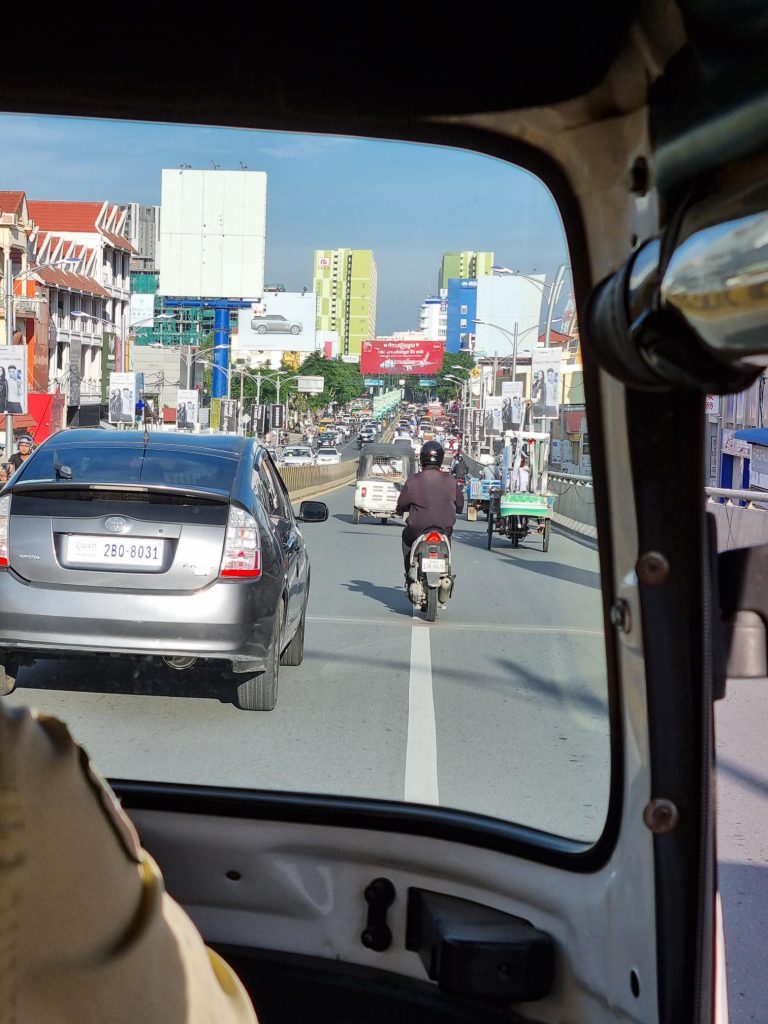
On arrival at the hotel, we were reminded of yet another SE Asian custom – that of selling their tour services. After some negotiation, we booked our hotel receptionist (also a registered national tour guide) to take us to two of the most infamous parts of Phnom Penh – S21 and the Killing Fields – the two Phnom Penh genocidal museums. It’s one of those things that needs to be witnessed.
That done, we headed out along streets crowded with Tuktuk, cars, vans and many scooters, to Bassac Street, a popular bar and restaurant area, for dinner and our first Cambodian meal – which was actually Thai, but delicious – and had vegetables!!!

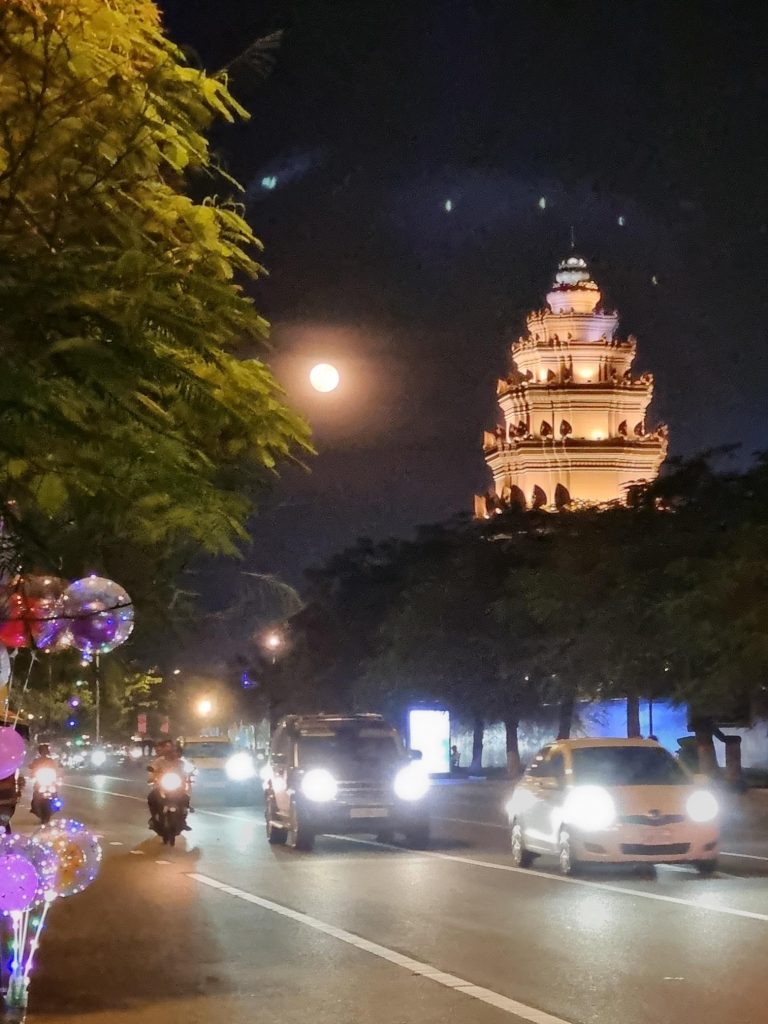
The next day was the day of our tour (by Tuktuk) with Smey, our guide and ‘007’ the Tuktuk driver. We didn’t know much Pol Pot history, but both could vaguely remember it from when we were very much younger – TV footage and discussion among the adults. Suffice to say, it was an emotionally tough day and there is a bit of info below, but words cannot truly convey the depths of inhumanity to which humans can sink.
Smey gave us a potted history of the regime from 1970 which allowed the Khmer Rouge to gain popularity and then took us through the regime’s rule alongside the Tuol Sleng museum tour. This is the S21 Genocide prison, the S21 being the end of the ID number of the Commandant of the prison). It was previously a senior school which was used as a prison and torture centre (no other words for it) through which 20,000 souls travelled and only 12 survived during the four year Khmer Rouge rule.
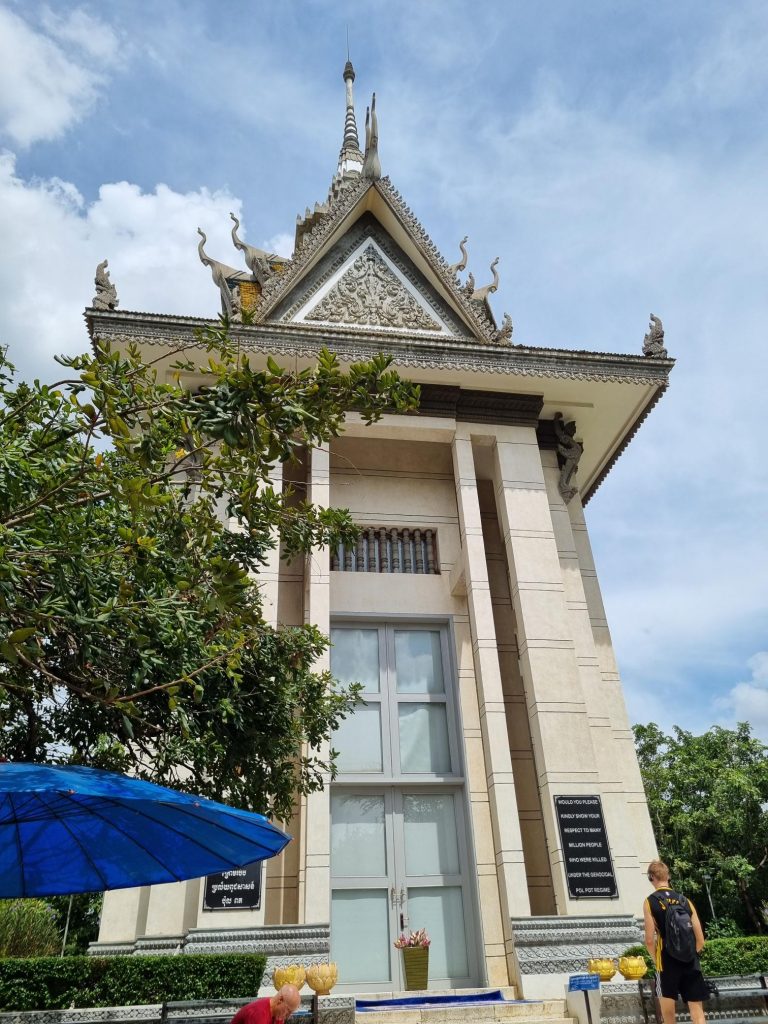
After a fascinating ride through many back roads over a 15km stretch of what is now Phnom Penh “suburbia” we had a quick lunch and then a tour around the area known as the ‘Killing Fields’. There are actually around 340 known ‘killing field’ sites in Cambodia. The one in Phnom Penh was discovered in 1980 after flooding caused bodies to rise to the surface of the soil of what had been a Chinese burial ground. Mass graves are still being uncovered there, each containing many, many bodies. Again – words cannot sufficiently describe the site but it was a very deeply moving experience. We took no photos other than the one below, which starts to convey the scale of the horror.
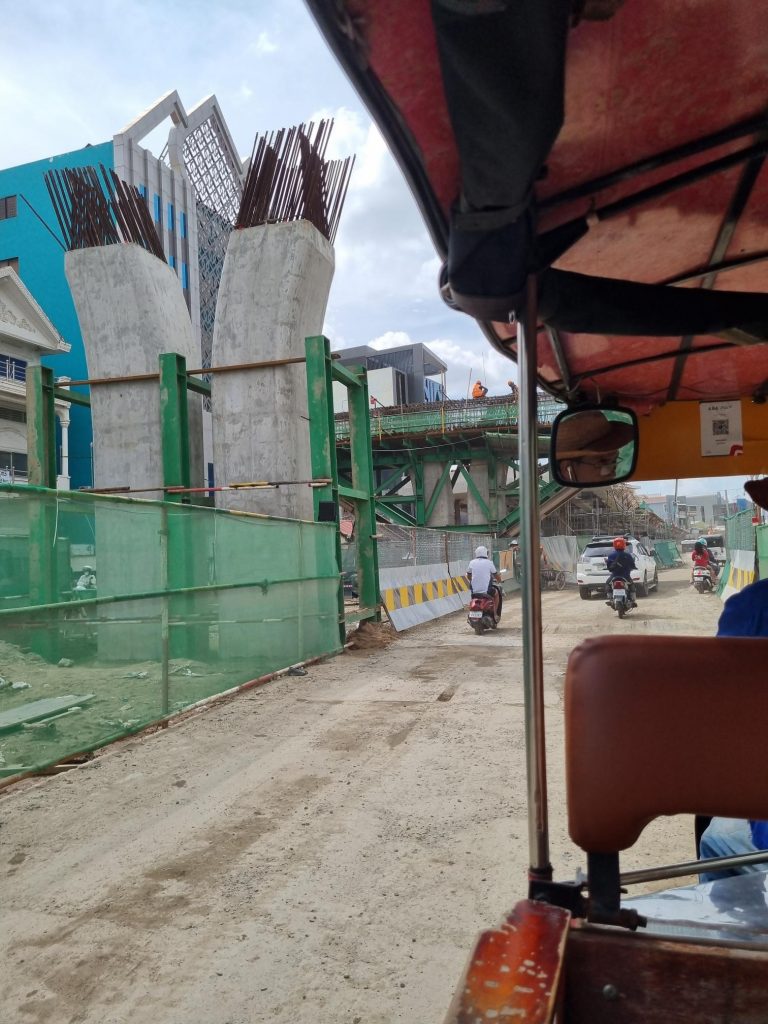
On a lighter note, we had an exciting journey back into the centre of Phnom Penh in our Tuktuk via back roads, dirt roads, and…… a building site – it seems that anyone can travel pretty much anywhere!
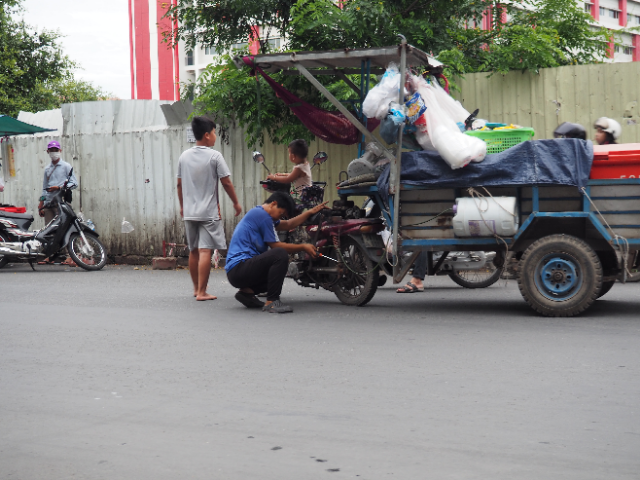
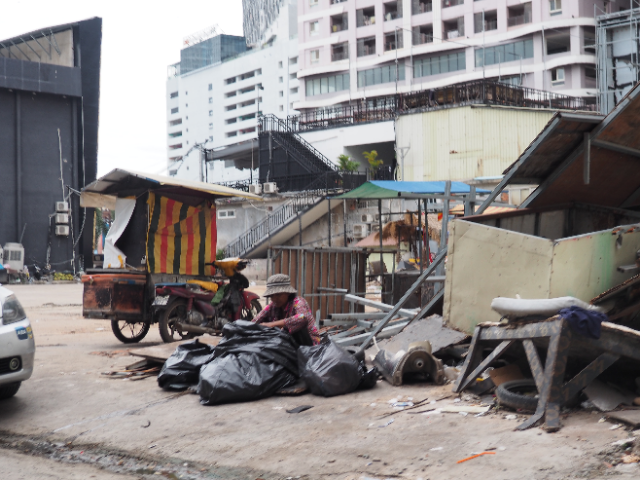
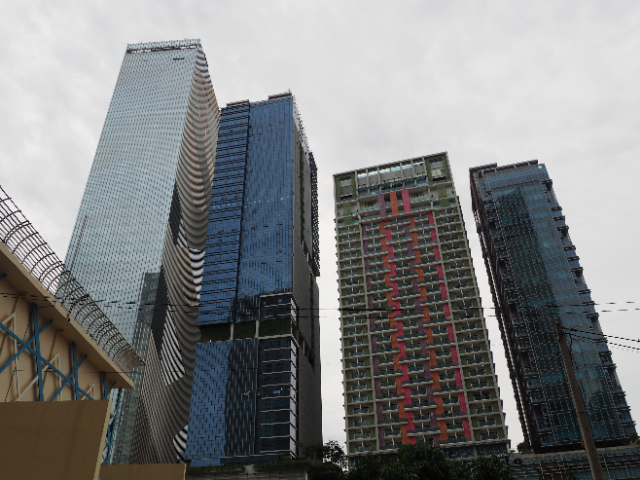
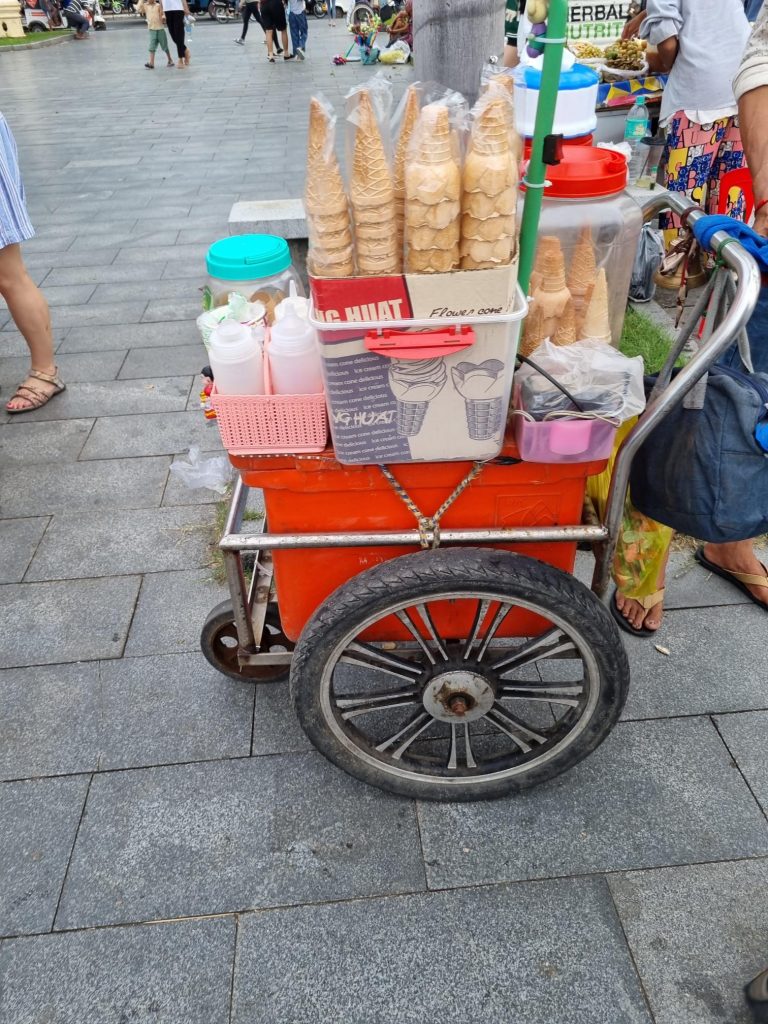
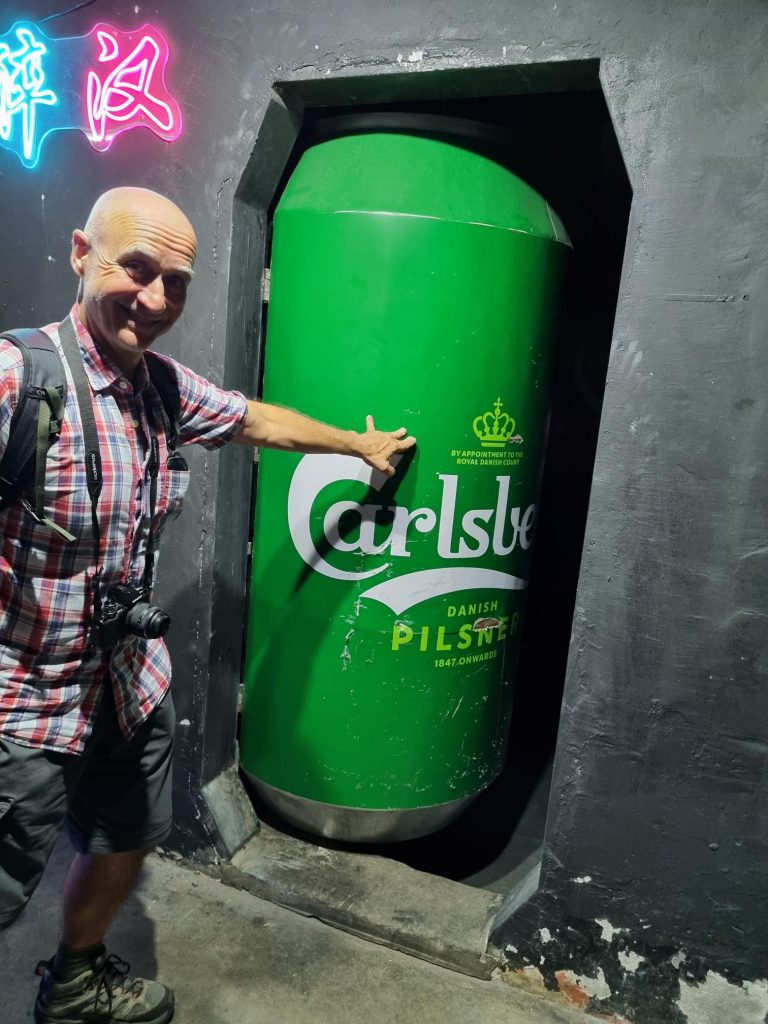
After a quick freshen up, we headed out for a walk along the riverside to find a bar we had spotted online with good views from which to watch the world go by and restore our faith in human nature. It was refreshing to see people going about their normal daily activities and experience many of the wonderful, quirky and fascinating sights that Phnom Penh can offer:

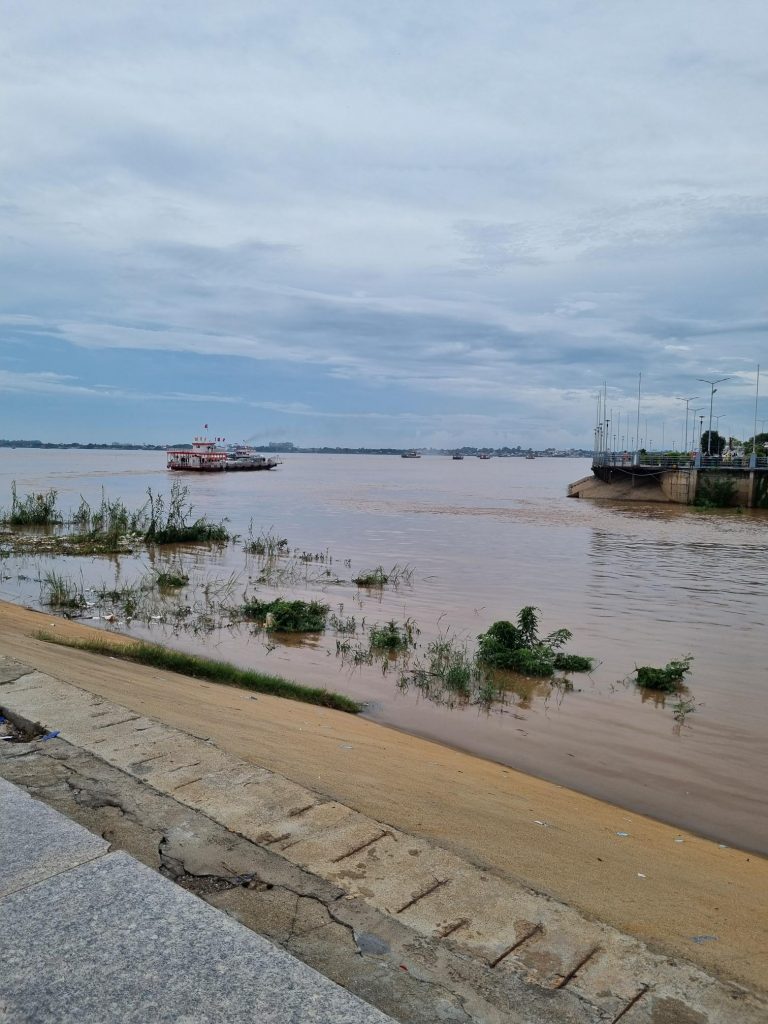

On finding we were the only customers at the ‘5 Drunk Men’ bar (on the 5th floor),
we were able to commandeer a seat on the terrace and watched the weather roll across the Mekong
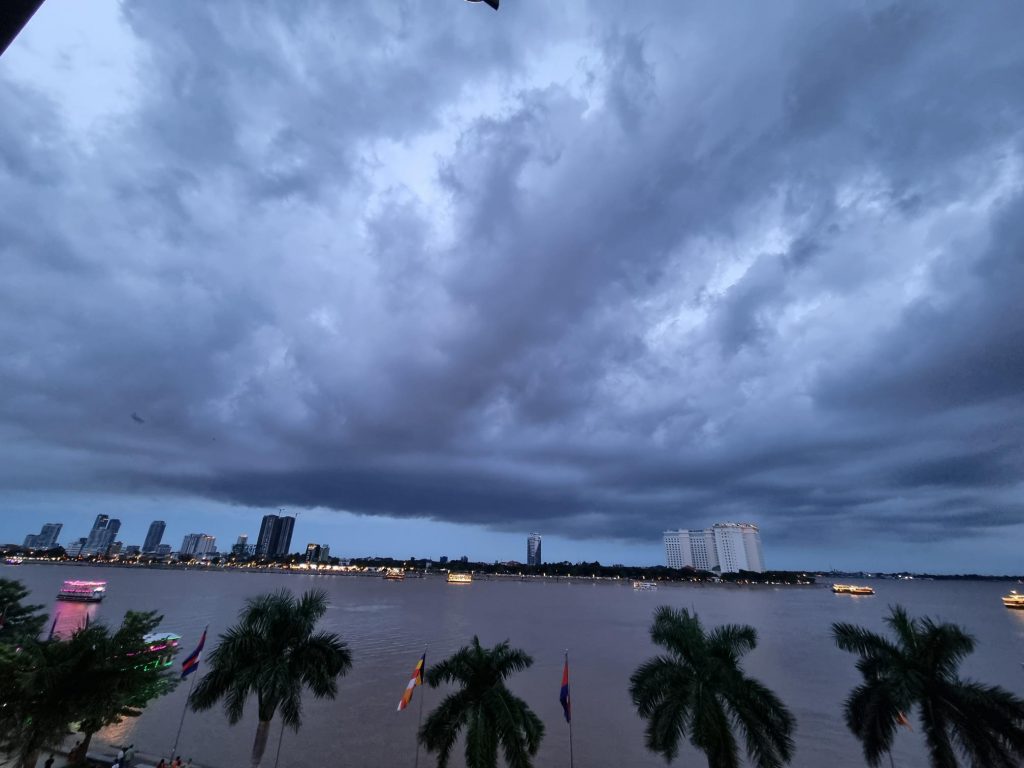
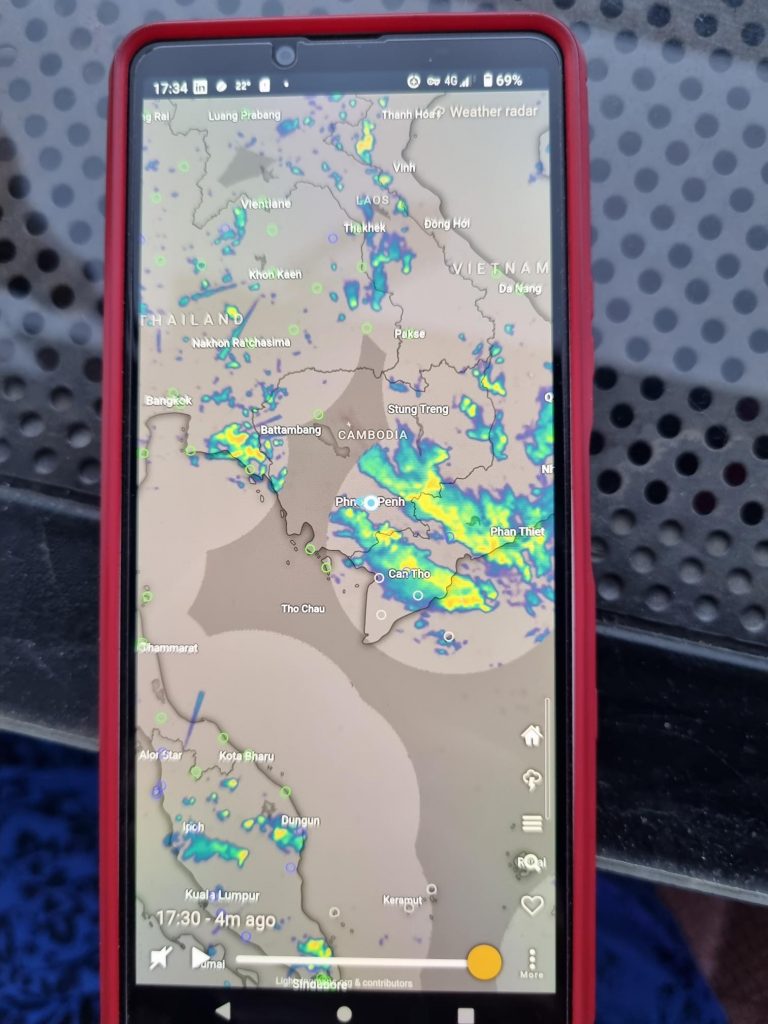
whilst the sun dropped to reveal the glow of buildings and riverboats taking tourists out on cruises.

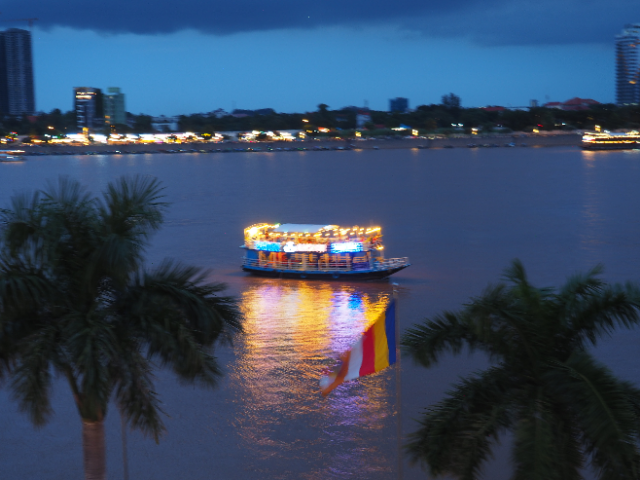
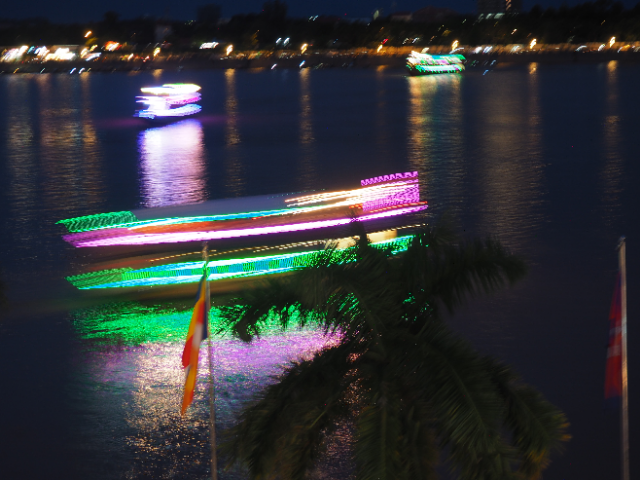
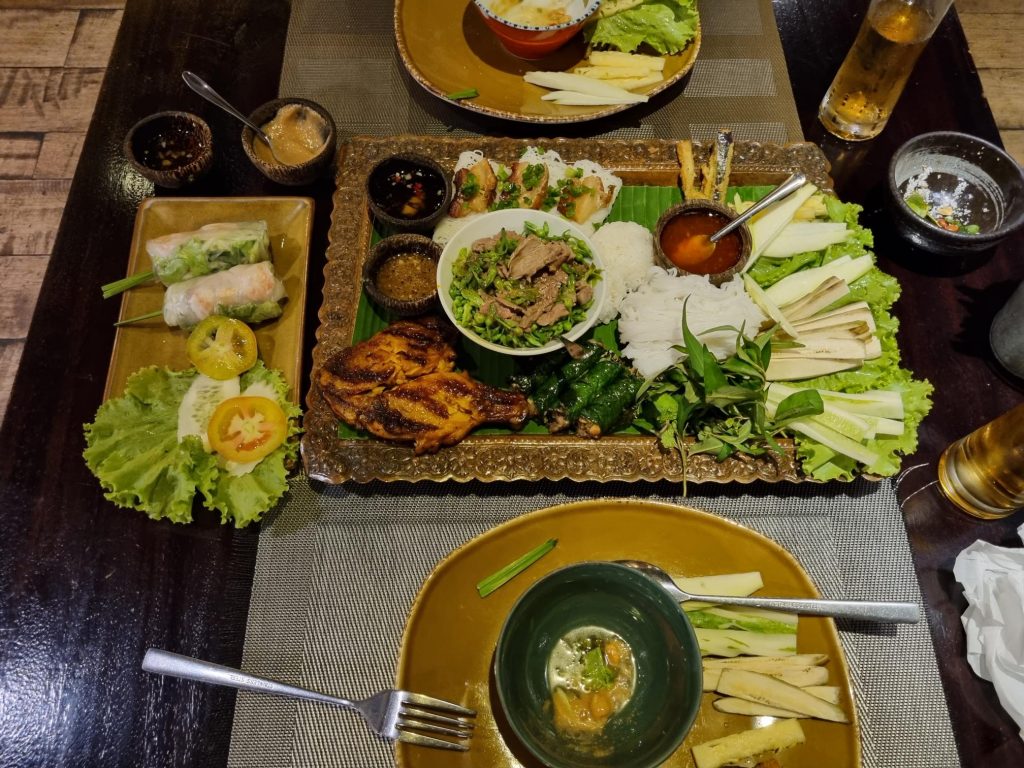
We finished the evening with a real Khmer Cuisine meal – absolutely delicious and a good finish to a thought provoking, depressing and yet uplifting day.
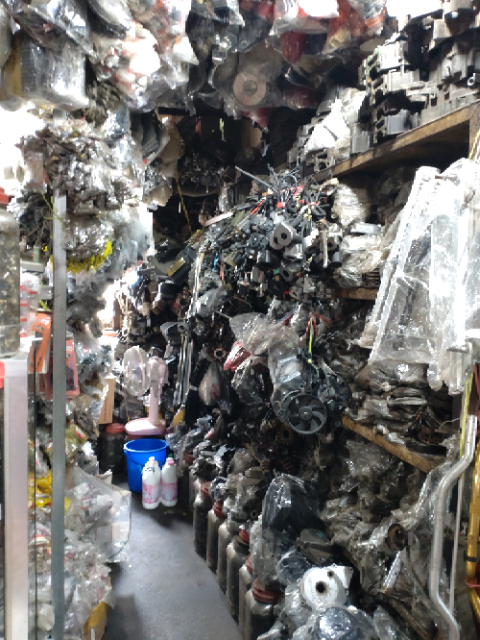
Our 2nd full day in Phnom Penh began with a walk to the ‘Russian’ market, where lots of locals and tourists go to buy genuine and fake brands of clothing, watches etc, which can be found alongside souvenirs and food stalls. You can get pretty much anything in this market, including everything mechanical you might have never known you needed – new and secondhand.
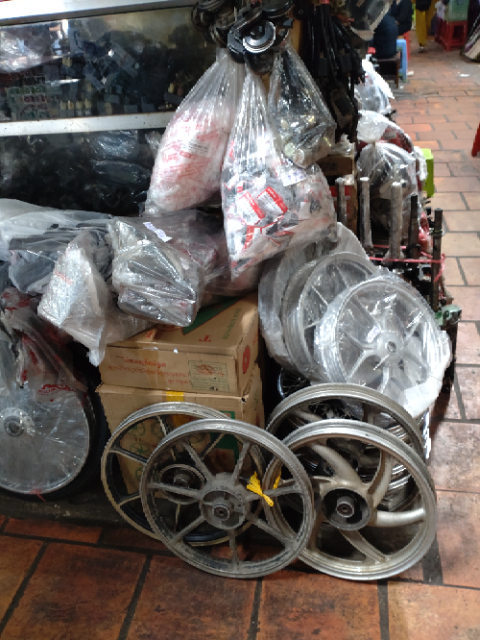

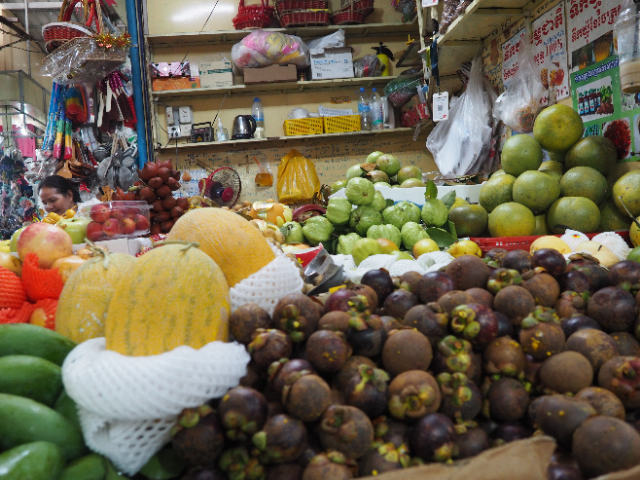
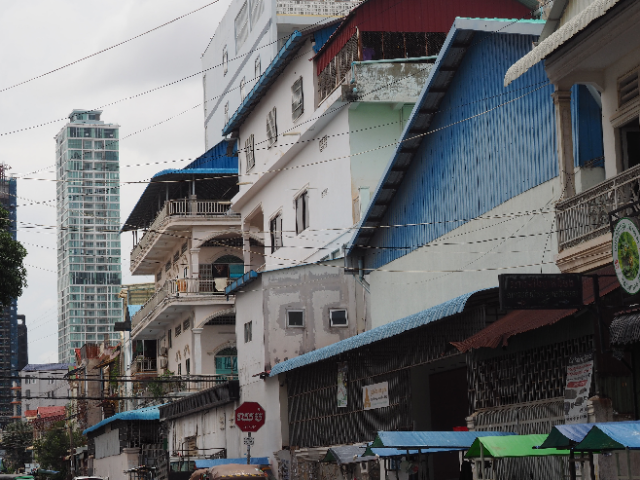
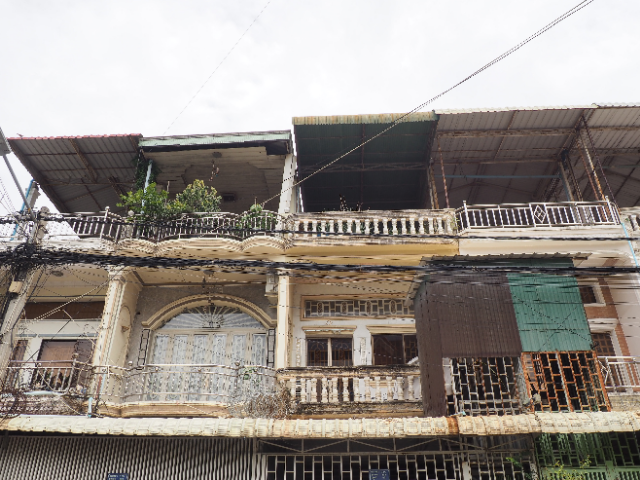
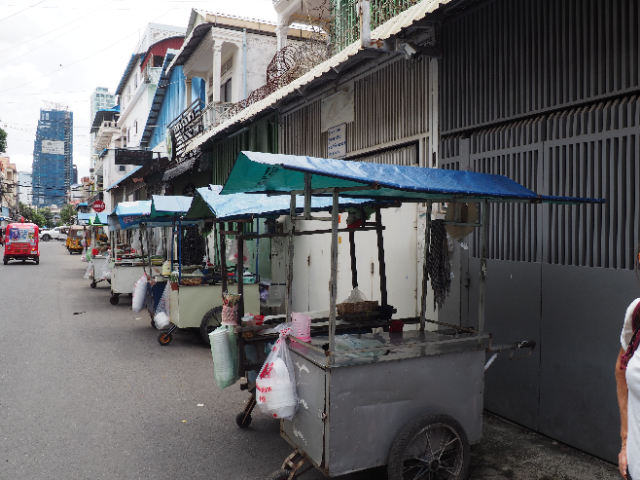
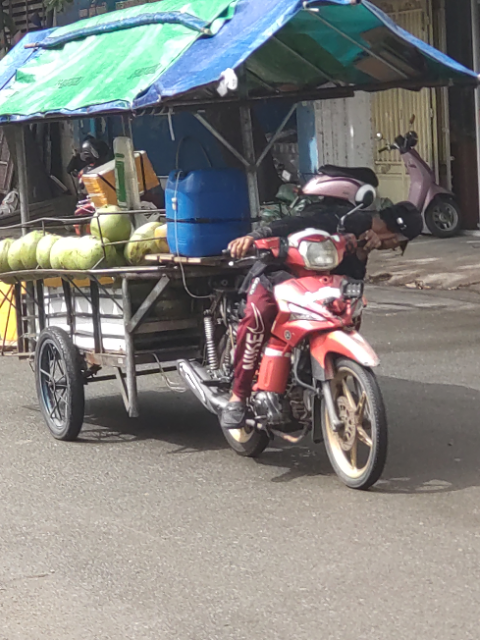
It was a hot and sultry day, with quite a lot of little showers of rain and high humidity so after a stop back at the hotel to cool of a bit (nice air conditioned room), we headed out for the Royal Palace. As always on our walks, we were struck by many interesting street scenes – traffic of all kinds, the differing housing all crammed in together, the street stall ‘parking’, and the many pigeons down on the riverfront.
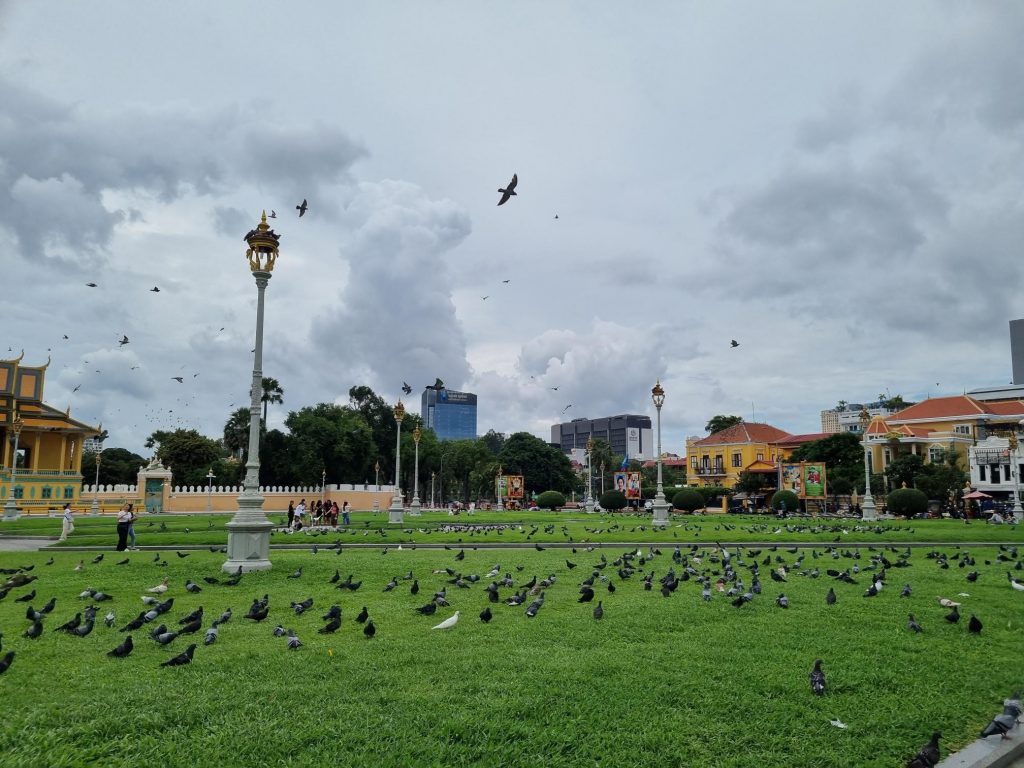
The Palace (always closed between 11am and 2pm), was a very different structure to those we had seen in Japan and South Korea. It is actually the home of the current monarch, so some of it is permanently closed off, but what we did see was rather opulent with lots of gold and silver; it is also known for it’s emerald Buddha, as well as the many ‘ordinary’ gold and silver ones presented as tributes to the monarch and the emerald Buddha in the ‘Silver Pagoda’. As usual, photos inside were not allowed, but outside there was much to see.
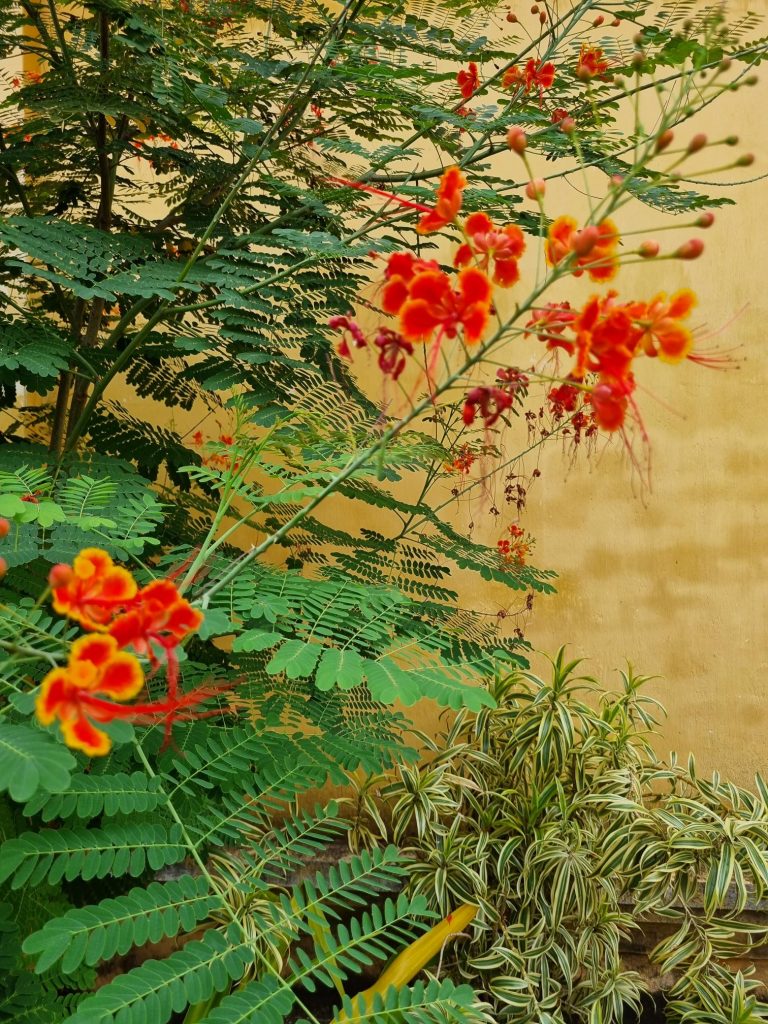
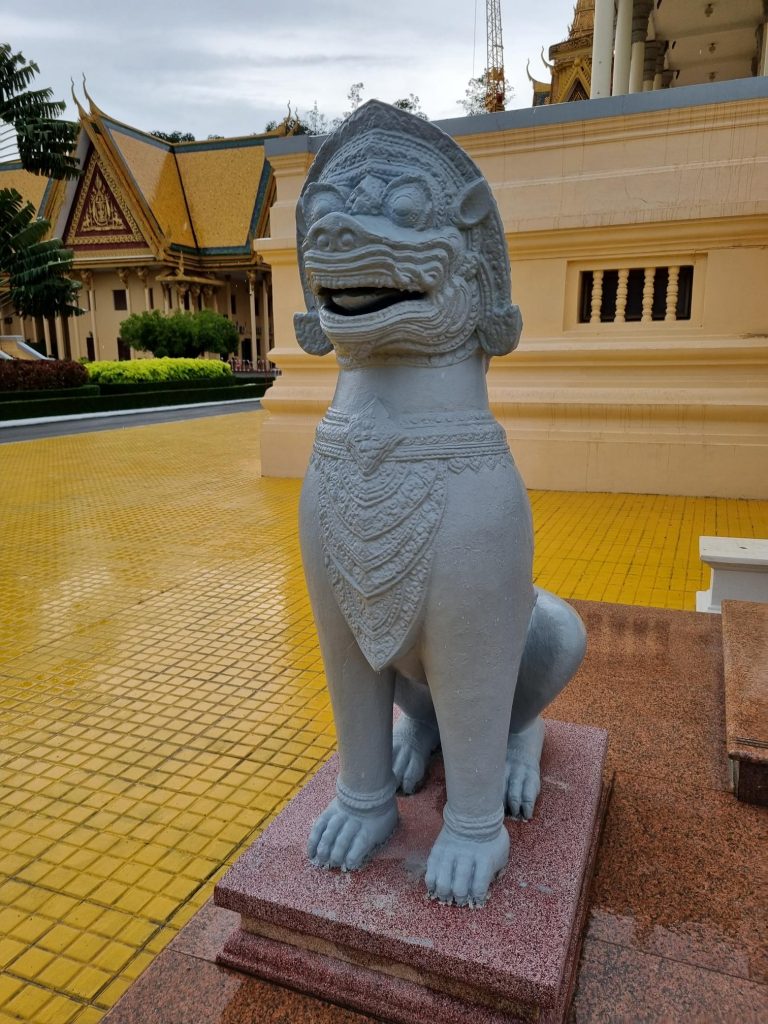

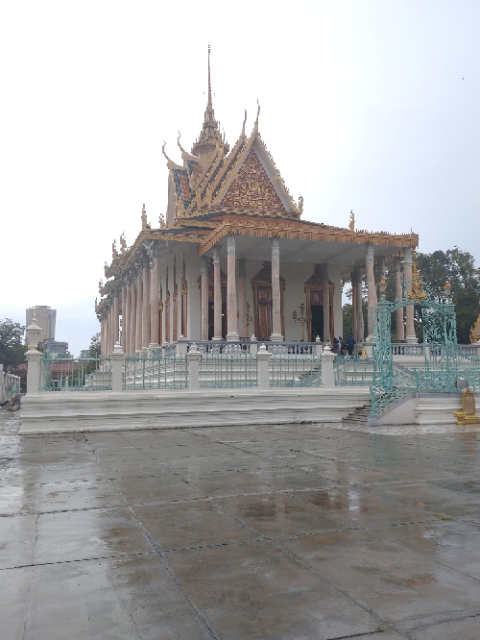
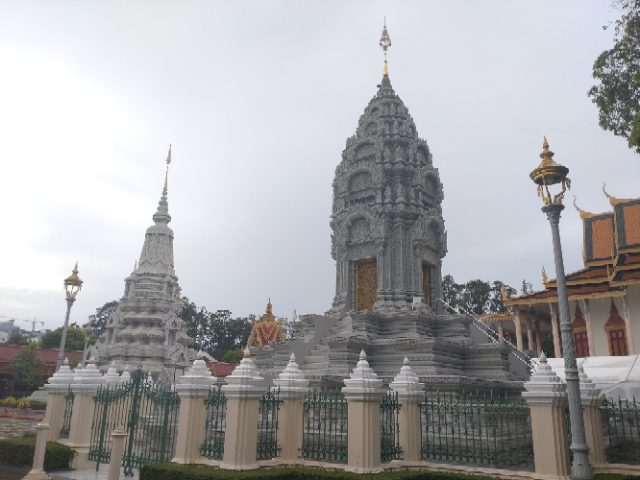
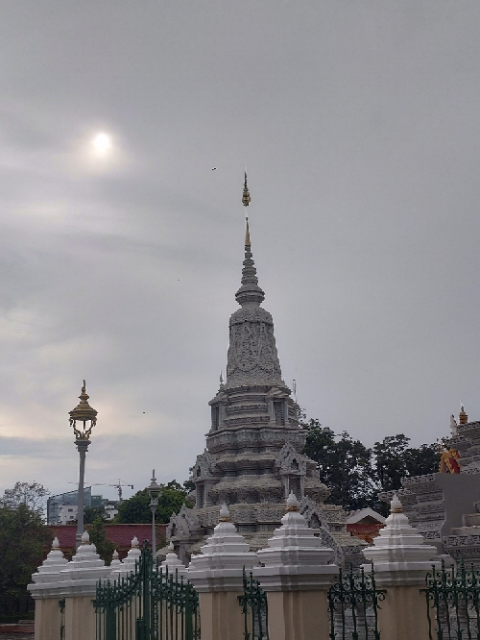
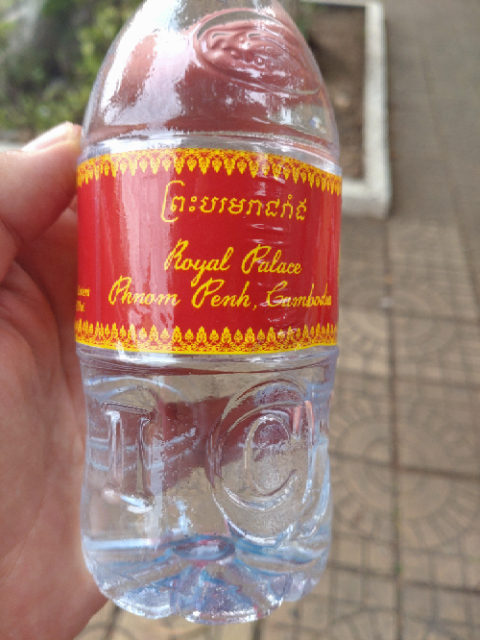
On heading out of the palace to return to the hotel, we were handed a free bottle of water each – courtesy of the King.
Siem Reap – Angkor Wat
You will all have realised, having read the above, that Cambodia is a land of many photographic opportunities. It’s culture is very different to that of Western culture – perhaps even more so than Japan and Korea (both of which seemed alien too, yet more developed in a Western sense – pavements, shops, better roads etc) – which is both delightful and yet difficult to explain. There is wealth – seemingly much in parts; poverty – almost certainly in many more; but also a sense of humour, a sense of contentment and a respect for humankind – which given the Country’s more recent horrific history is an incredible reflection on its people; but also mixed in is, dare we say it, a sense of unease and frustration with their Government (hmmm. does that sound familiar?). The scenery on this side of the country is very, very flat apart from the occasional Phnom – a mountain, (or in our minds hills, or hillocks); wet – end of rainy season after all; and yet very beautiful and lush. And of course we moved onto Siem Reap to ‘do’ Angor Wat, perhaps (aside from South America?) the most famous temple complex in the world.
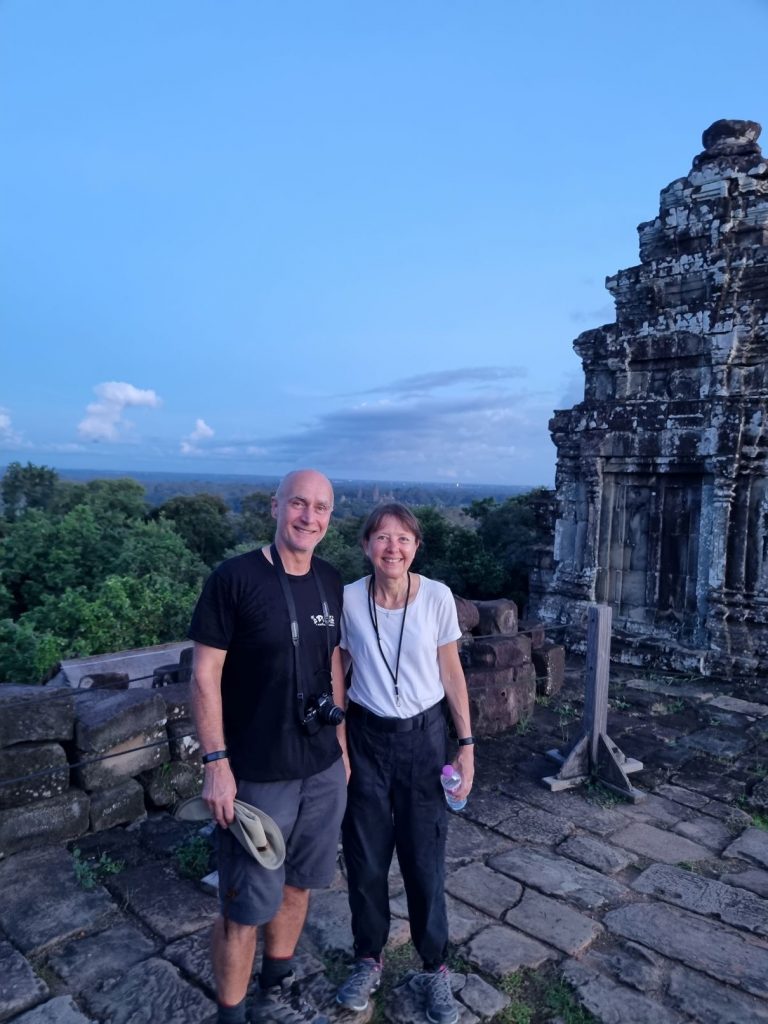
We have felt incredibly privileged to see it. It is a complex of many temples, the most famous of which is Angor Wat, and each was different.
We only spent three nights in Siem Reap as there are so many places we would like to see, and most of our time was spent at the temples. However, having spent many days since the start of our tour in larger towns and cities, where generally, life was geared around normality, Siem Reap was a bit of shock to the system. The small bits we saw of the city were very touristy and ‘Westernised’ – Bar Street – full of pubs with happy hour from 5pm to 11pm etc, and we felt a bit ‘hounded’ by people hawking their Tuktuks, clothing, souvenirs and so on. Having said that, everyone was incredibly friendly and once we had embraced the atmosphere, it was fun.
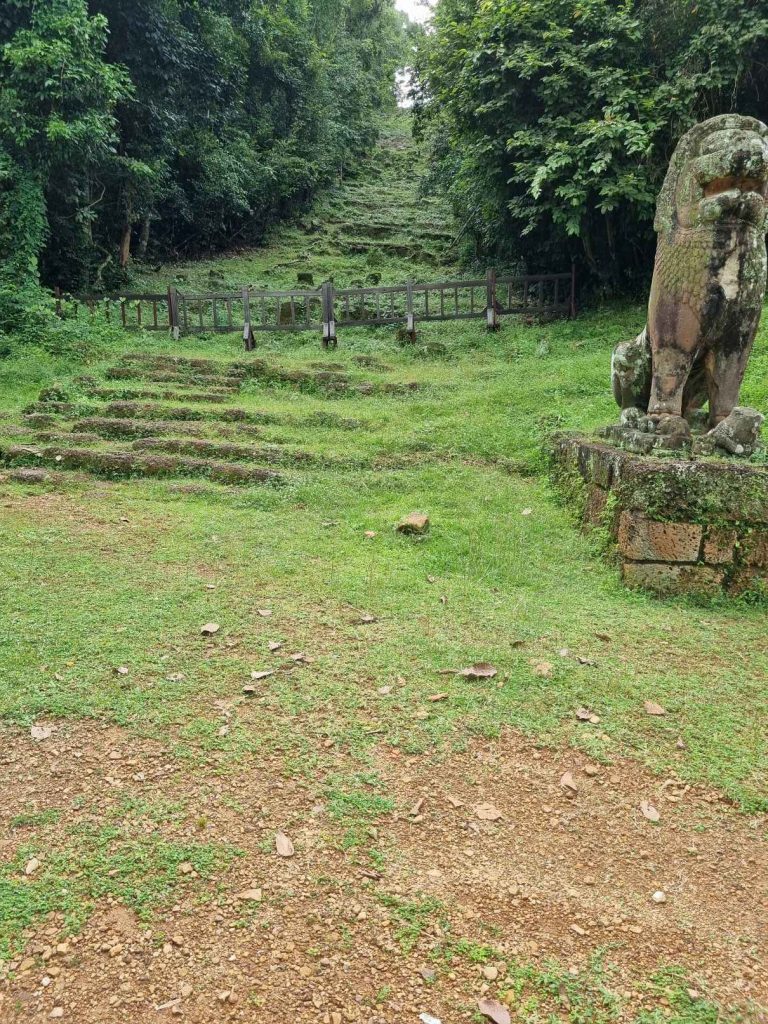
As we had no idea of what to expect of the temple area, we booked a couple of full day tours and were rewarded with two amazing days of incredible history, enhanced by two very knowledgeable, lively and interesting guides who were brothers (totally unbeknownst to us) who had been born and grown up within and around Angor Wat itself. The stories they were able to impart were told to them by their parents, who were told by their parents before them and so on. The knowledge they had on each temple we visited was very in depth and yet also often had a personal touch which made it all the more interesting. The temples are centuries old, many in total abandoned disrepair and some being slowly renovated. It was rather a strange feeling that they were being built at the same time that perhaps some of our aged cathedrals were being built and even before. Most were build between the 9th and 12th century and each for a different reason – to pay respects to a mother, a son, a father, wive/s, etc etc. The religious aspects were also complex: some Hindu, some Buddhist, some both, some converted over time… It struck us as a case of ‘live and let live’.
We visited in total around ten temples – far from all, but equally too many to impart the complexities so forgive the lack of information – you’ll just have to visit them yourselves if you haven’t already.
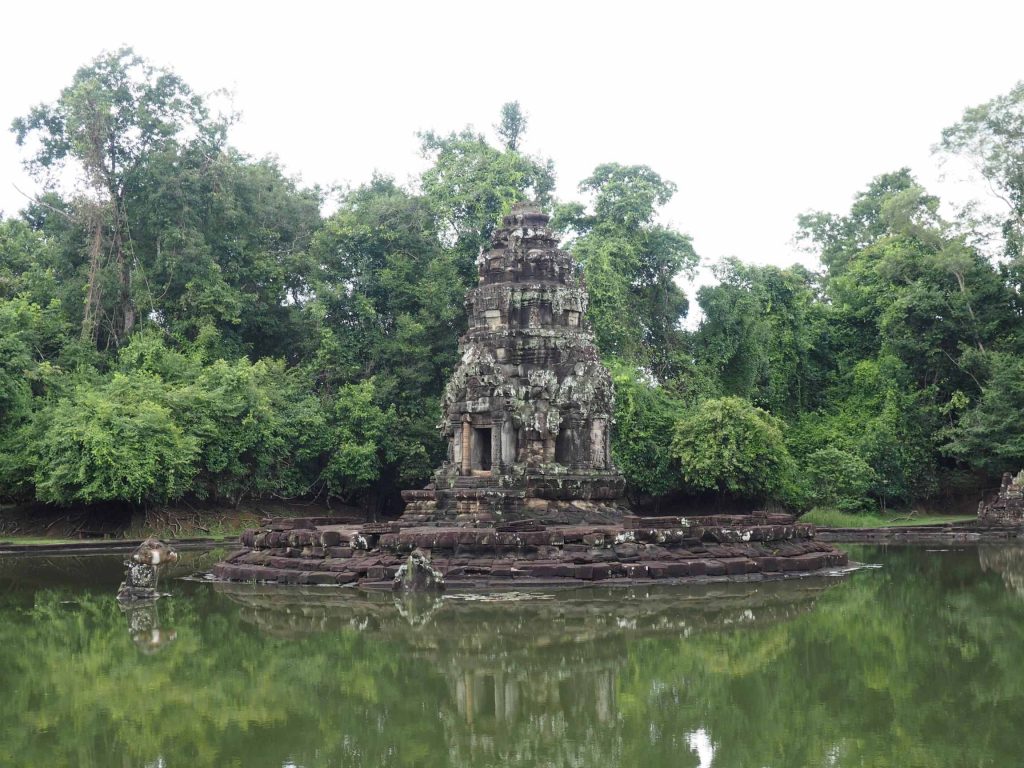
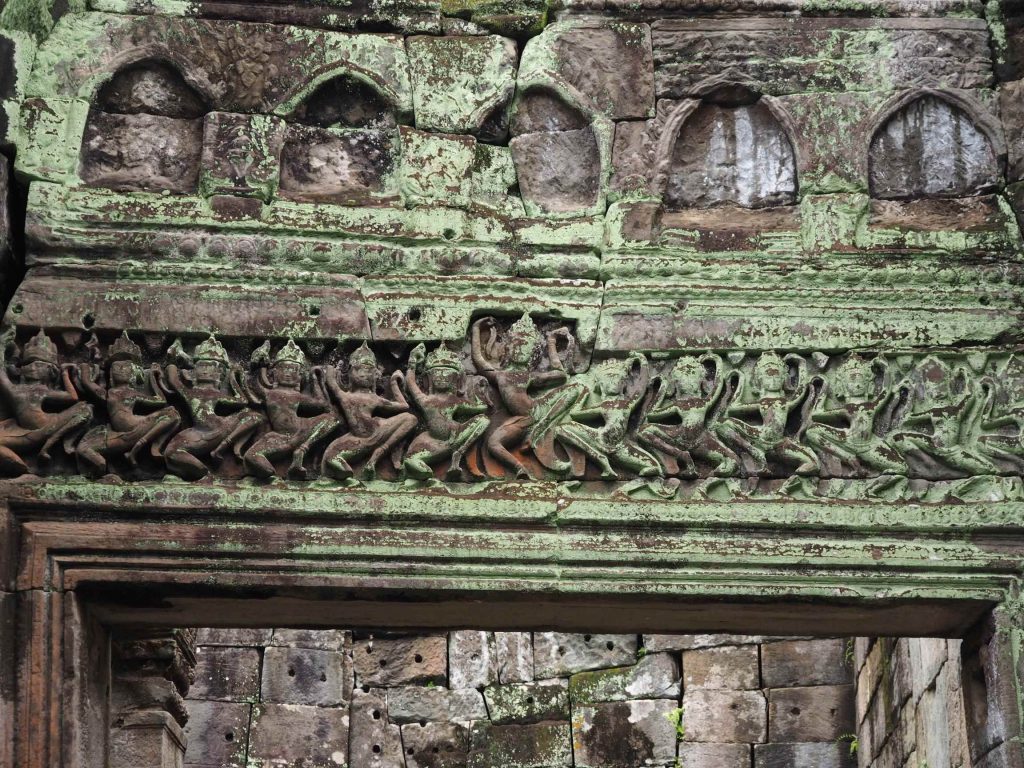
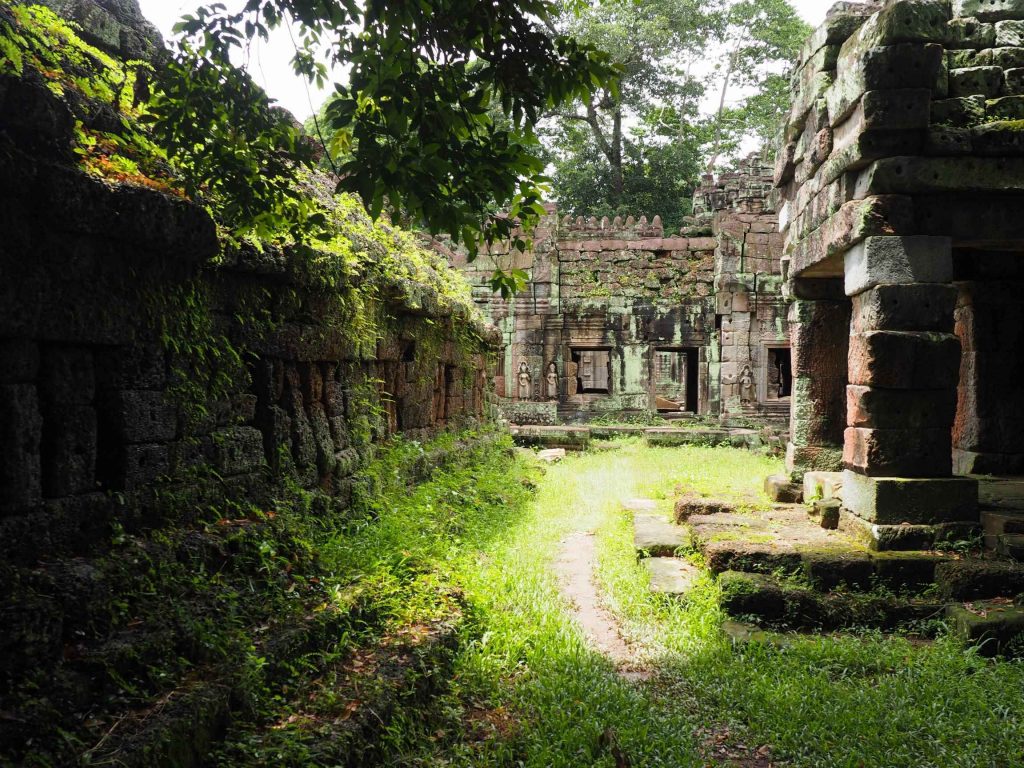
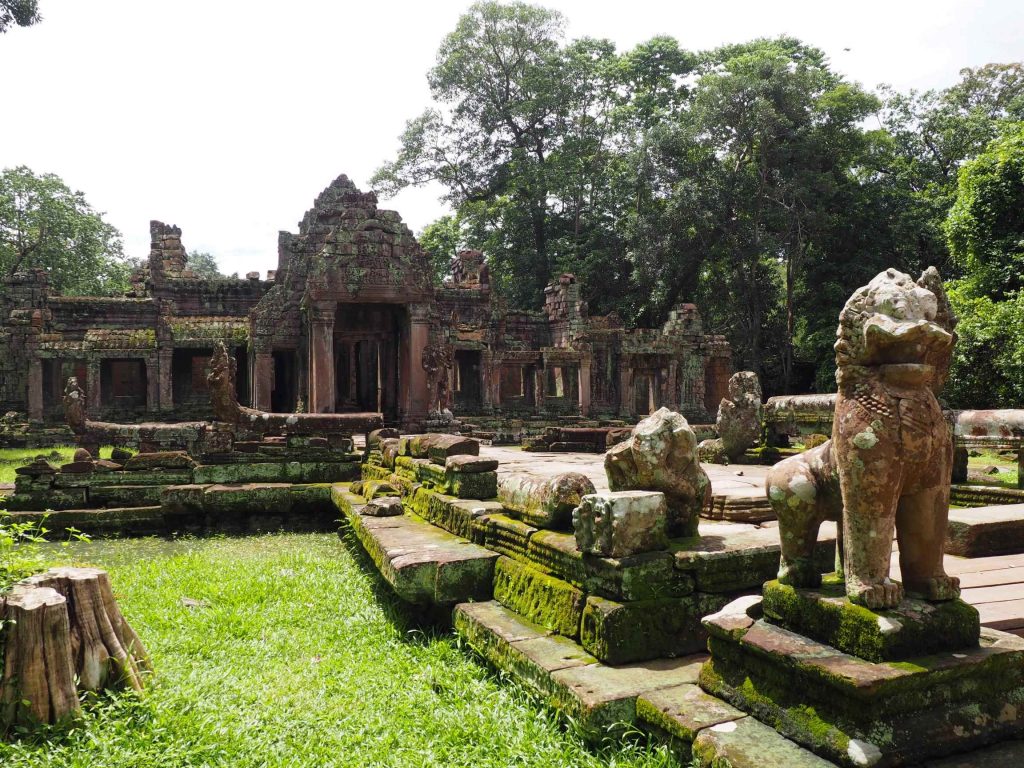
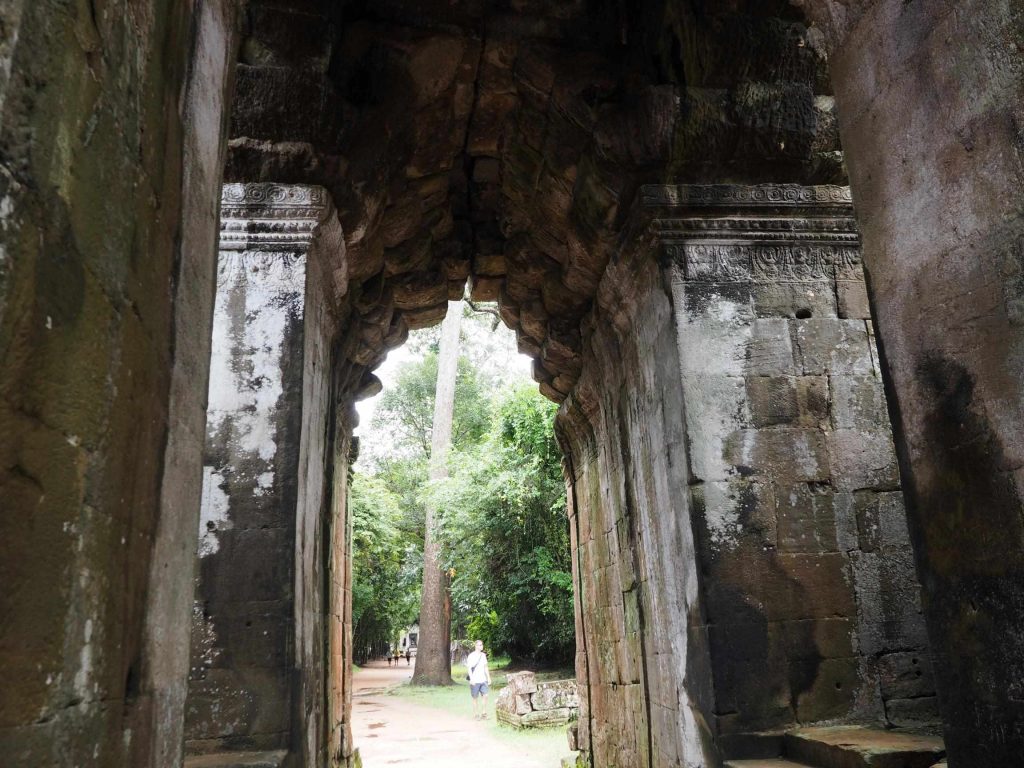
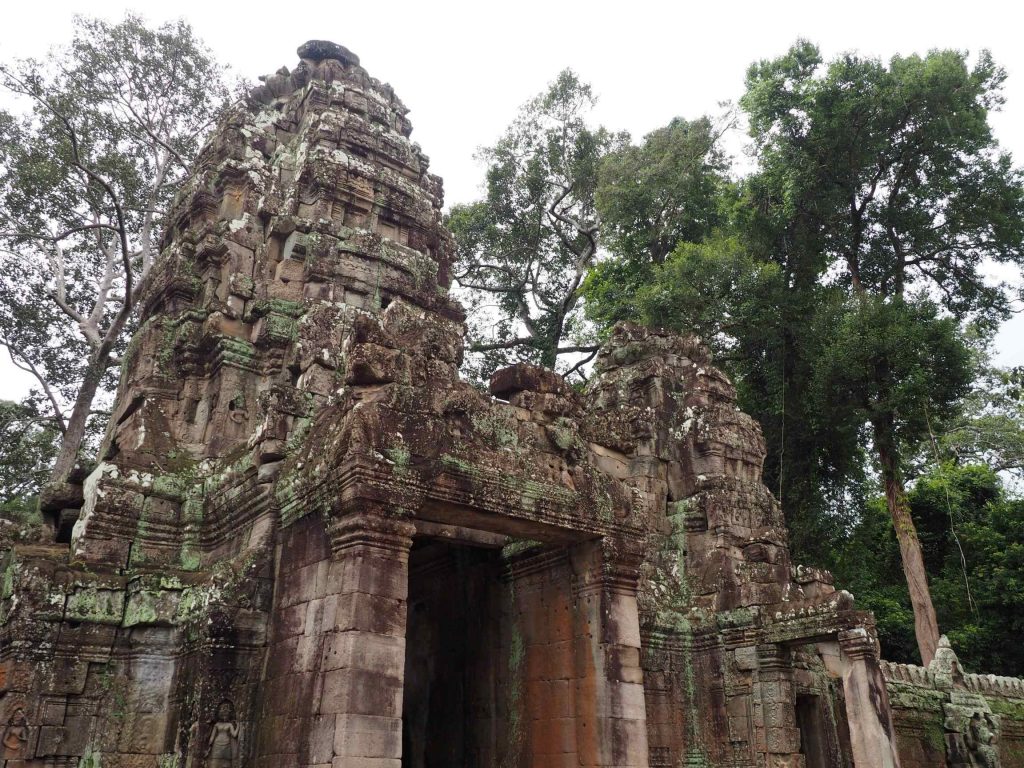
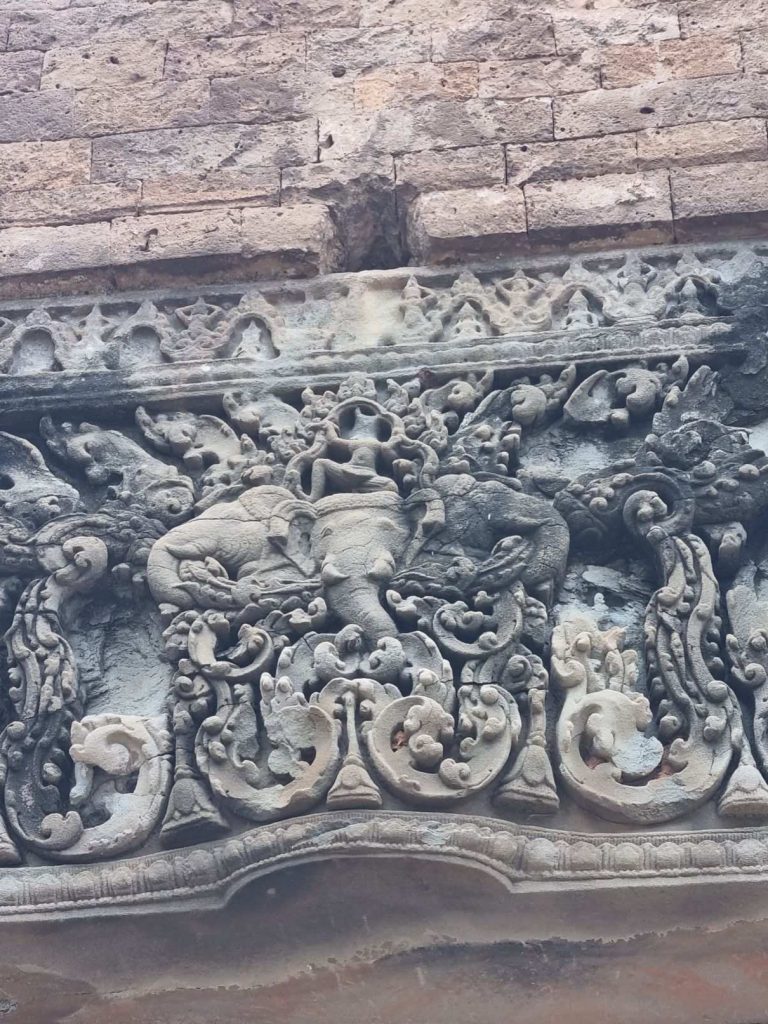
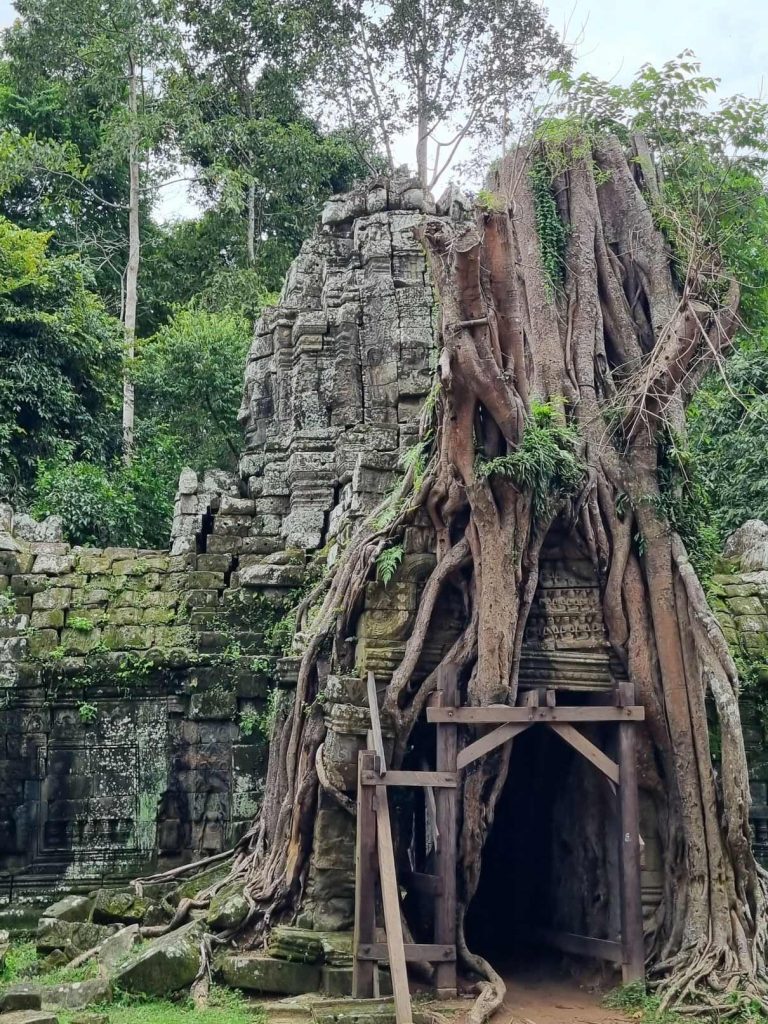
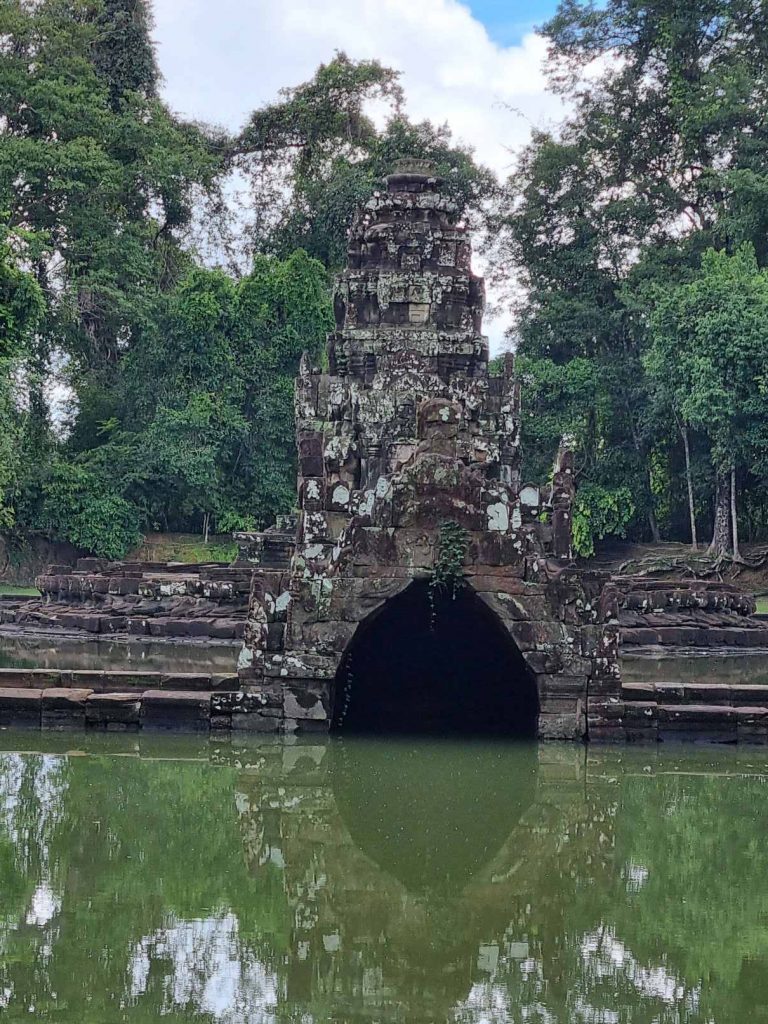
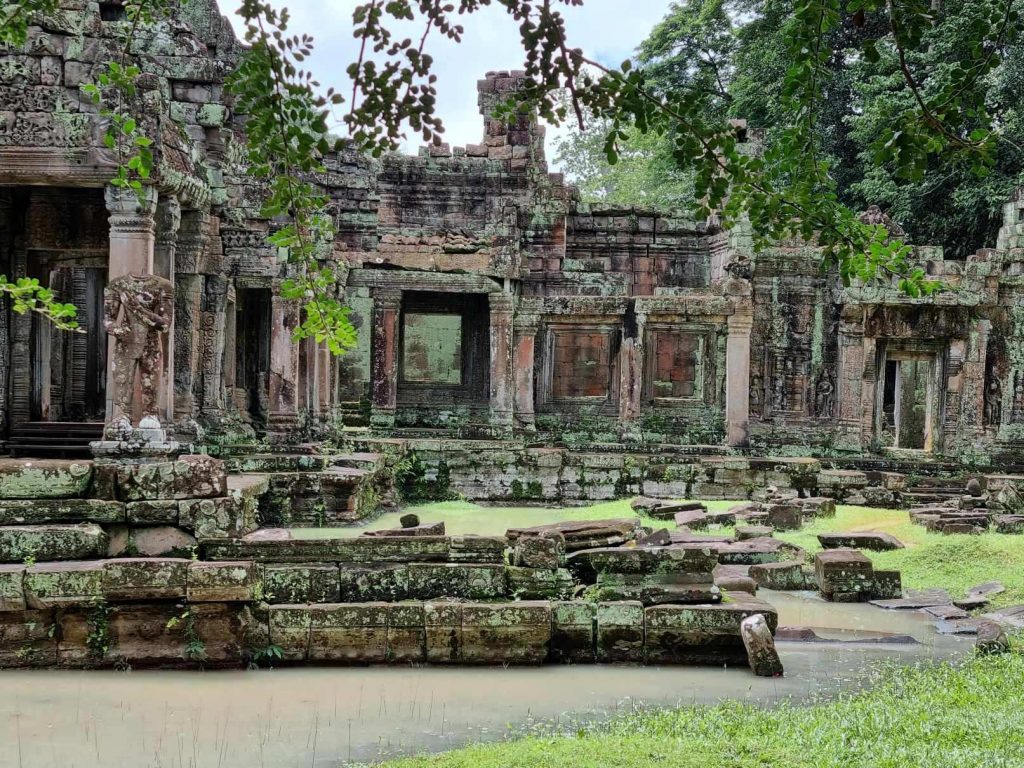
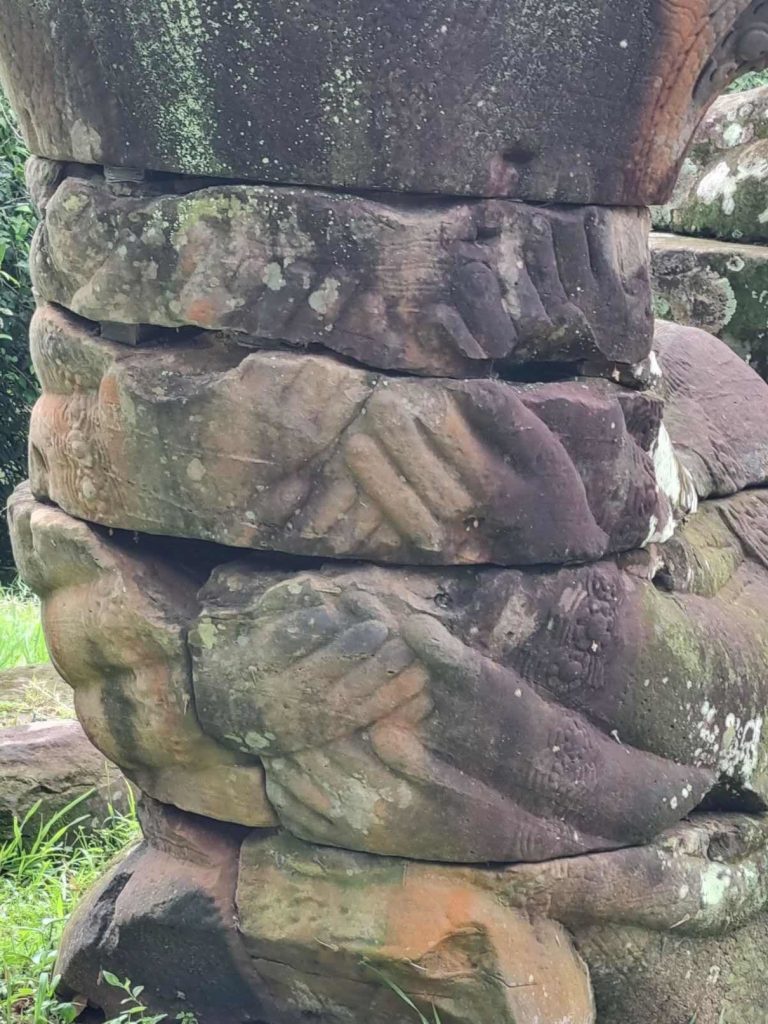
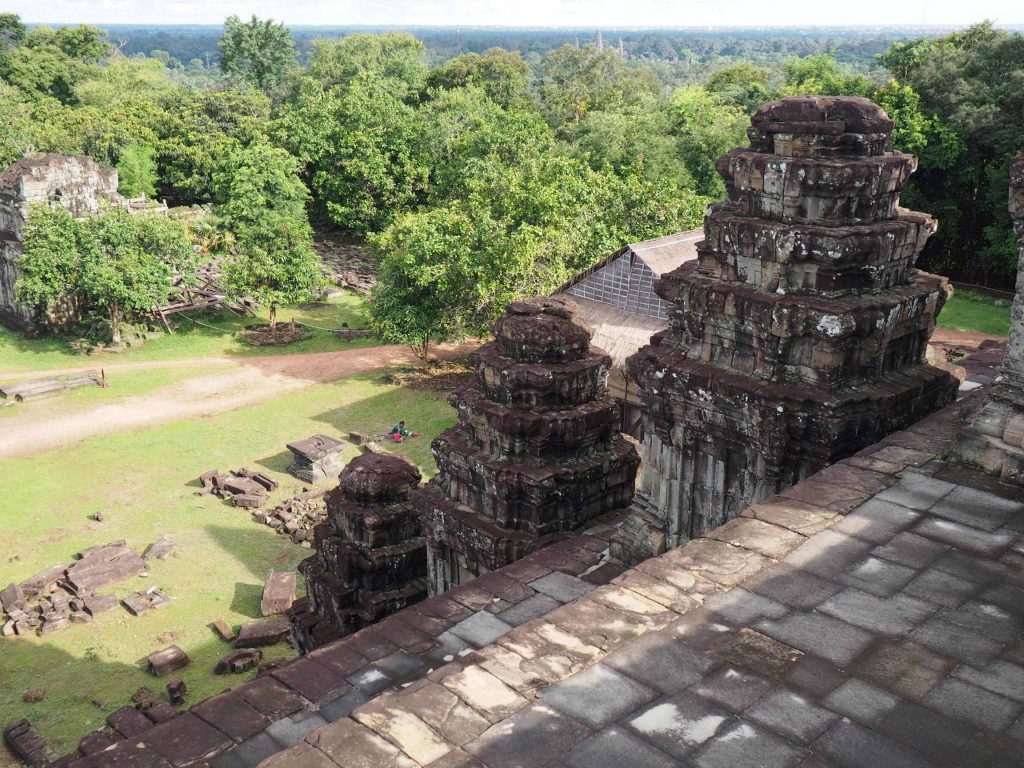
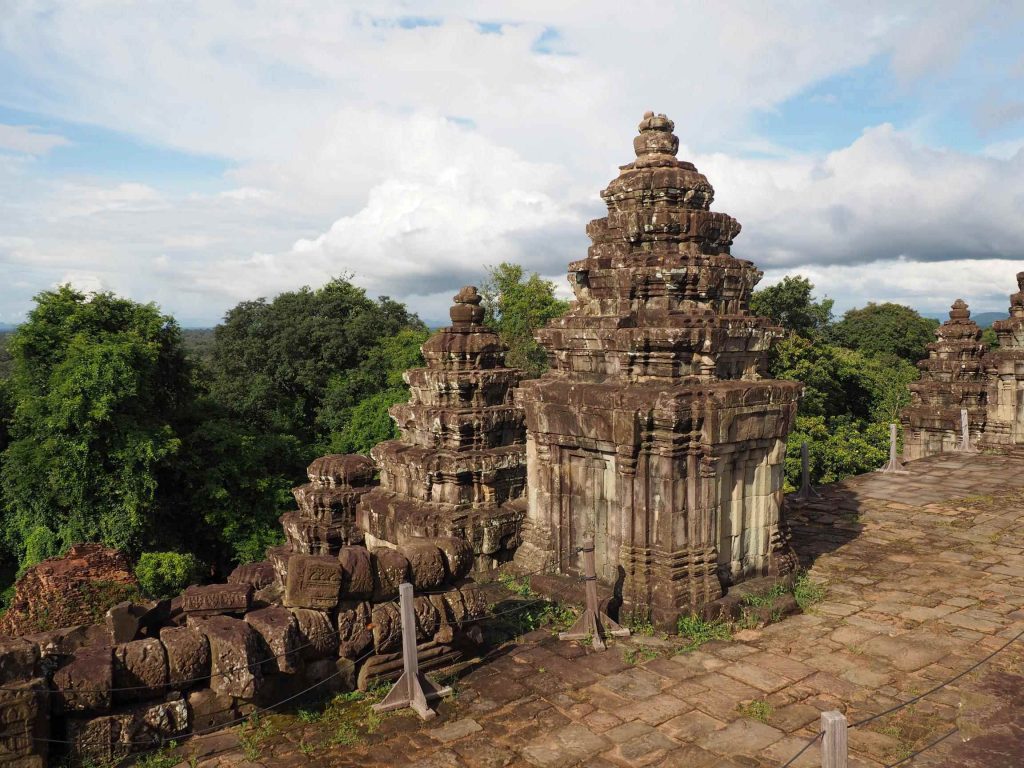
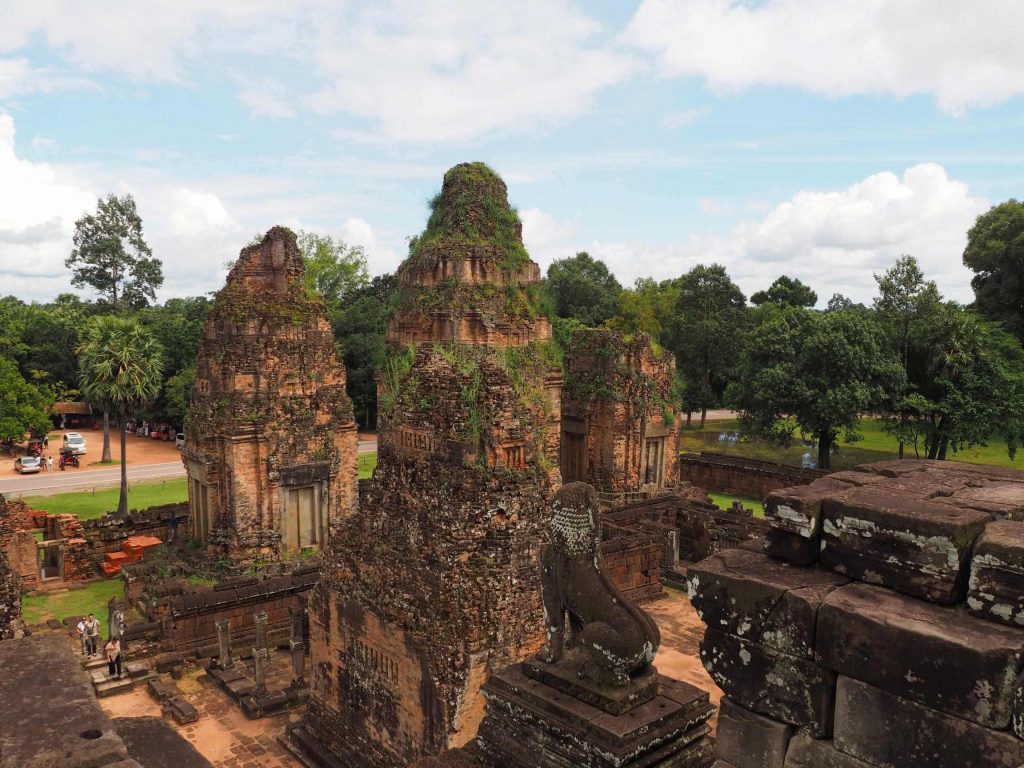
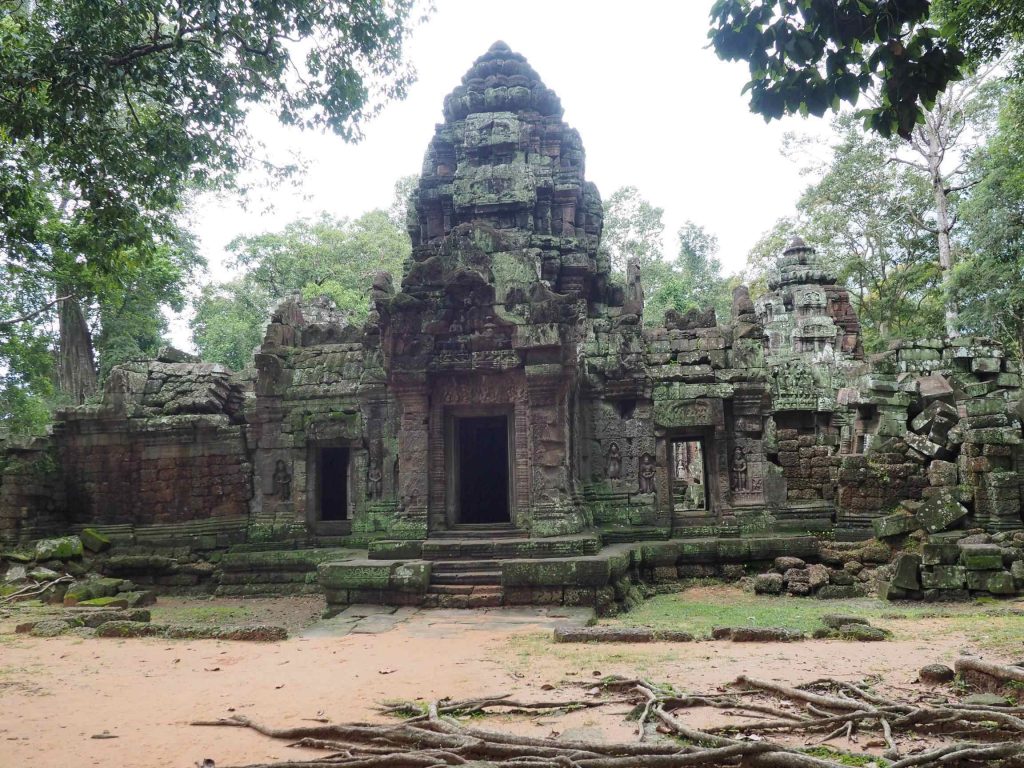
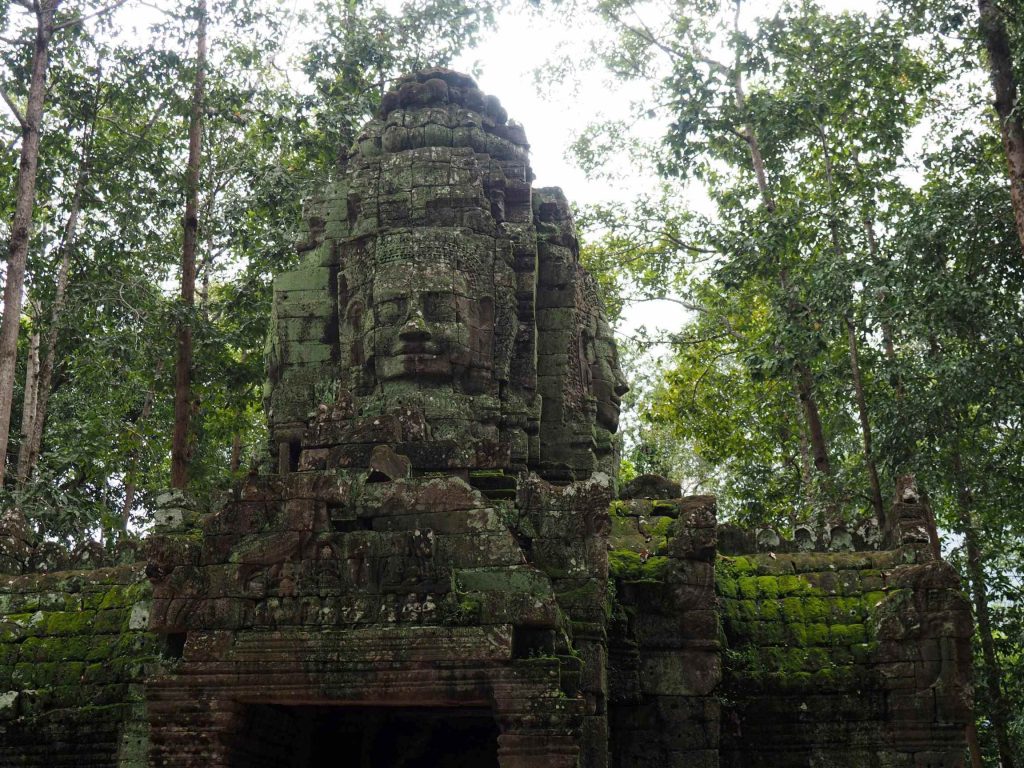
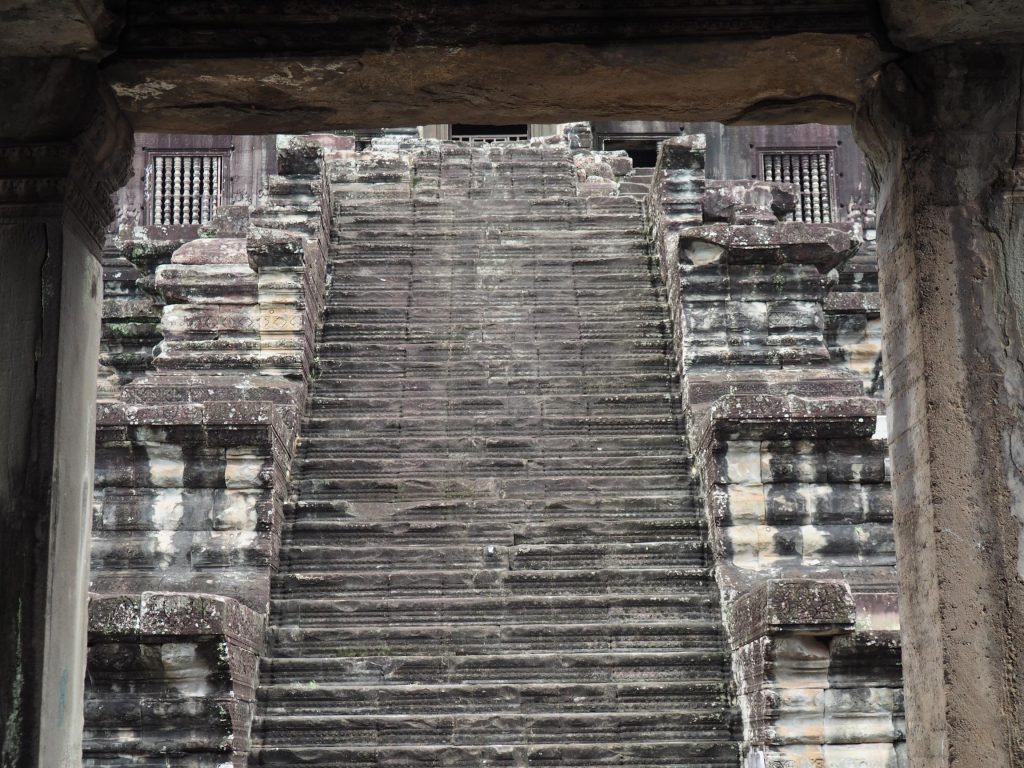
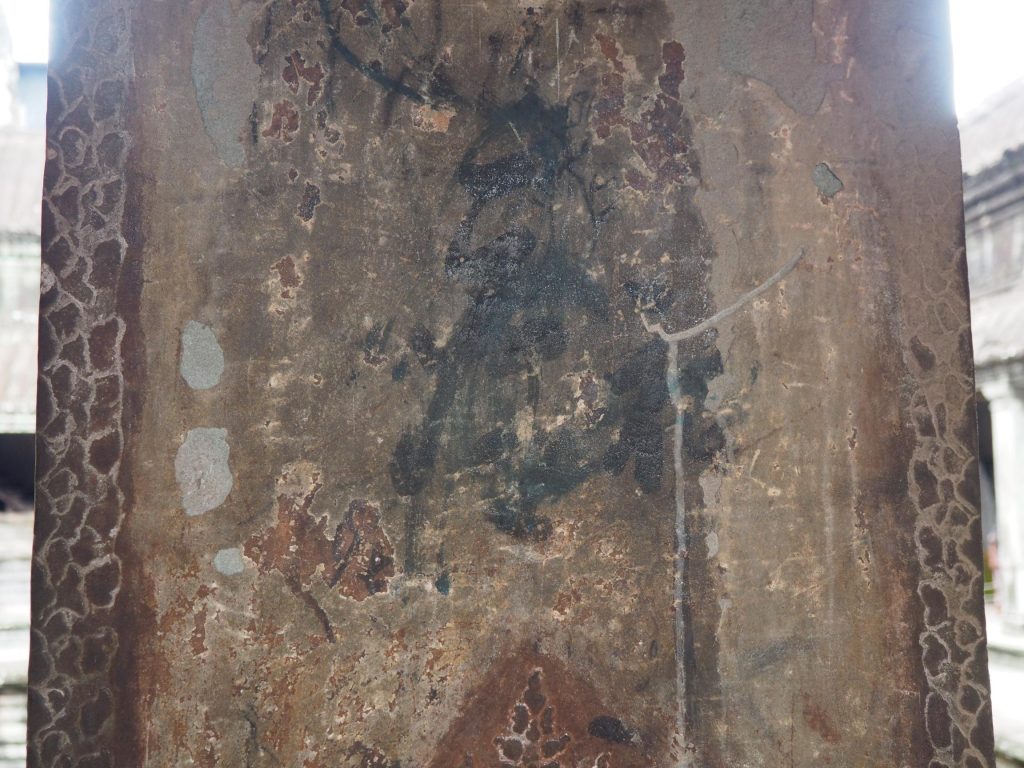
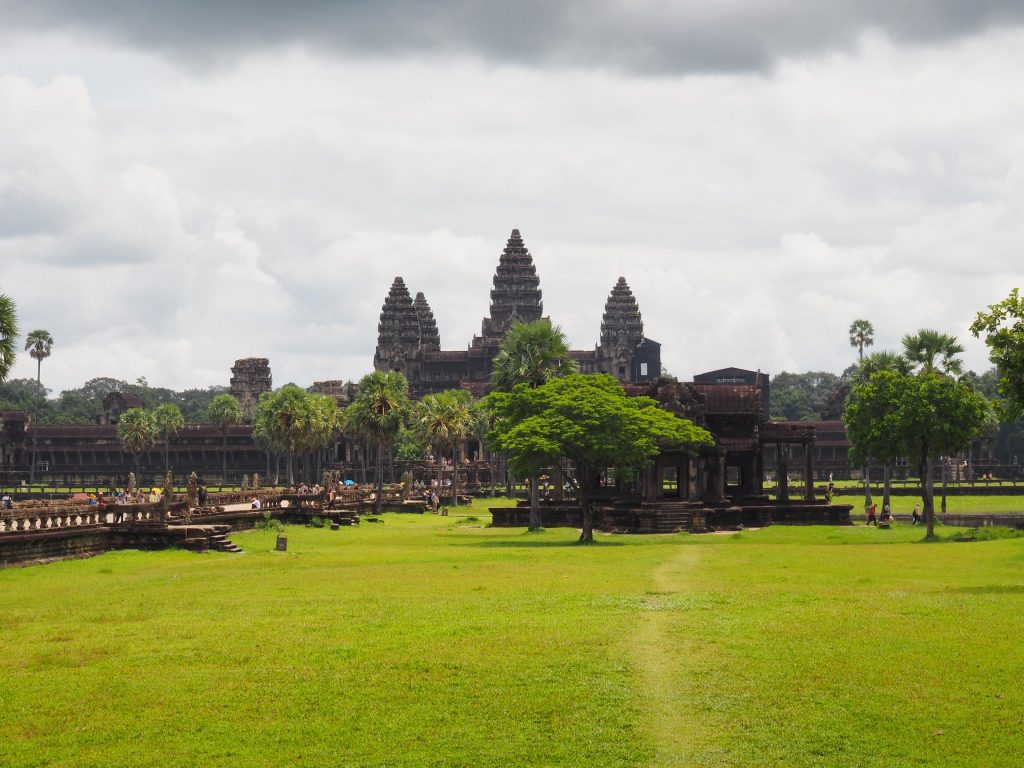
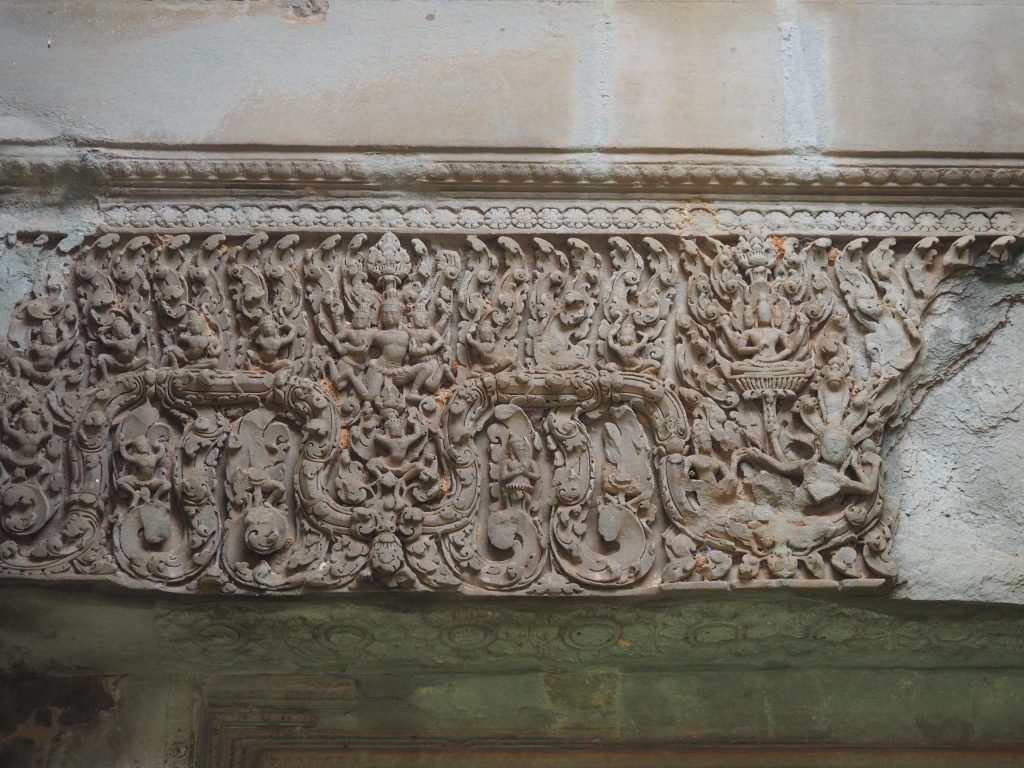
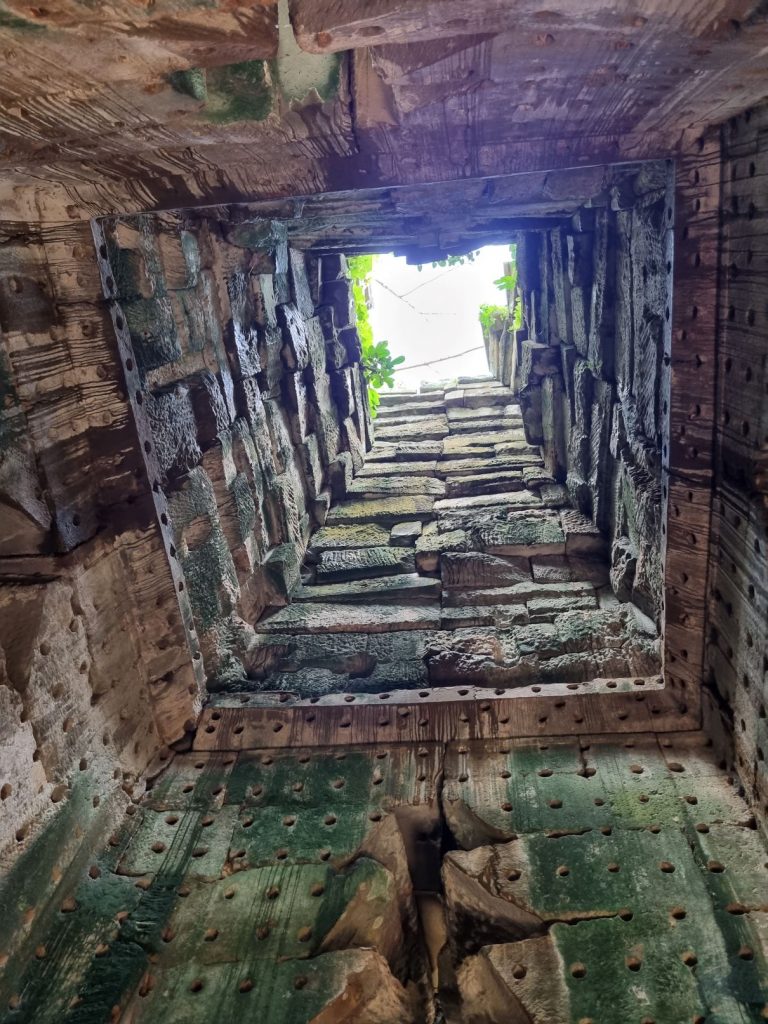
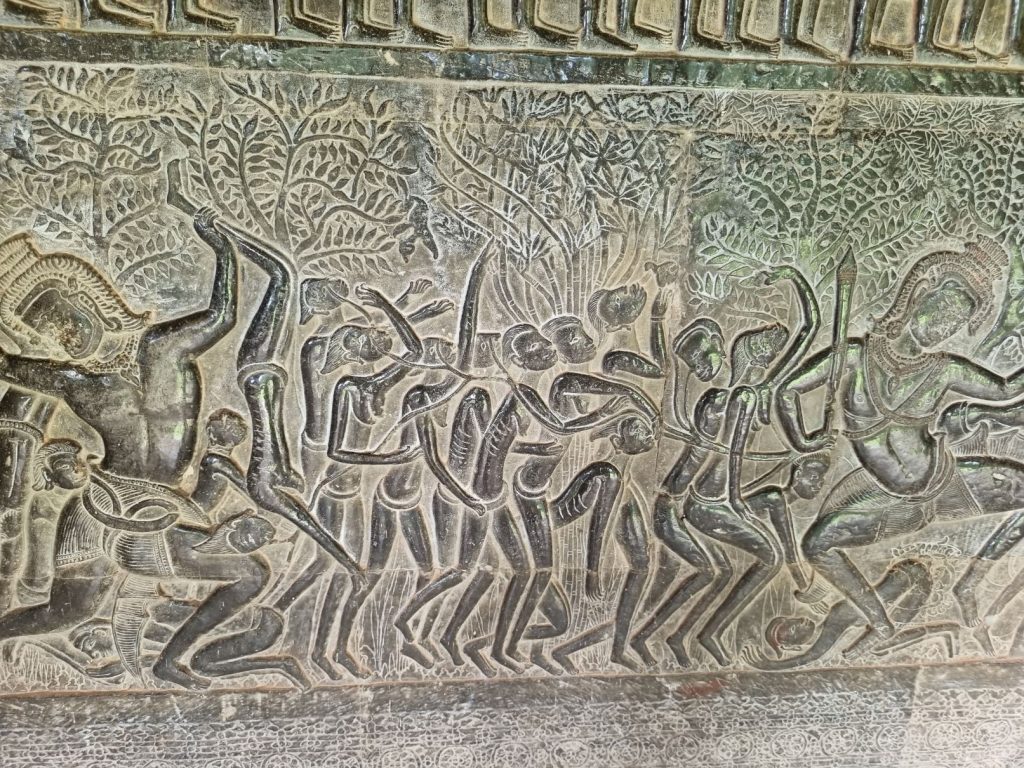
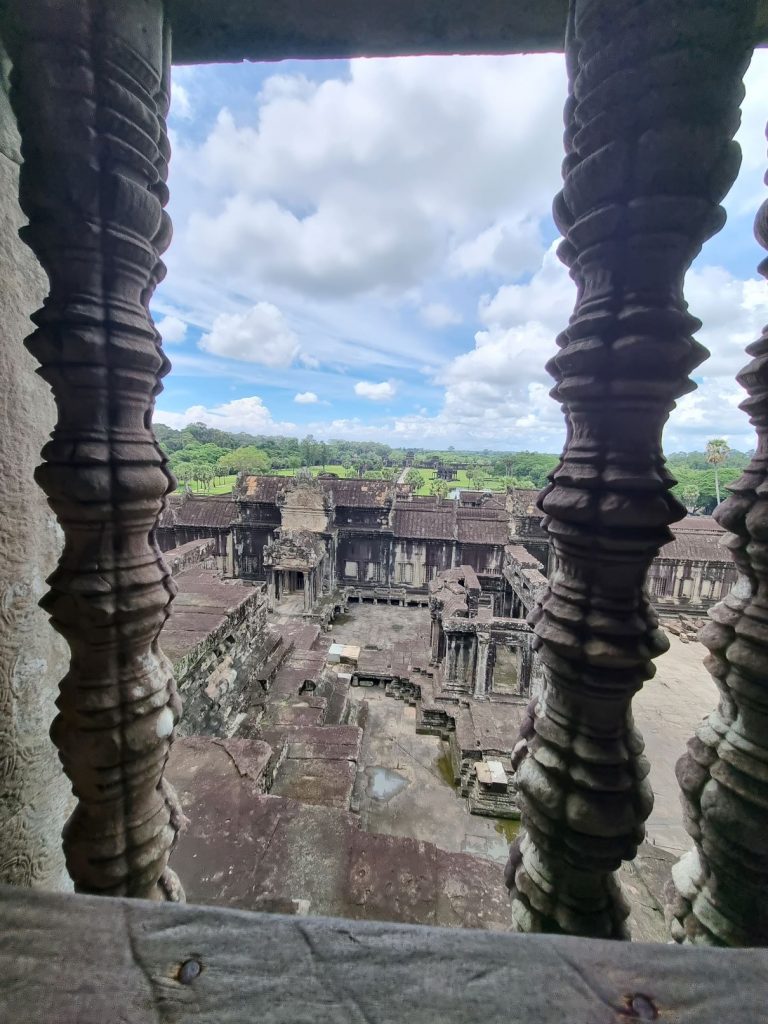
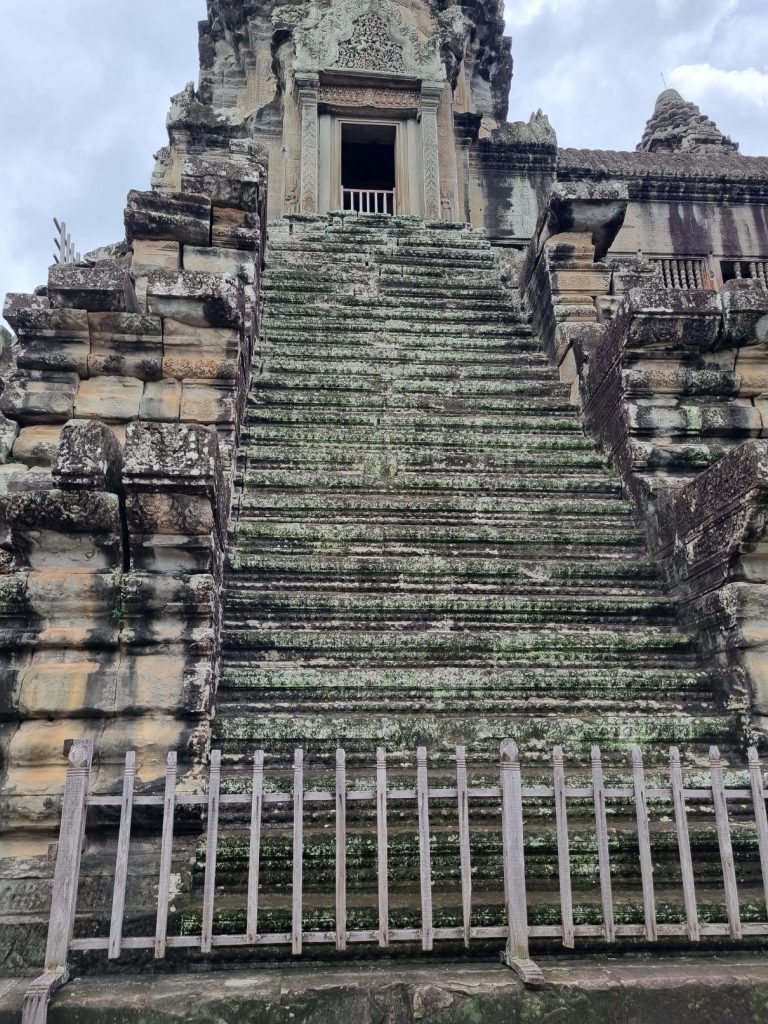
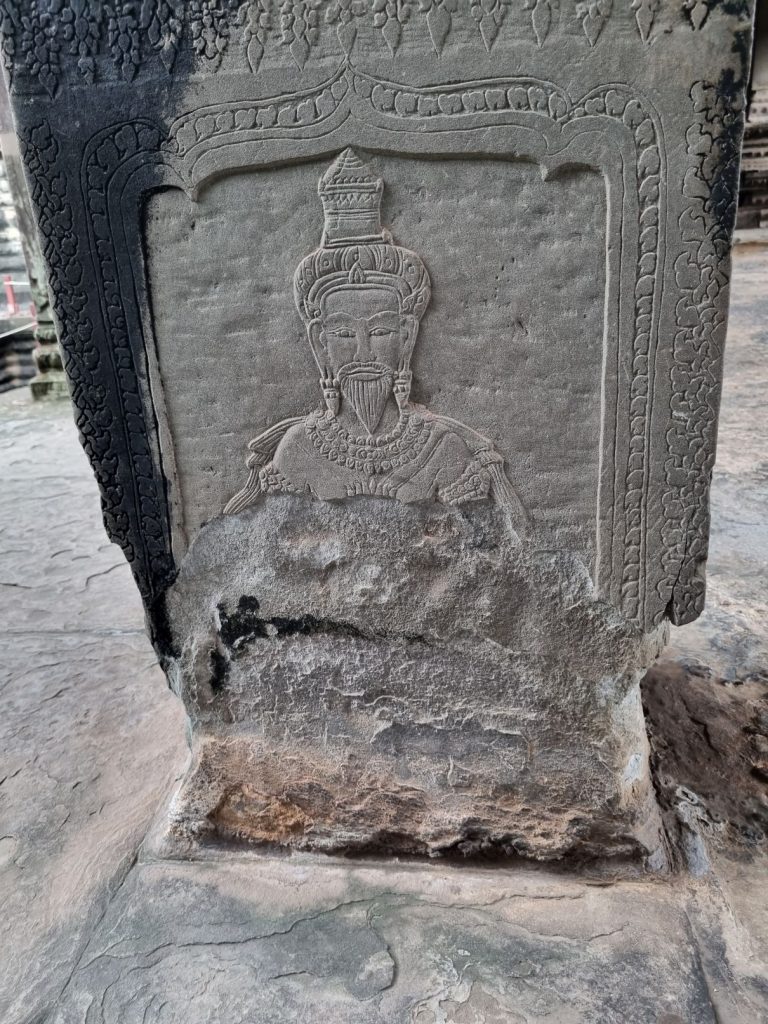
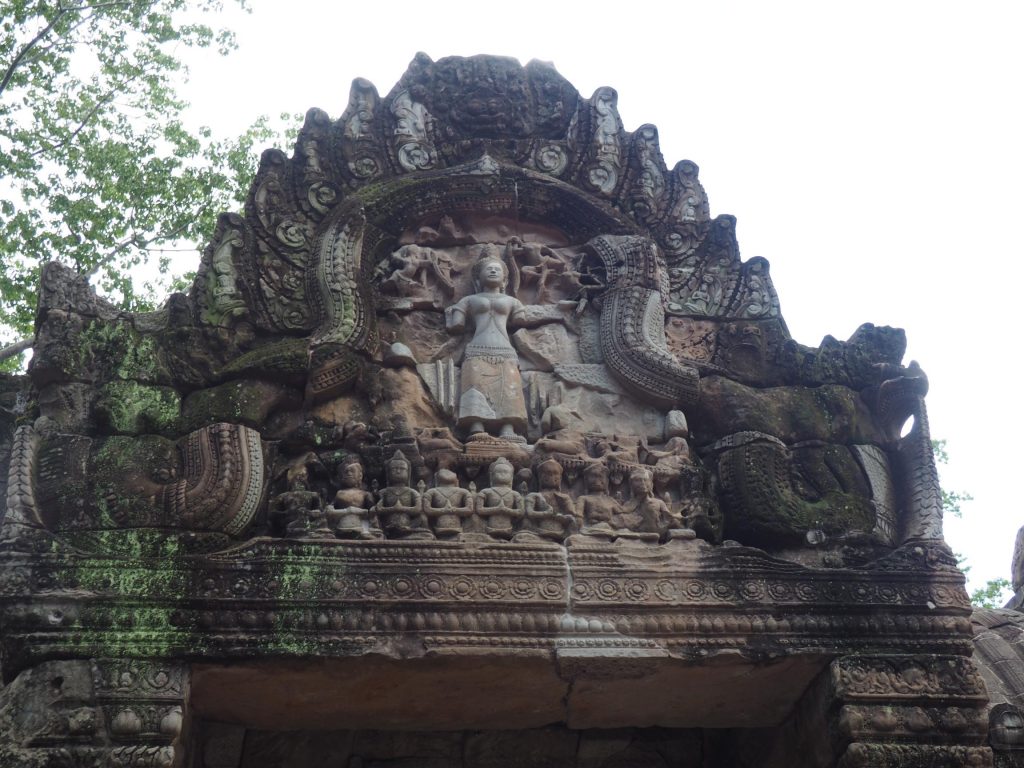
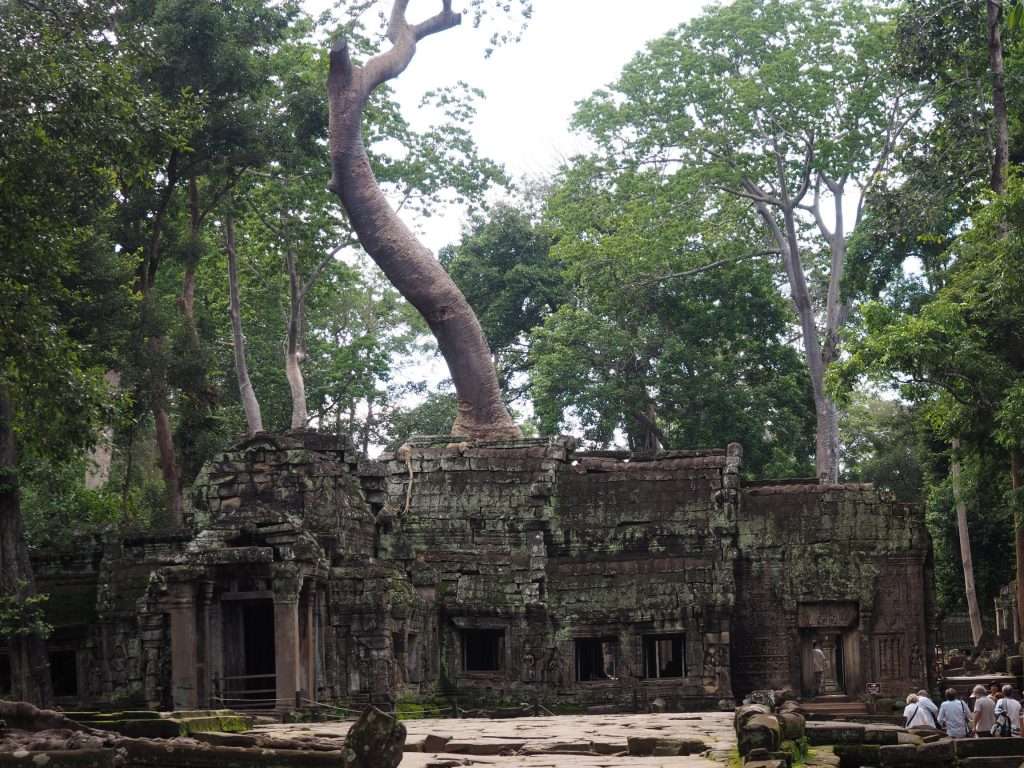
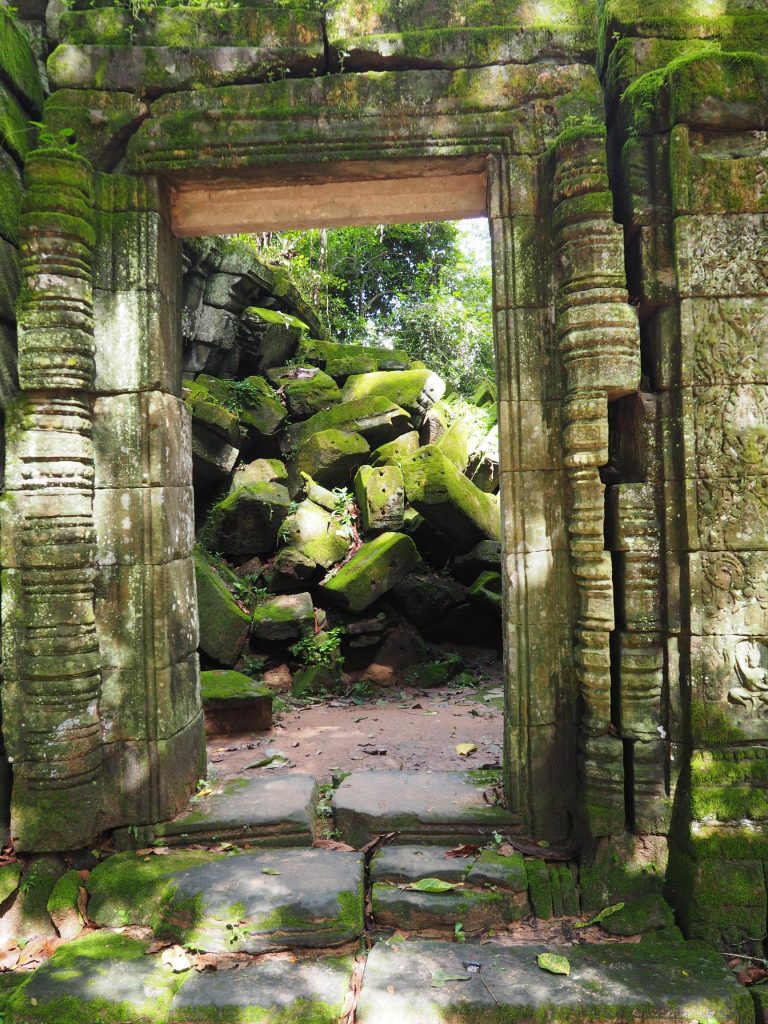
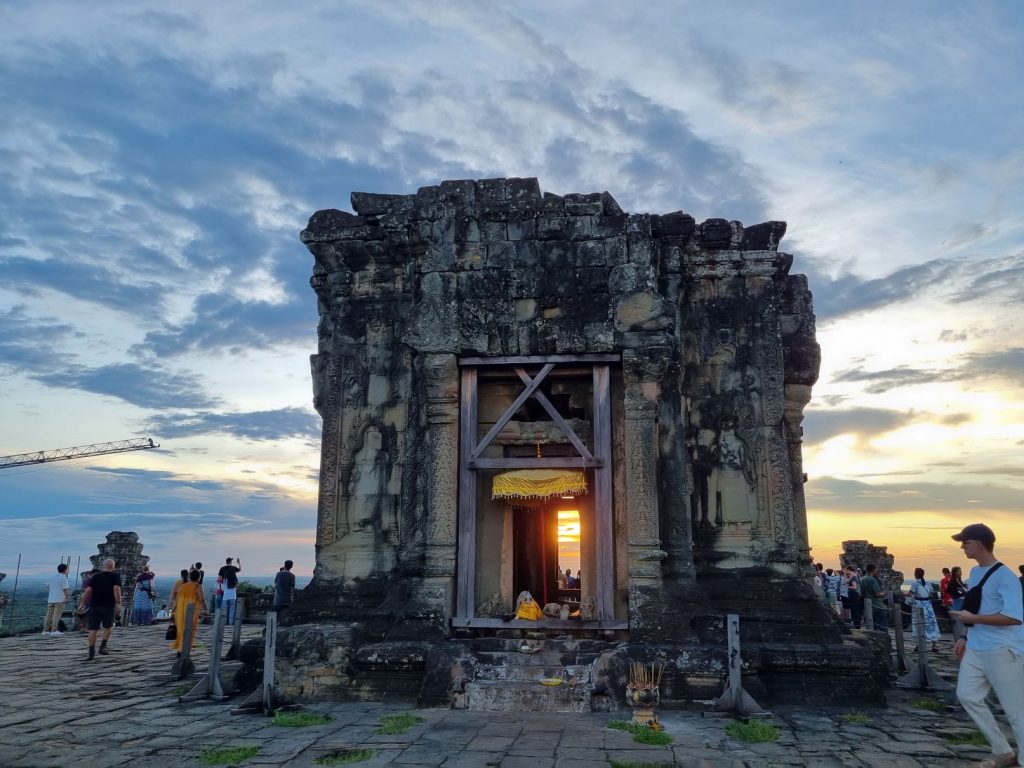
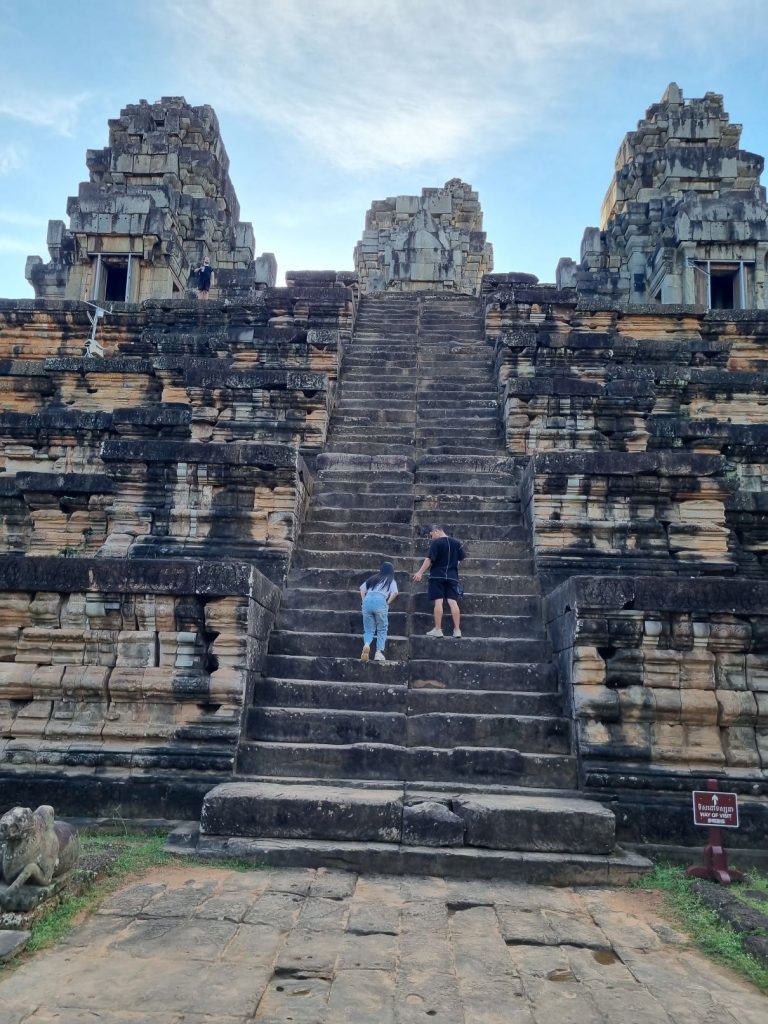
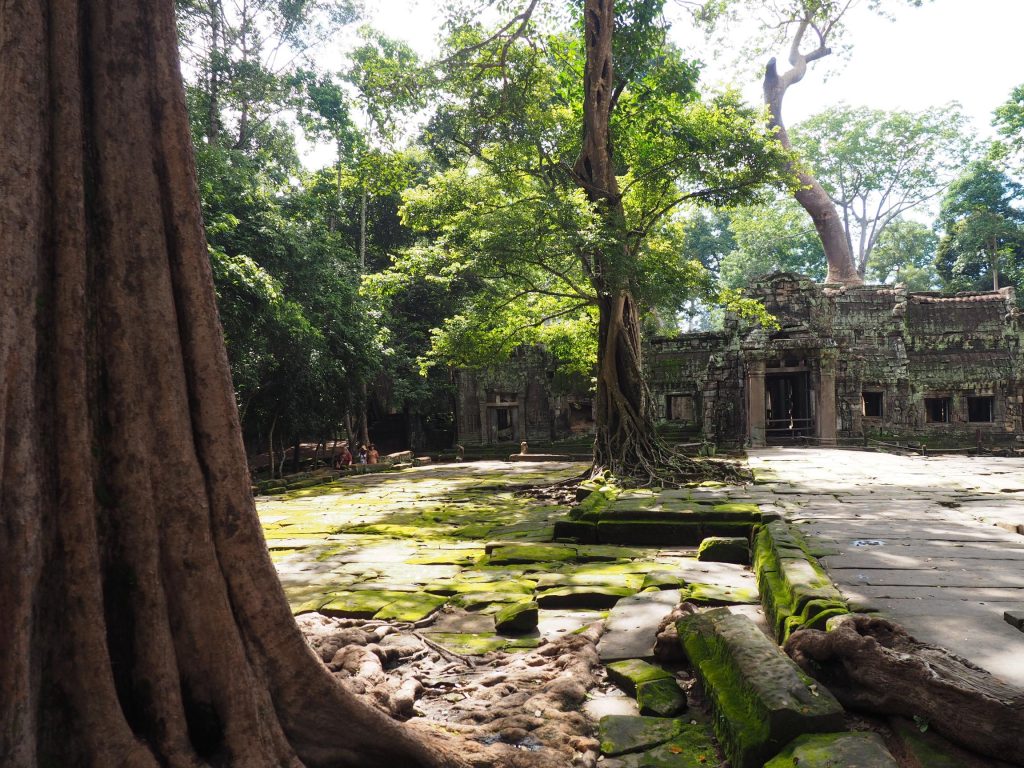
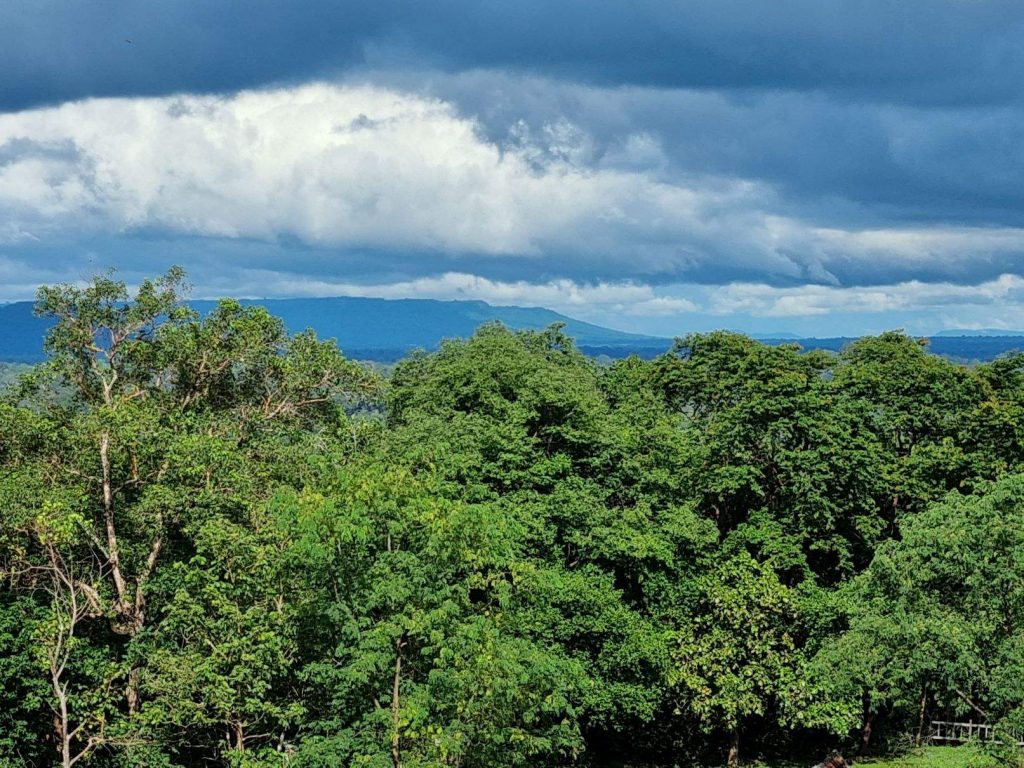
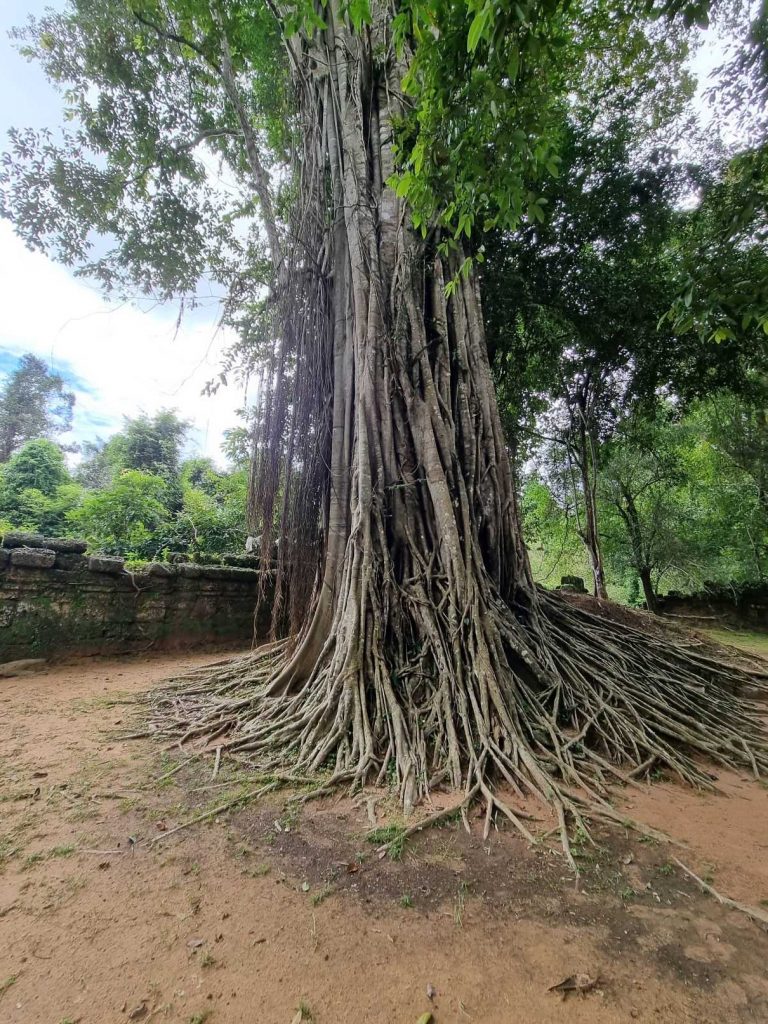
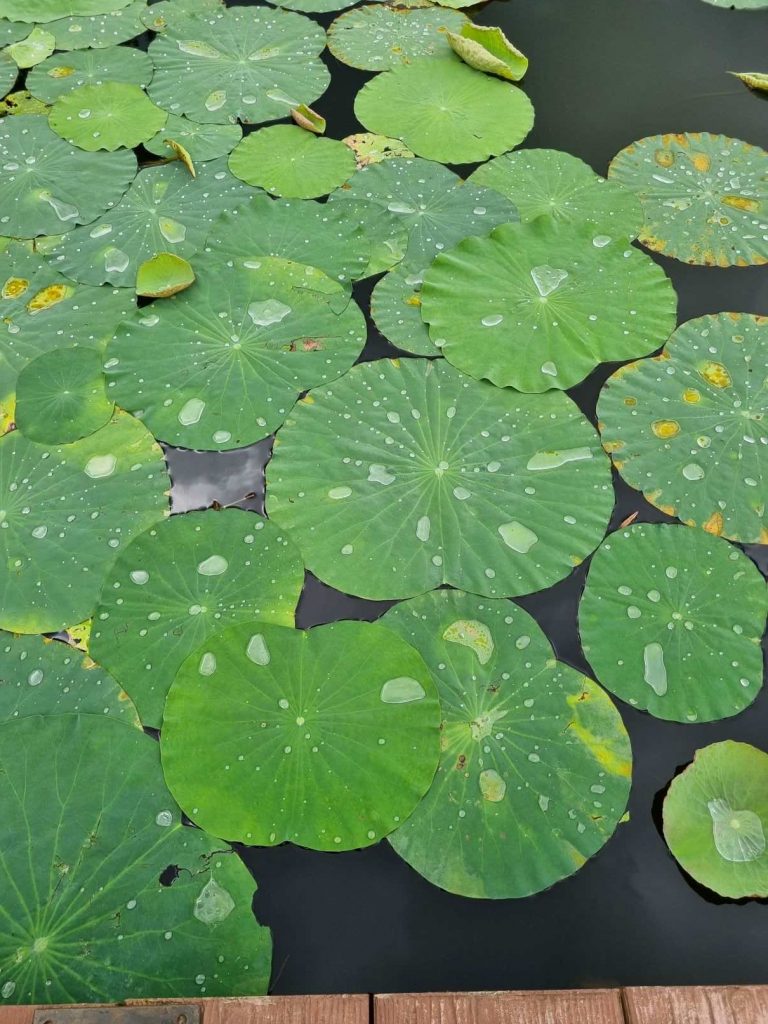
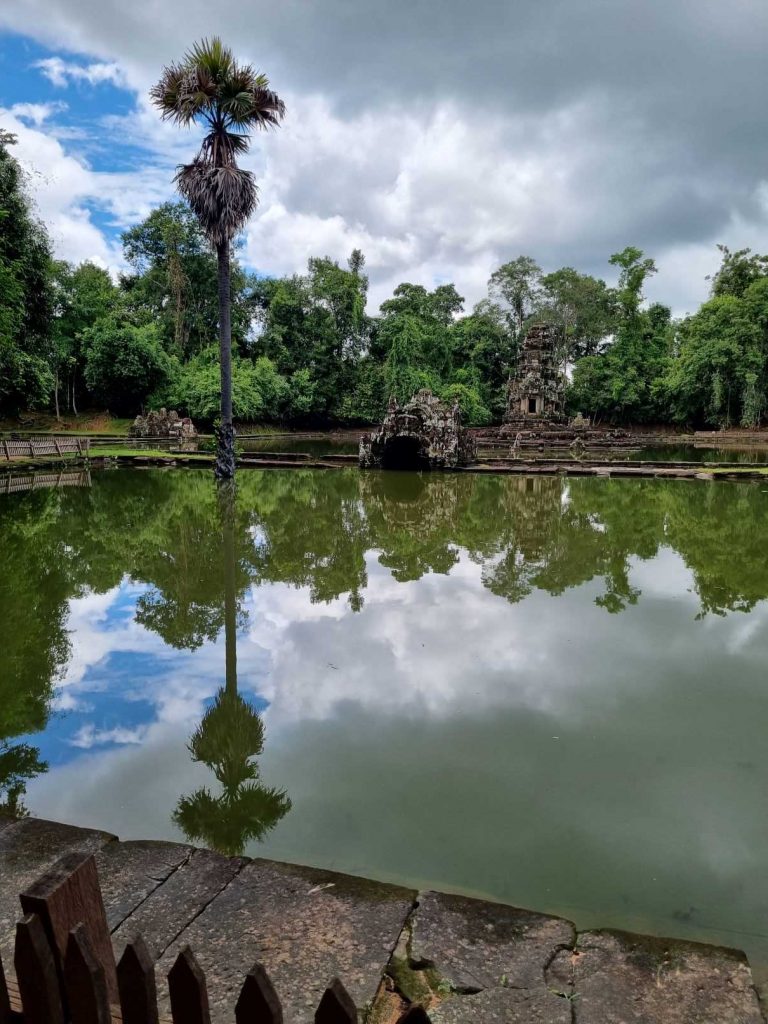
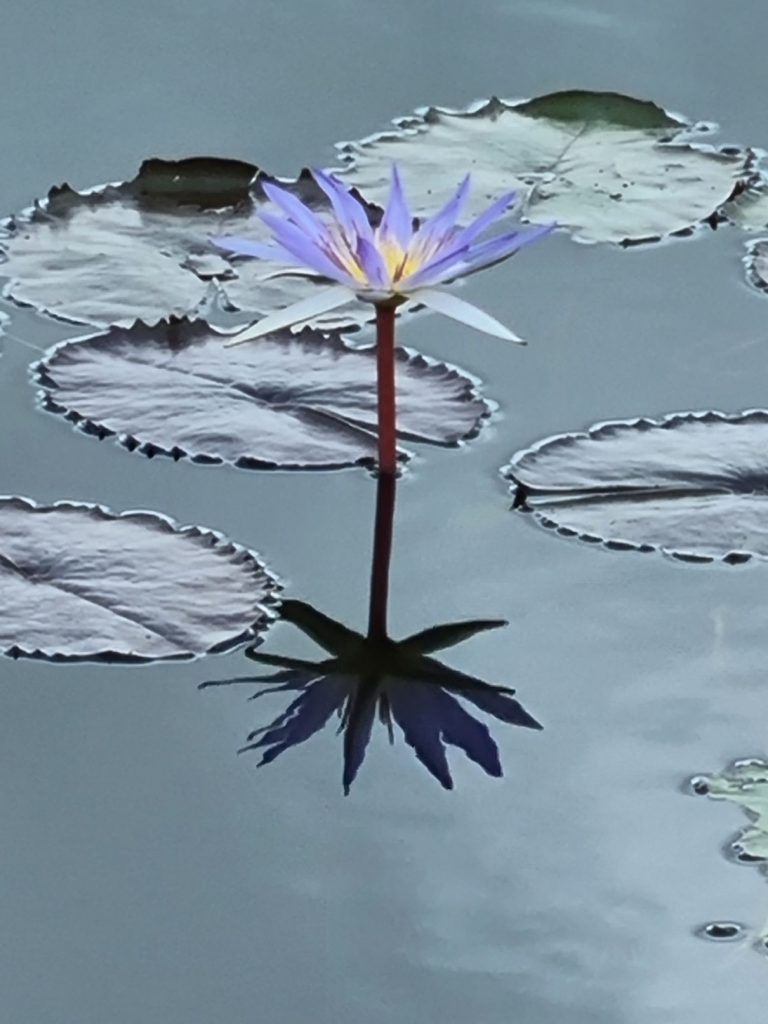
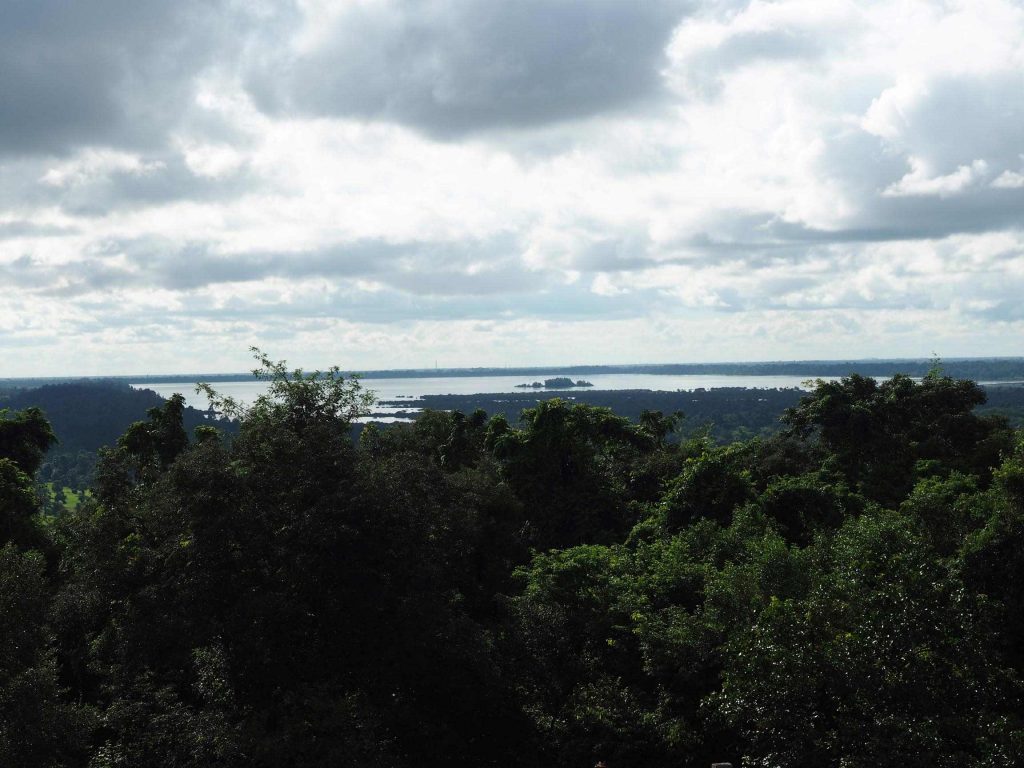
At the same time as seeing the temples we were also captivated by the beauty around us.

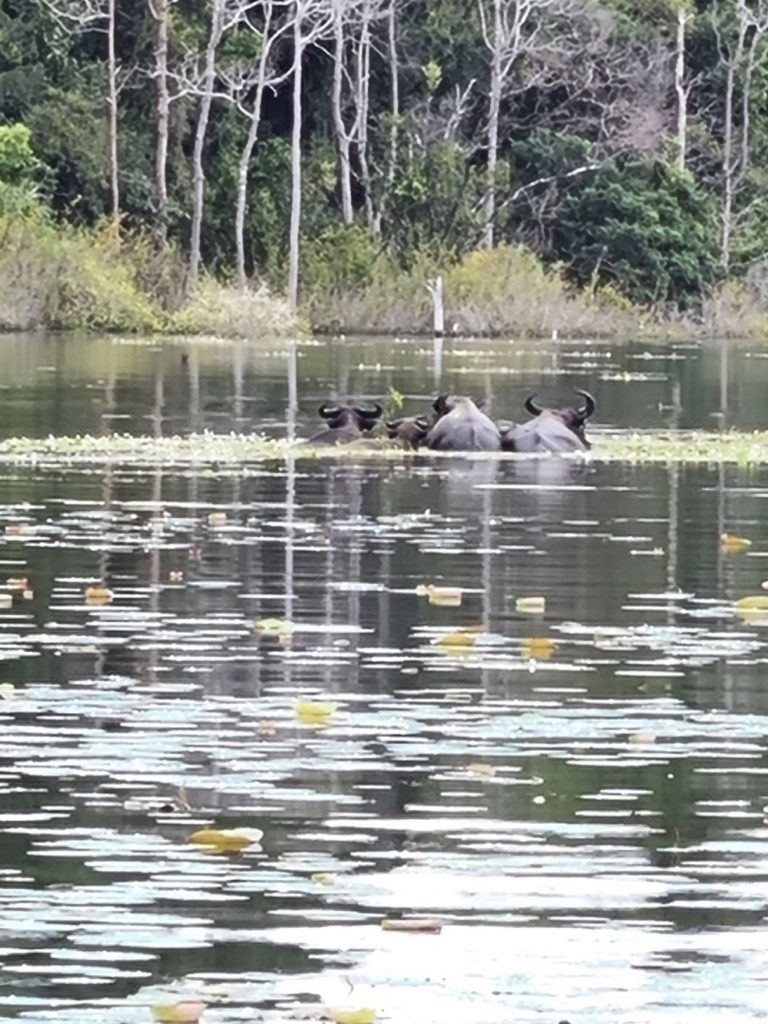
Our guides introduced us to some of the ‘locals’ too.
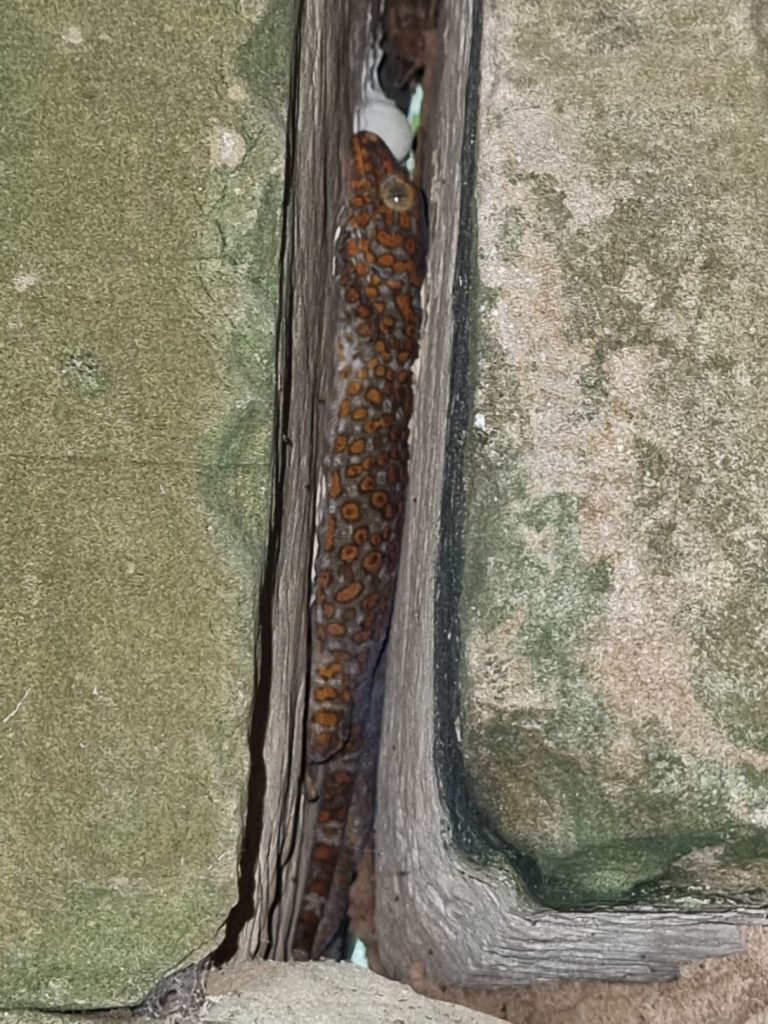
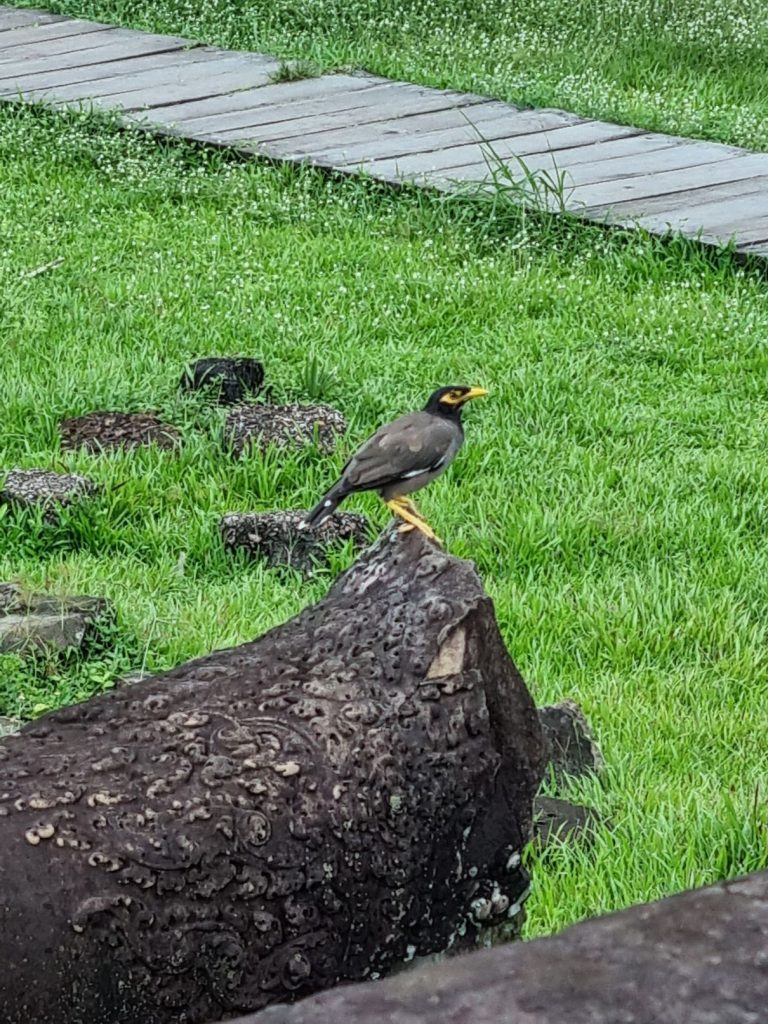
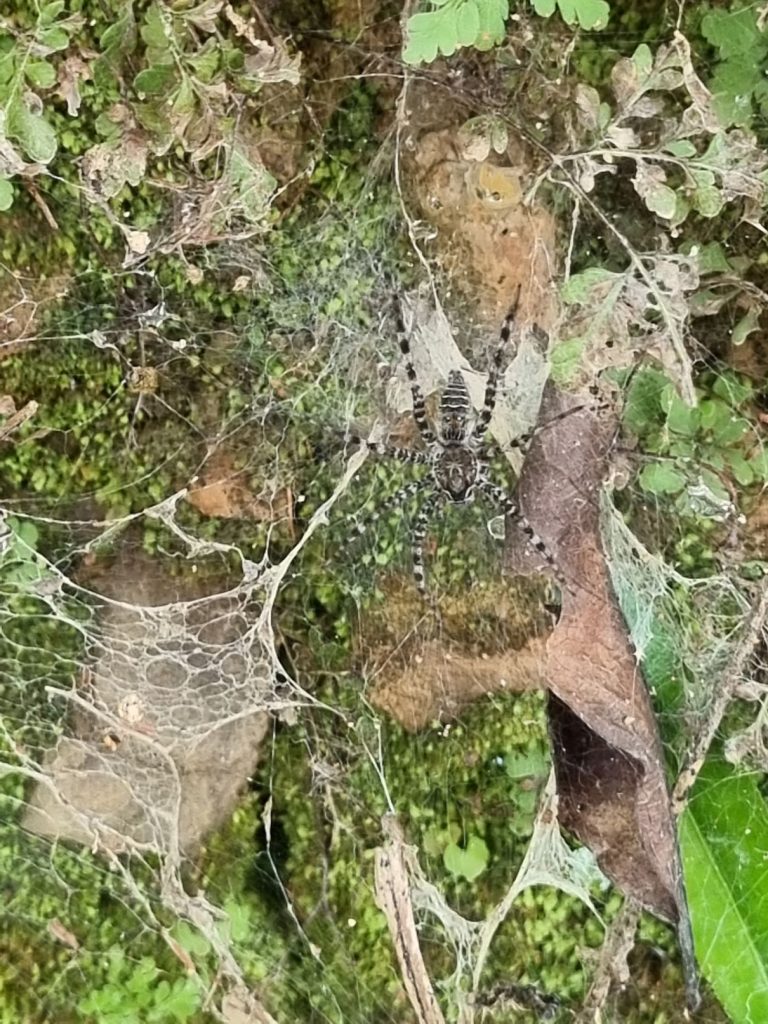
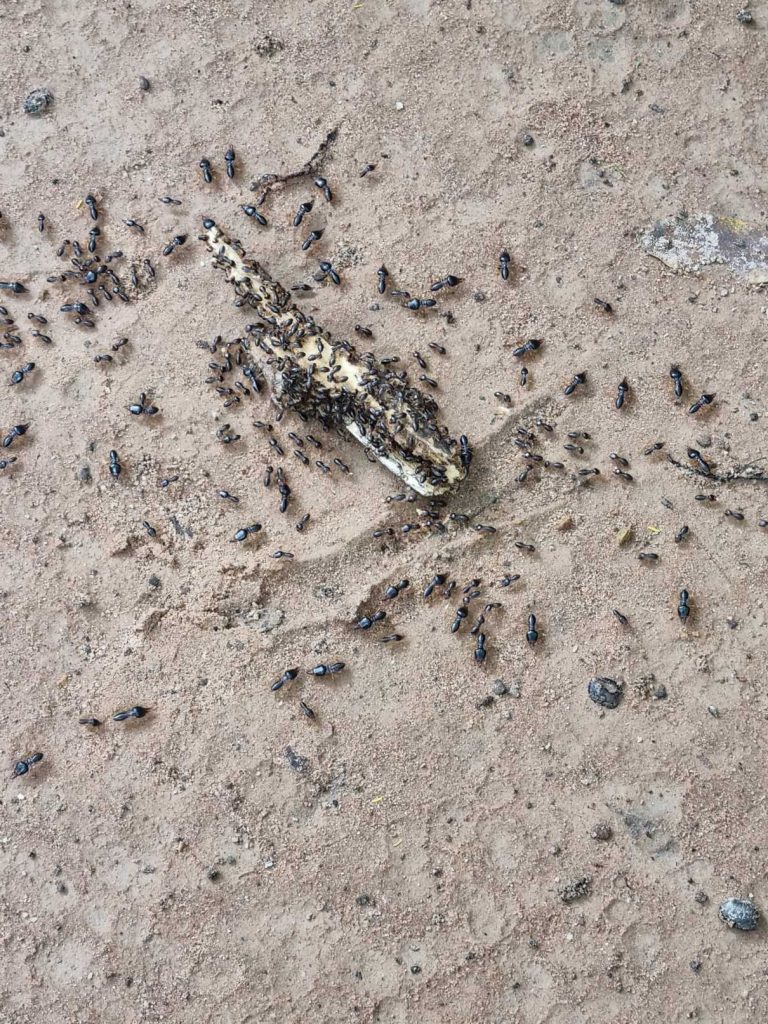
It is too difficult to impart this history and beauty in text without writing a book, so hopefully, each picture imparts a story.
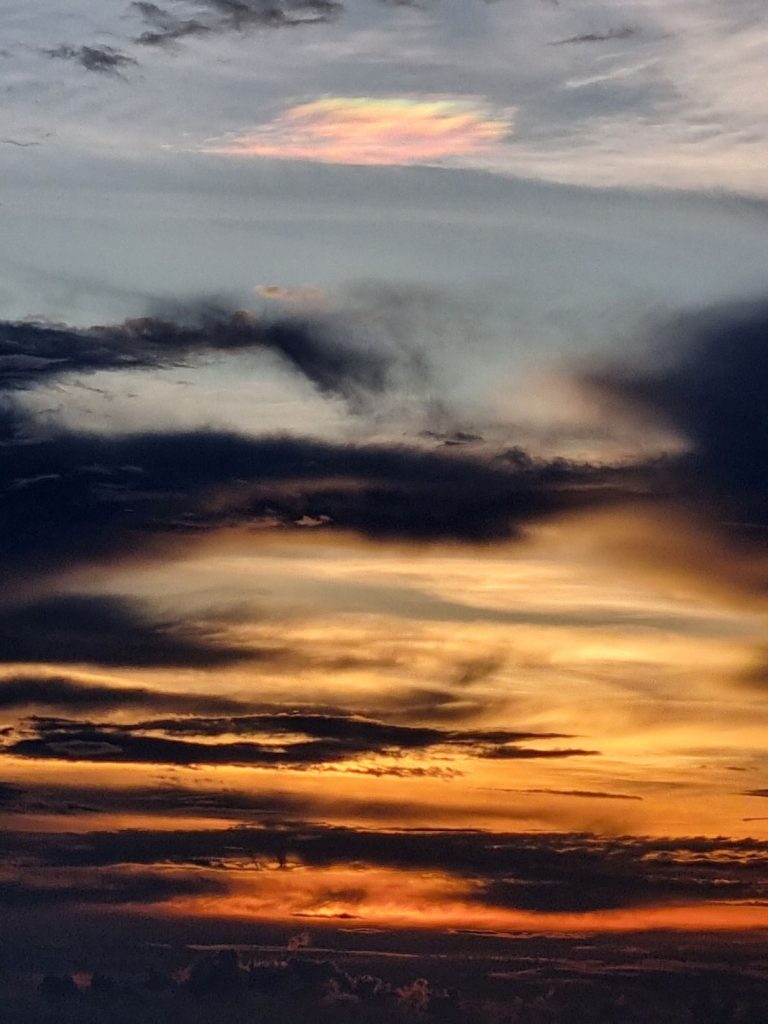
And of course, we finished the temple tour with a sunset.

BATTAMBANG
We decided to go to Battambang for a bit of relaxation. We had heard that although it is a more wealthy area and apparently Cambodia’s second biggest town with quarter of a million people, it was quiet and peaceful and felt we wanted to slow down a little. Had a very pleasant three hour bus journey during which the scenery (still very flat) became more lush and tropical feeling. It was immediately obvious on arriving the Battambang was different. Very few high buildings – none over about three stories and very much less frenetic on the roads (although still lots of scooters and mopeds and Tuktuks).
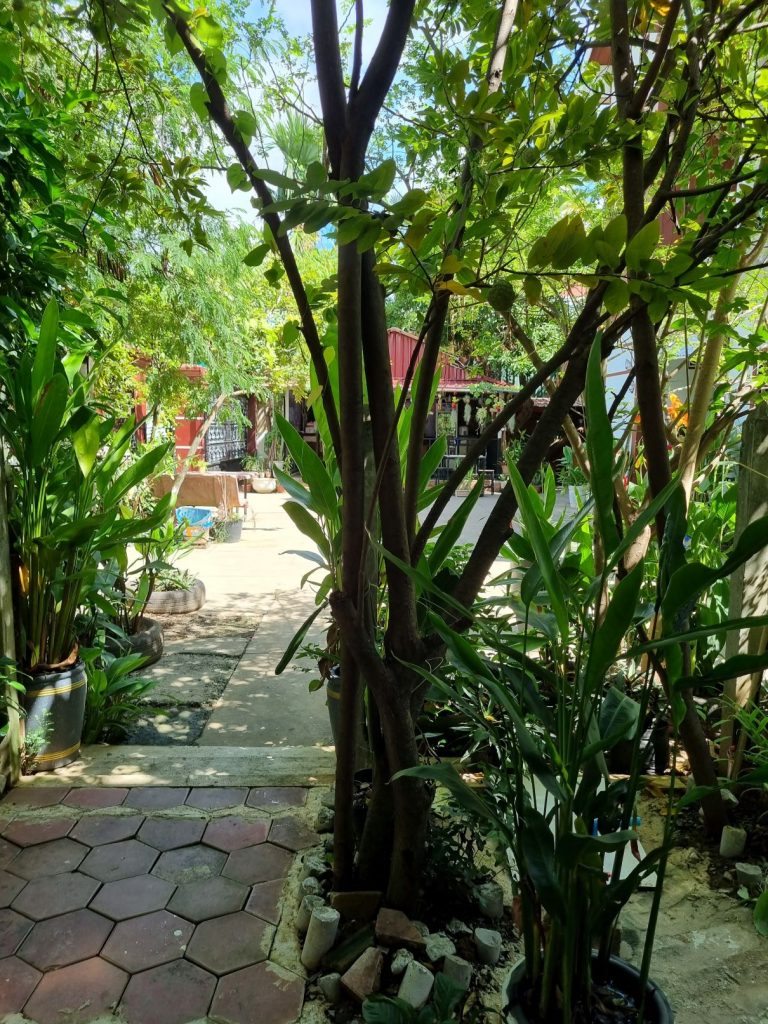
We decided to stay in a homestay – more of a guesthouse – instead of a hotel. A great choice – very very friendly and they sent their driver to collect us from the bus – a real bonus. Comfy room, obligatory wet room shower, and they did our laundry for us – hooray!!
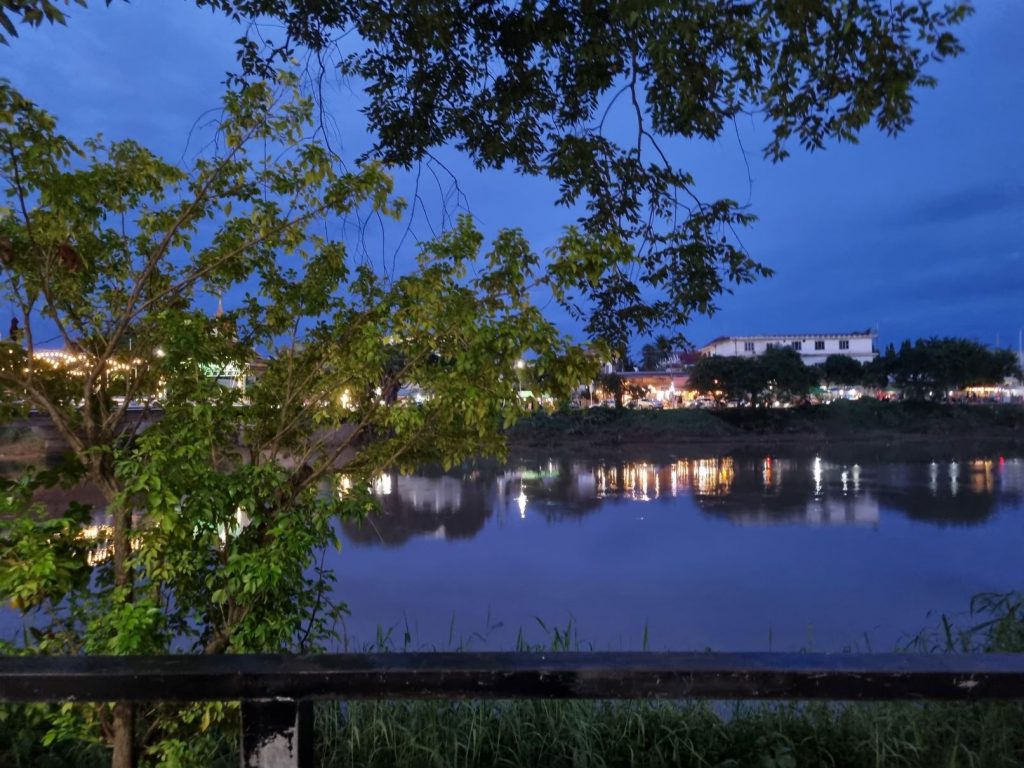
We spent the afternoon wandering along the river and through the town to get a feel for the place. It is much prettier than some places we have stayed, and we agreed with the blogs we had read that it does indeed have lots of lovely examples of French colonial architecture and is definitely much quieter than Siem Reap or Phnom Penh.
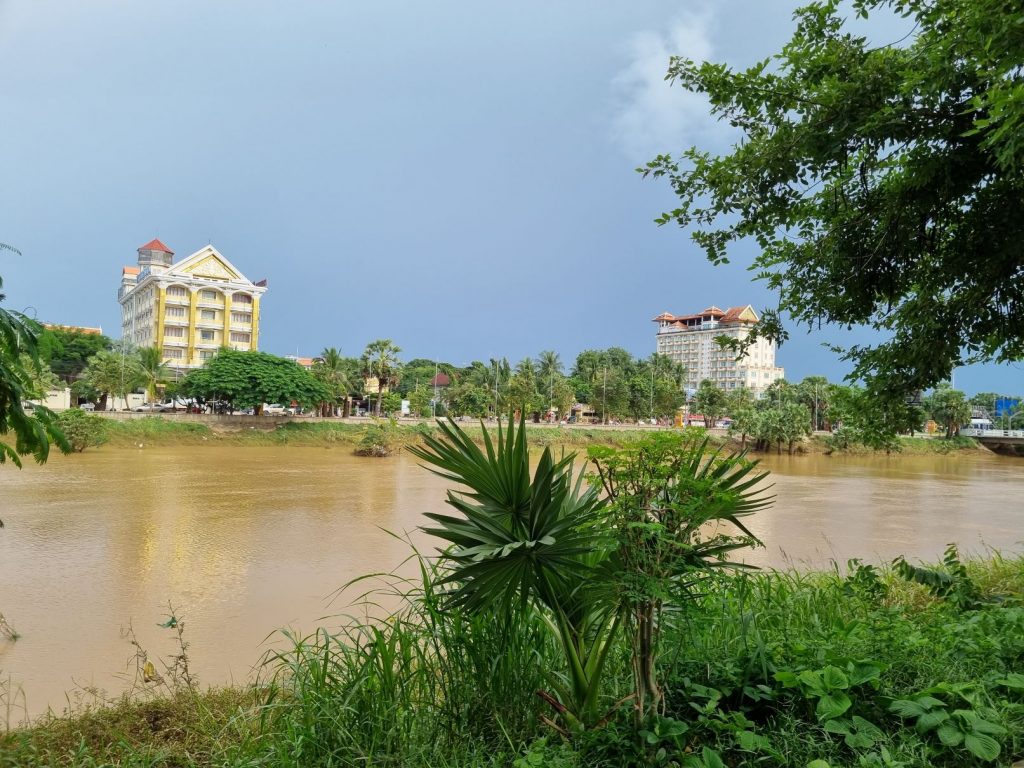
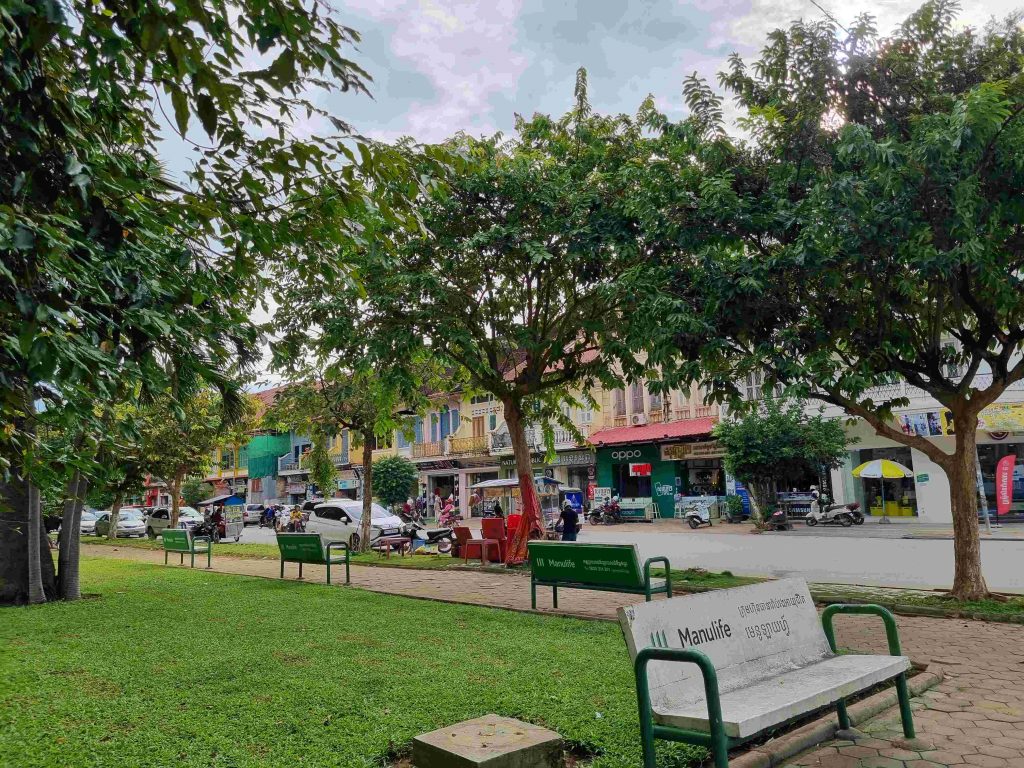
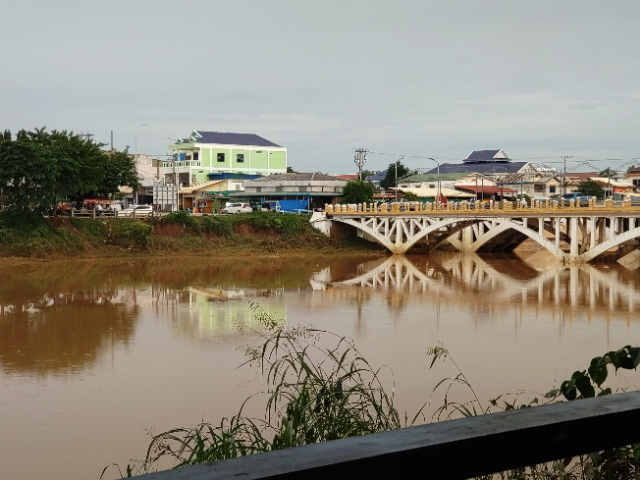
We booked the homestay’s driver, Sopron, to take us on a tour of the tourist activities on our first full day. It is very clear that there is much less to see and do here but it was a really enjoyable day. Sopron is a delightful chap – friendly, knowledgeable, modest, and his English was fantastic. Once he realised we were interested in the scenery and culture of the area, as well as the “touristy bits”, he opened up even more, showing us a local mushroom farm and explaining rice harvesting, stopping to point out the second planting of rice. He talked to us about some of his experiences of living as a Cambodian through the Khmer regime (he was 10 years old in 1975) and also of his time through the civil war in 1993. It was humbling.
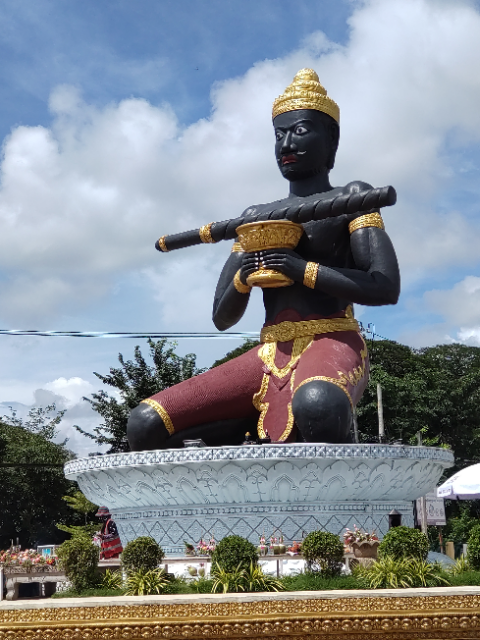
Our first stop was the roundabout at the edge of Battambang, which Sopron explained actually means ‘Lost Stick’. According to legend, the king of the time dropped his stick (a bit confusing this, but we think it was something to do with his office of authority), into the river by mistake and it was lost. A man dived into the river and found it for him, so the king decided that this region was thereafter to be renamed Battambang, after the lost and recovered stick/”rod of office”, and people afterwards revered the man as what can only be described as a “saint” in European terms.
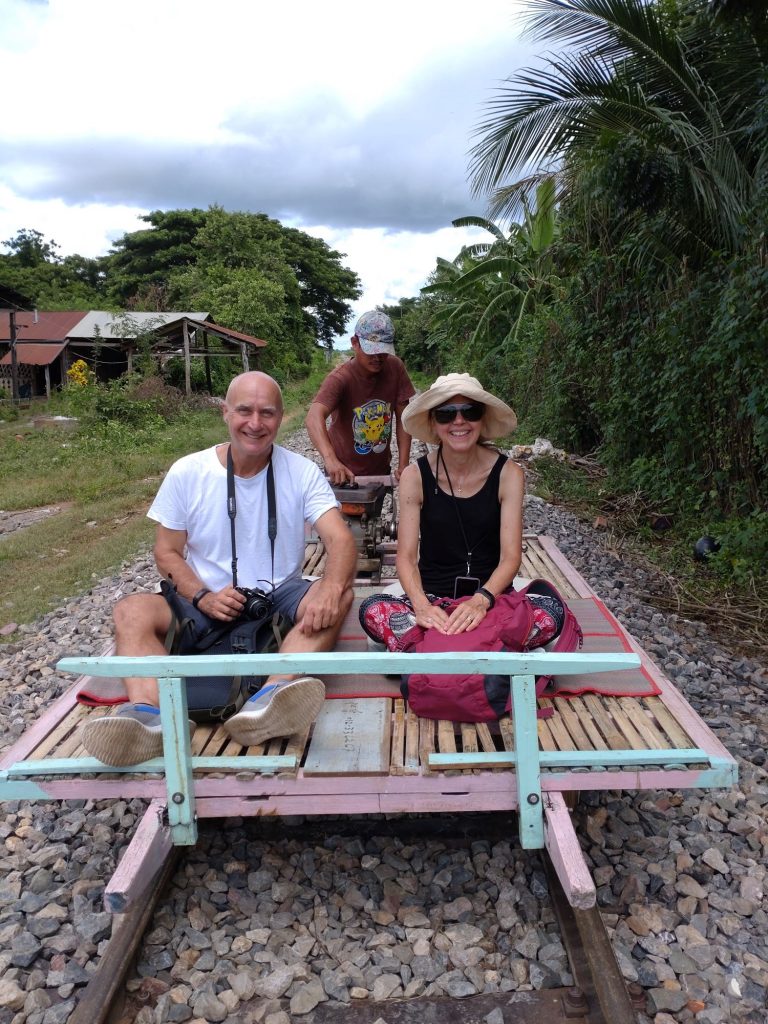
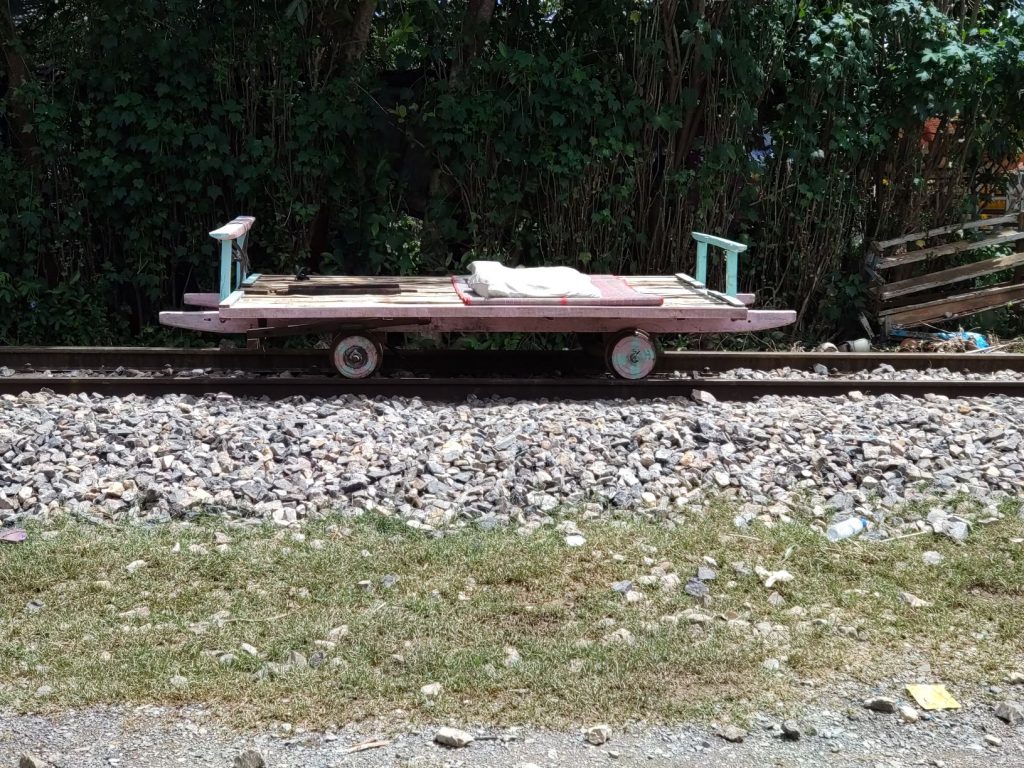
Next stop was the ‘Bamboo Train’. The Khmer Regime destroyed the railway line between Cambodia and Thailand so locals had no way to transport heavy goods from one community to the next. Shortly after the regime ended, they salvaged part of the route and built bamboo flat bed trucks which they poled along the line with a bamboo stick. They still use this as a method of transport but nowadays have small motors on the flat trucks to power them and have developed it as a small tourist activity to help support the local community. We had a trip along the track and back on one of the flat beds and rattled through rice fields, vegetation and over bridges at what felt like a very fast speed but was probably only about 25km/hr – fast enough though! It was very scenic and a great way to stay cool in the breeze.
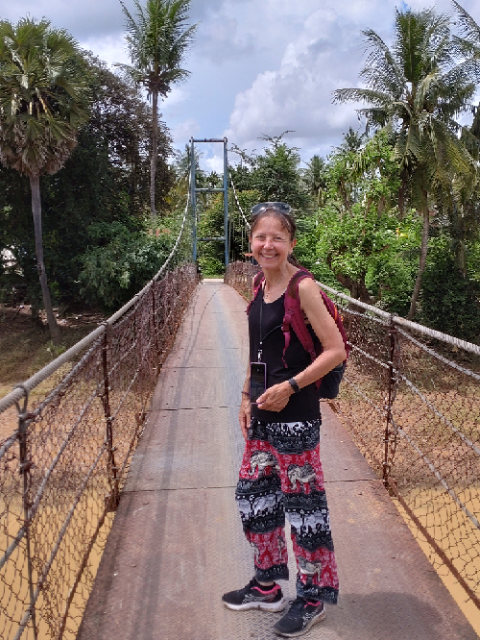
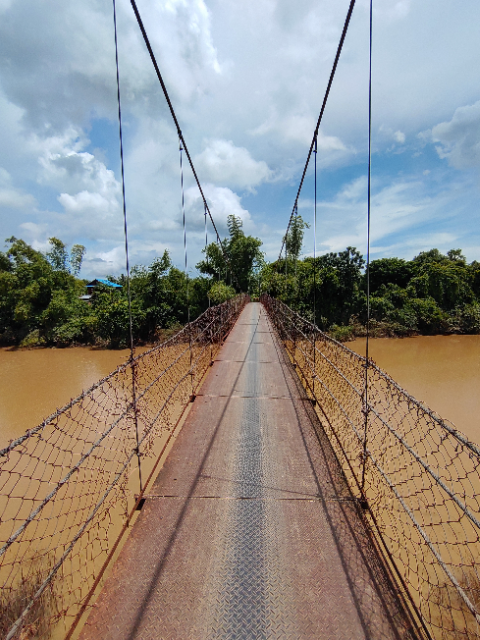
Sopron took us to a suspension bridge (just wide enough for a Tuktuk) which was built through a collaboration of Government and villagers to allow children from the community on the opposite bank to attend the elementary school without either having to get a boat or do the long journey by road.
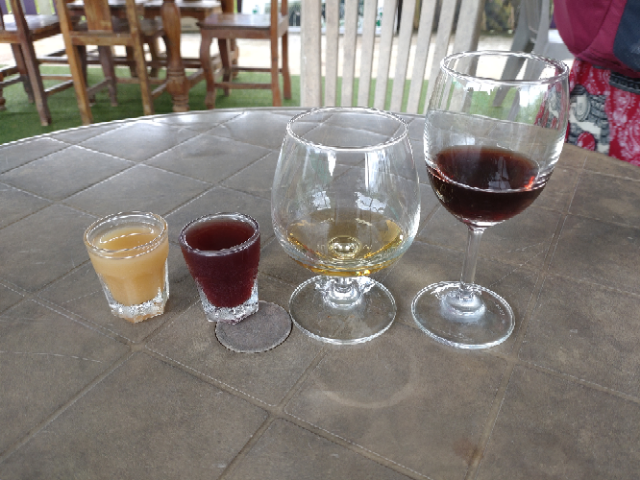
This was followed by a trip to a local winery. We had not realised the Cambodians made grape wine (we had assumed only rice wine); it was interesting to have a quick look at the vines with red grapes ripening, and even more interesting to taste their 2018 Shiraz (quite sweet and plummy – a bit sherry like), red grape juice, ginger and honey drink and of course, their brandy, which was very nice indeed. Sadly, with backpacks and therefore limited luggage capacity, we were unable to buy a bottle to bring home as we didn’t want to cart it round with us and felt it would not survive the mail system!
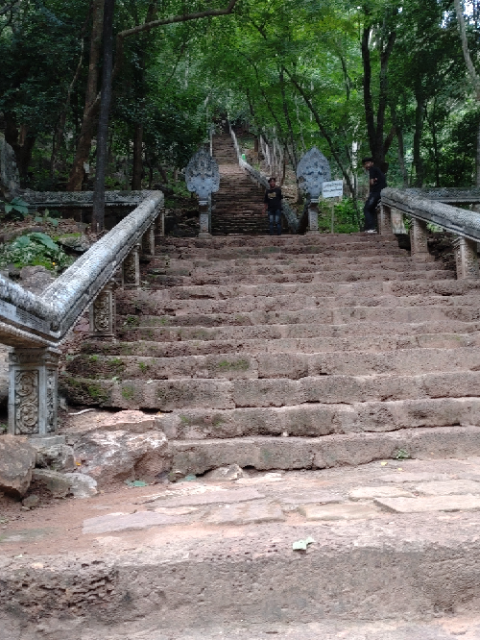
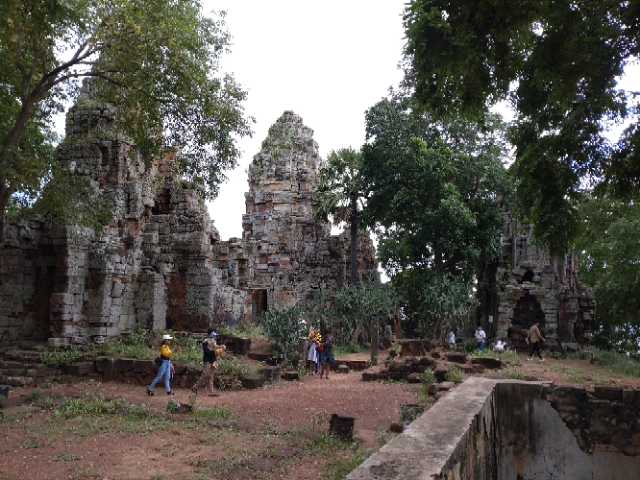
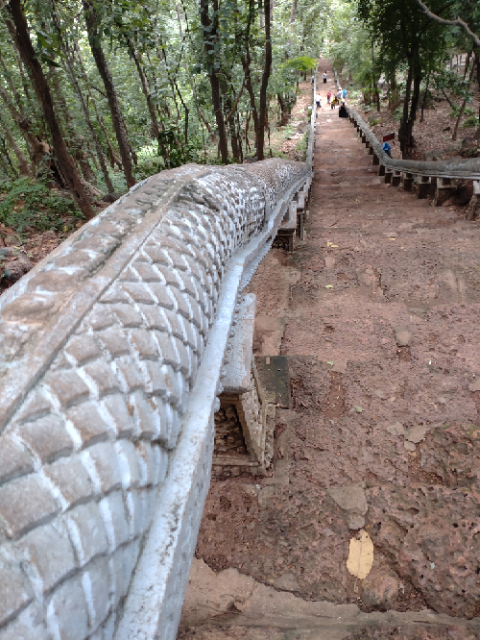
Lunch was on a lake front at Banon Hill where many Cambodian families go at weekends to have time as a family, and was followed by a climb (more stairs) up to a Buddhist temple. Like those in Siem Reap, this was over 1000 years old, and it showed – no renovation here, but this only added to the charm.
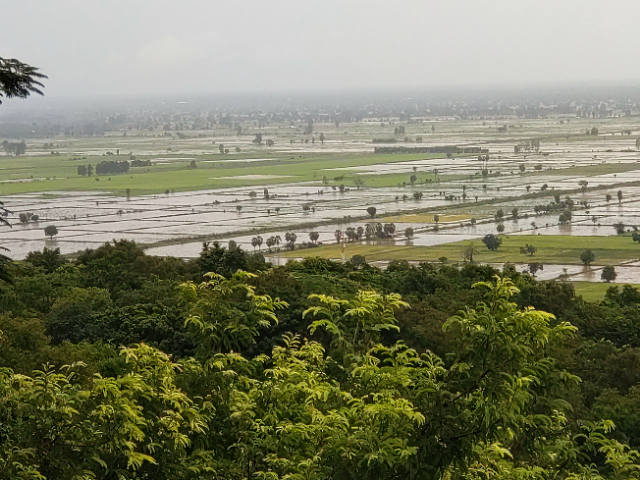
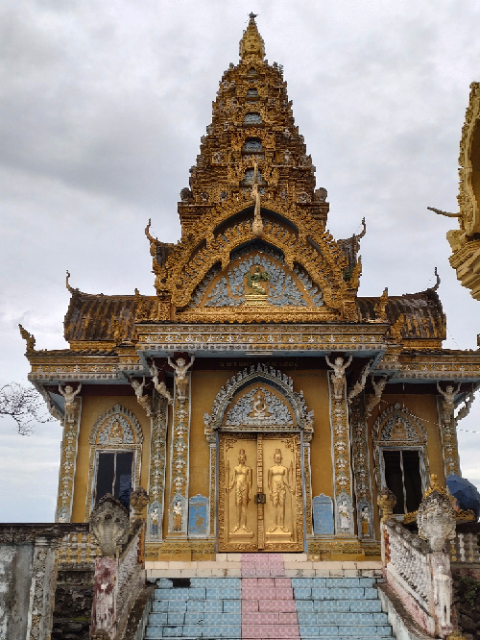
More Tuktuk miles past mushroom farms, rice fields and banana plantations took us to Phnom Sampov where there was a Khmer killing site and a bat cave.

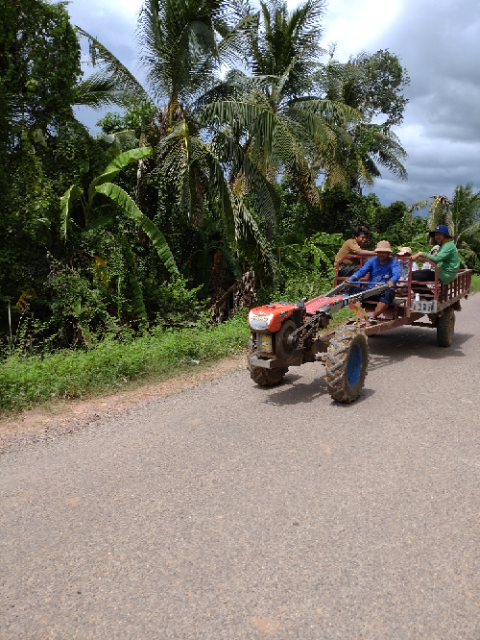
The killing site is known as the Killing Caves. A series of three caves where bodies were dumped. Soprong pointed out the house in which he was kept along with 35 other children during the regime and told us of some of his life at that time. Like Phnom Penh, it was sobering to think that this had all happened in our lifetime.
There are many bats in Cambodia and most are protected as Soprong had told us earlier whilst showing us some trees heavy with fruit bats. In the same location as the killing caves was a cave which was home to over 1 million wrinkle lipped bats. These are very much protected as they eat crop destroying insects, so the people appreciate them. We got to the cave at what would have been sundown had the sun been shining (rainy season don’t forget ;-)) just in time to watch the bats leave. After about 10 minutes they were still leaving.
Apparently, they can fly a distance of about 80km and eat up to 100% of their body weight each night. A lot of insects!

We headed back to the room for a freshen up and walked into town for a delicious meal at Jaan Bai where we had Fish Amok (a ‘must try’ Khmer dish) and chicken with banana flower and lemongrass. Really delicious.
Back to Phnom Penh and onwards
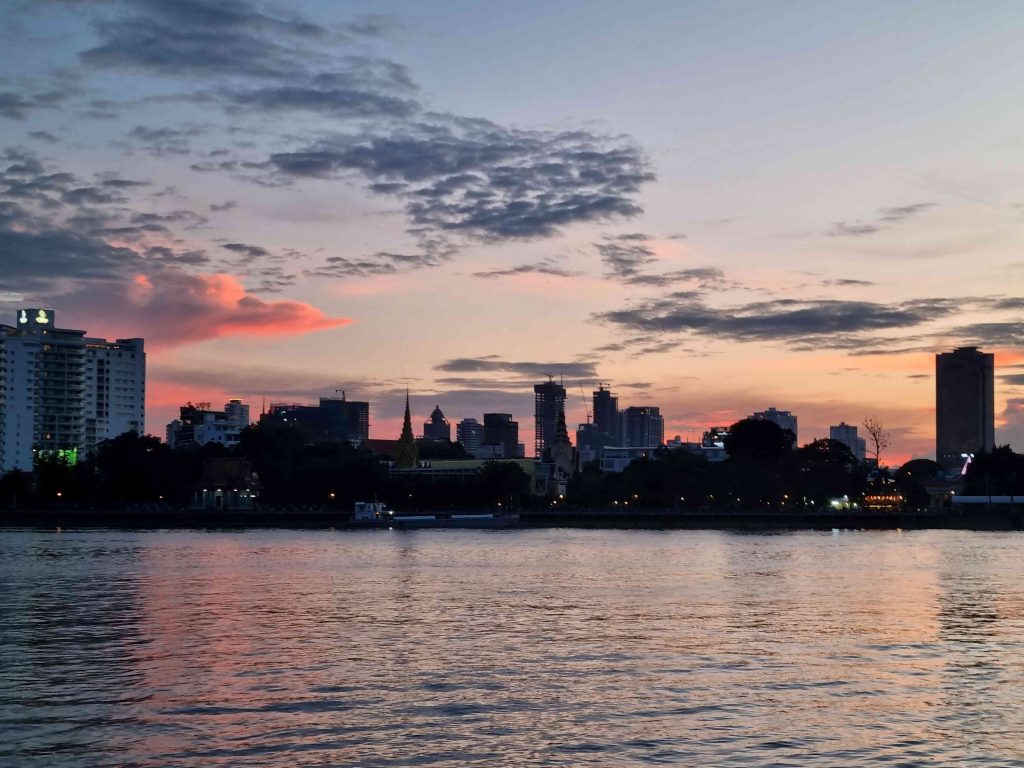
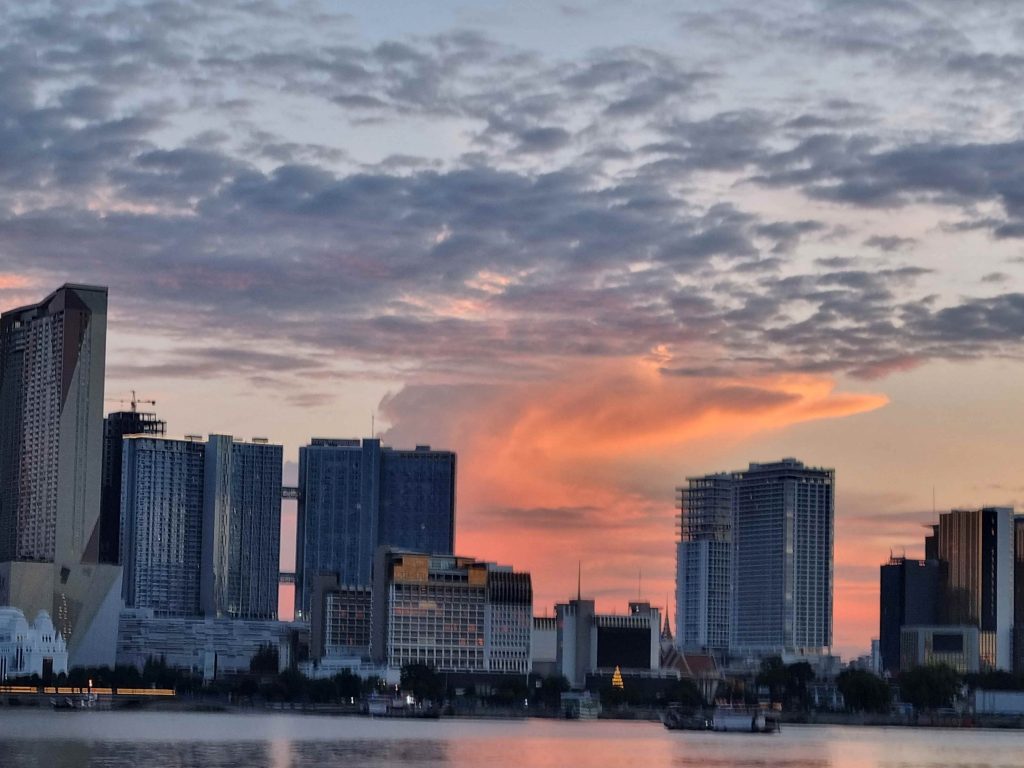
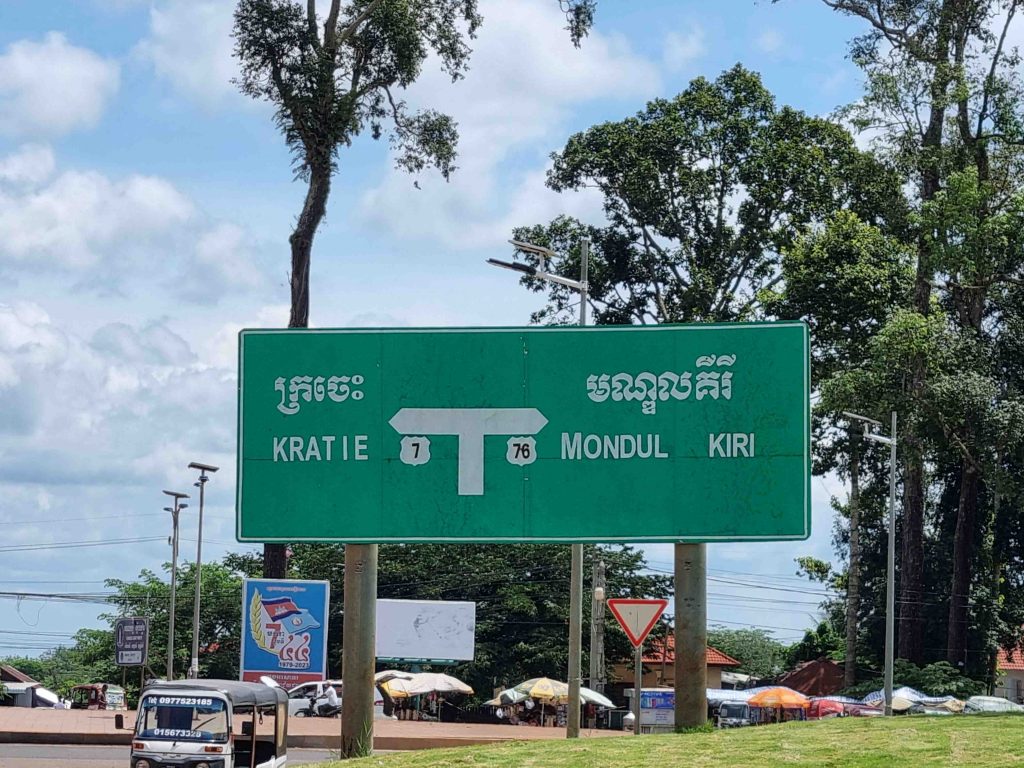
We decided one of our ‘must do’ parts of the trip was to experience a bit more of rural Cambodia, and we also wanted to position ourselves further east and a bit closer to Laos for a later stage of the journey. After some research we picked on Mondul Kiri province (Kiri meaning mountain summit) as it offered hills (Seim Reap, Battambong and Phnom Penh are all pretty flat – think Lincolnshire/Holderness!), jungle, and an opportunity to spend some time at an elephant sanctuary and do a bit of trekking. We picked up a bus to Phnom Penh (5 hr pleasingly uneventful journey) and stayed overnight in a hostel near the bus depot, but also near the river. This meant that a) we changed the age range of the residents significantly 🙂 – which was amusing in its own way; and b) we were able to take advantage of a sunset cruise. This was on the Tonle Sap and Mekong convergence, and this time there was a sunset rather than a downpour.
After a surprisingly peaceful night, another early start found us at the bus depot for our trip to Sen Monorom in Mondul Kiri.

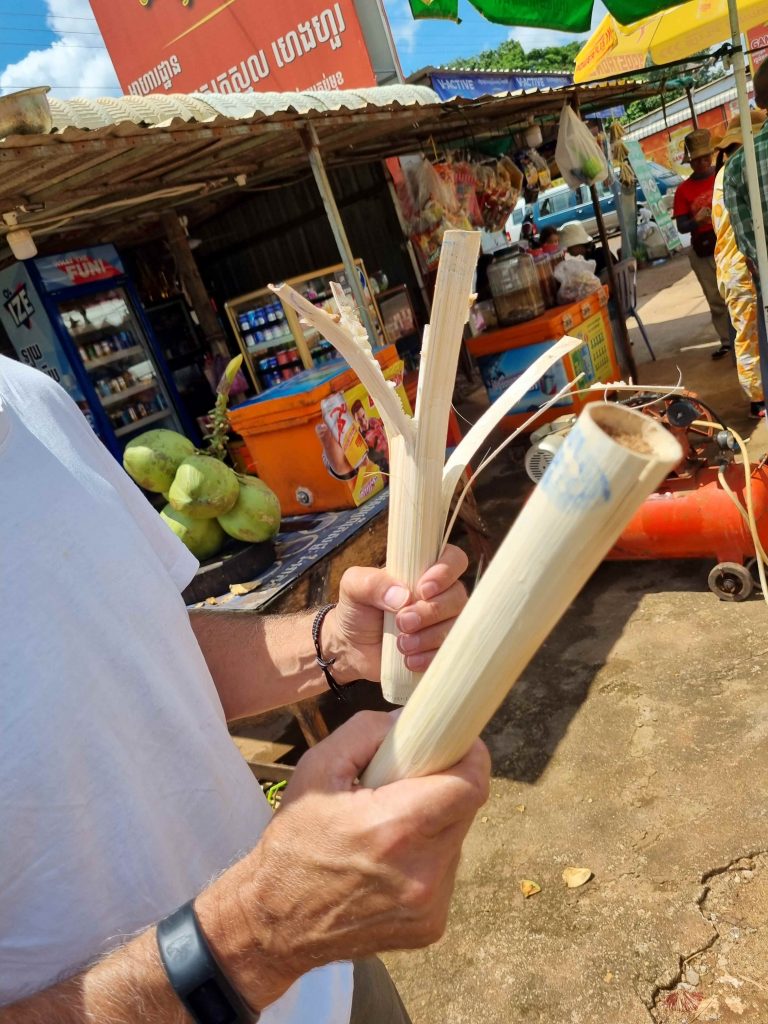
And yes, it’s another 5+ hr journey – no short distances in SE Asia! However, the bus was pretty comfortable, even if the road wasn’t. We had an interesting ‘lunch’ stop and were persuaded by the street food seller to try bamboo sticky rice – which is pretty much what it is – sticky rice stored in a bamboo wrapper which you peel off and break off chunks of rice. It was really nice and made a nice snack.
Mondul Kiri
We were glad to arrive in Sen Monorom after several hours of bouncing around – it’s fair to say that it’s at the extreme edge of the country – watching our progress on a map we were running for some time within a mile or so of the border with Vietnam.
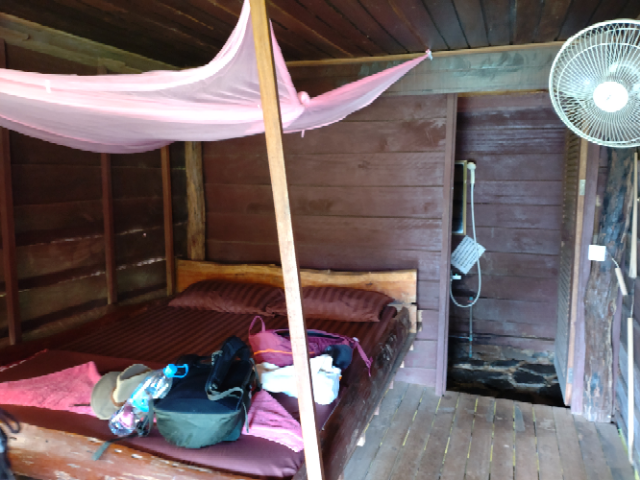
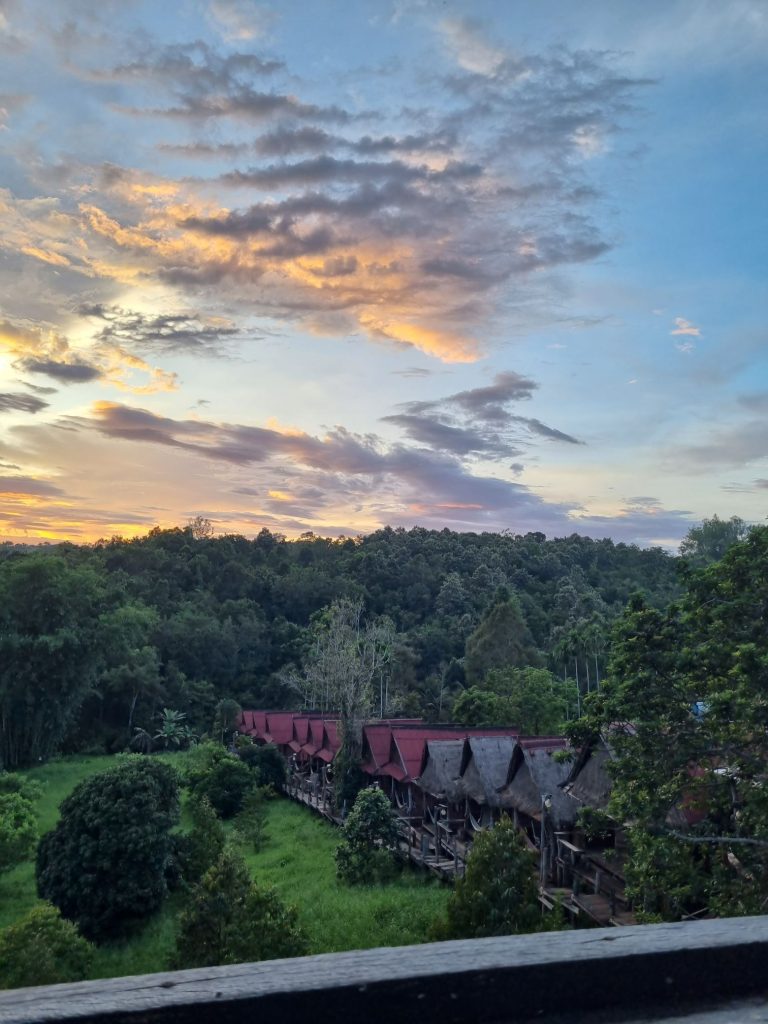
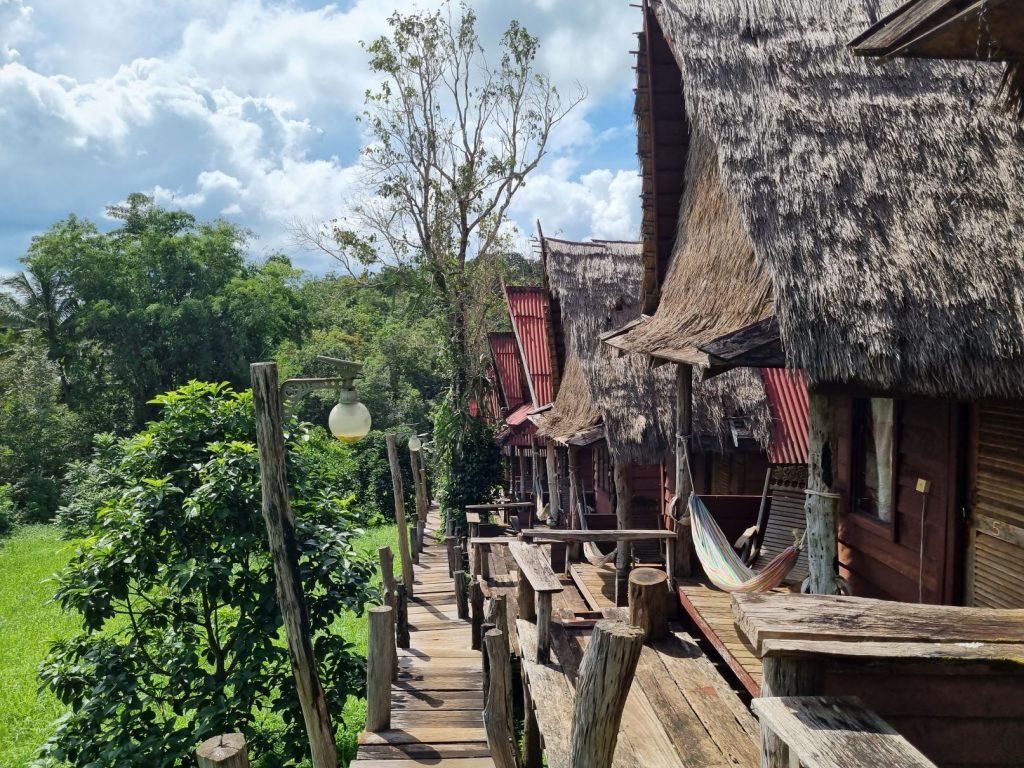
We found our lodgings easily within a shortish walk of being dropped off – Sen Monorom is a pretty small conurbation in comparison to everywhere else we had been and had a quieter and more sleepy attitude – despite the apparent number of guest houses there was definitely no kowtowing to tourists, of whom there seemed very very few. We had booked The Tree Lodge – mainly because this was owned by the same person who had set up the elephant sanctuary so it was easy, and was the pickup point for the tour. We weren’t disappointed by the views and it definitely matched the photos. It was, though, the most basic accommodation we had experienced, so far – wooden huts on stilts and a small wet room which was rather bizarrely floored with large flat rocks laid very randomly so it was like crossing the room on stepping stones to go to the loo (which did flush!). There was nowhere to really put anything and it was easy to drop things between the cracks in the floor boards into the vegetation below, but it had lights, a fan, mosquito net and wifi, along with the most fabulous views, and all you could hear was the insects serenading us.
After a quick sort out we headed out for a walk and stopped at a stall for a “kebab” and a beer. The owner spoke no English so his daughter – probably about 12 – who spoke very good English for her age – translated the price. However, she got her 20 and 30 confused, so once again we tried to overpay, and once again were corrected by the vendor who gave me back 10,000 riel! So far no one has taken advantage of our ineptitude and all have been scrupulously honest – while there is no reason to ever expect anything different, it reinforces your faith in fellow humans when it happens. Whilst eating, a scooter pulled up and the rider introduced himself as Andrea – an Italian who owned the Route 76 guesthouse and restaurant. We had a quick chat – he had spotted us and “knows all 12 westerners in the town, so when I see a stranger I like to say hello, in case I can help with anything”. As a throwaway question we asked what he knew about the journey into Laos – quite a lot, it transpired – so we decided to go to his restaurant for dinner on our final night of our stay to work through his suggestion of getting us us through to the Cambodia/Laos border crossing (not as simple as you might think, and a challenge we had been pondering).
Back at the Tree Lodge, the reception/restaurant area afforded a great view of the sunset and a chance to have a chat with other guests who had been on the trek we were about to do, and also quiz them about other places they had been.

We were up early to be ready for our elephant and trekking trip. There was a group of 11 of us all together, although six people were only doing the first day of the trip, which was a day with the elephants, and five of us staying over to do the following day’s jungle trek.
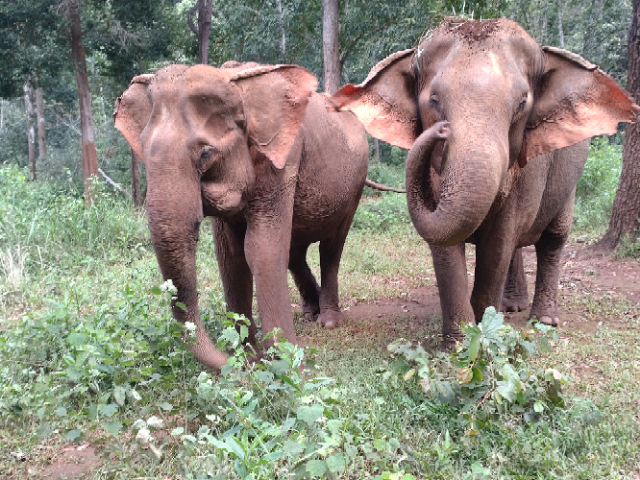
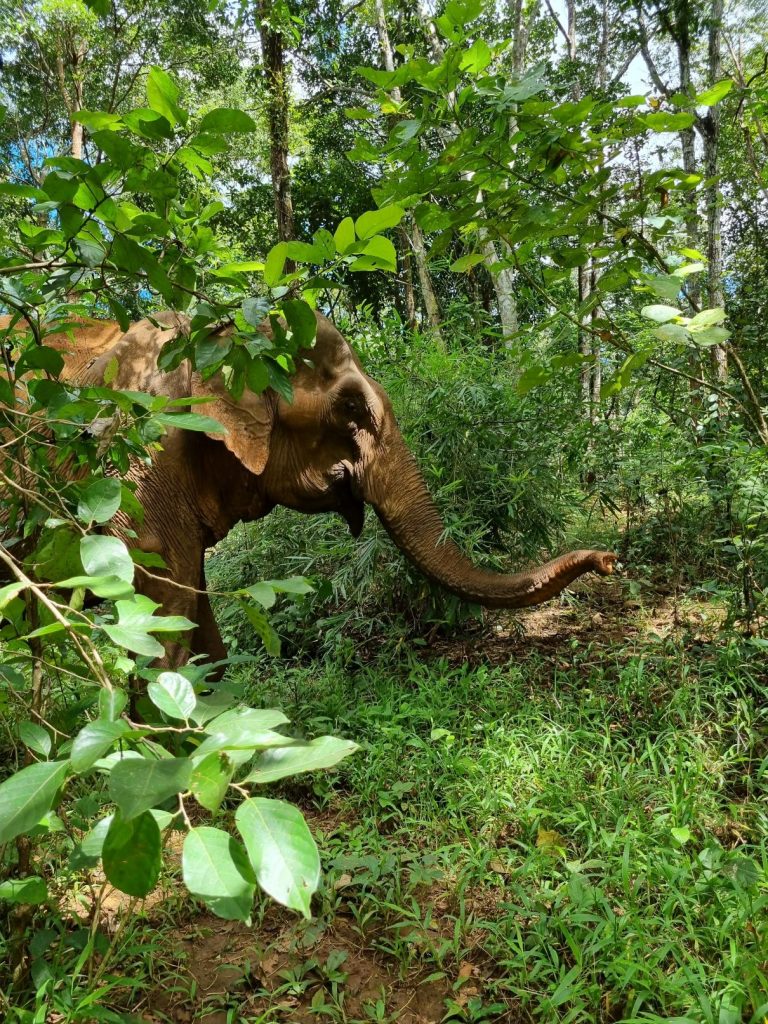
A pick-up truck took us the few kms to the jungle lodge, where we were introduced to our guide Loyin and given a talk about the sanctuary and jungle we were in. The jungle area covers about 1500 hectares and is home to 4 female elephants all rescued from a tough working life after capture, of logging or tourist rides. Two of them had suffered injuries during their working lives and two had just become too old to work effectively and all were badly treated. They have been gradually re-introduced to the jungle and now roam free, no rides, no work, and the ability to forage for themselves and come and go as they please.
The elephants are looked after and the jungle is forested by members of the Bunong Village – a local hill tribe who live sustainably from the forest and their own small holdings, and interestingly don’t think of themselves as Cambodian. They take pride in their way of life and want to preserve the jungle from the wealthy land owners who have over the last 20 years started to buy, flatten and replant the jungle with cash crops that are then exported to Vietnam, China, Thailand etc, taking away lands they have farmed and stewarded for generations.
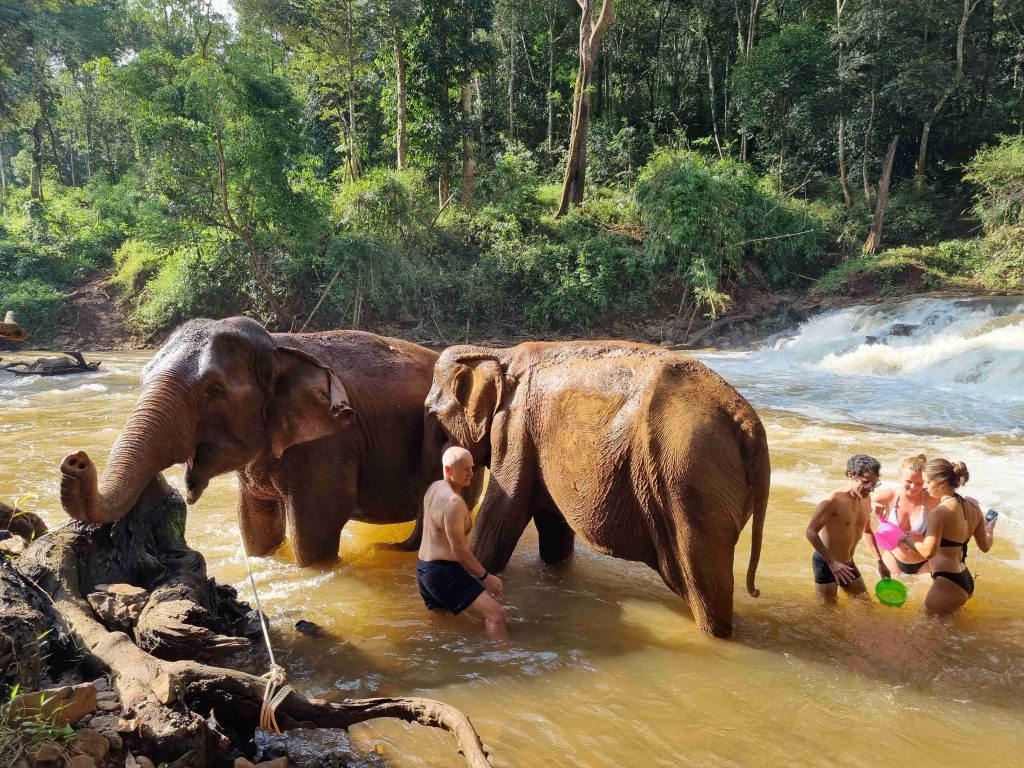
After the quick education, we were taken into the jungle to meet, in order, Sophie, Happy, Princess – the “old lady” of the group at 85+, and Combvine – the youngster of about 40. As we have said before, the photos convey they story better than we can.


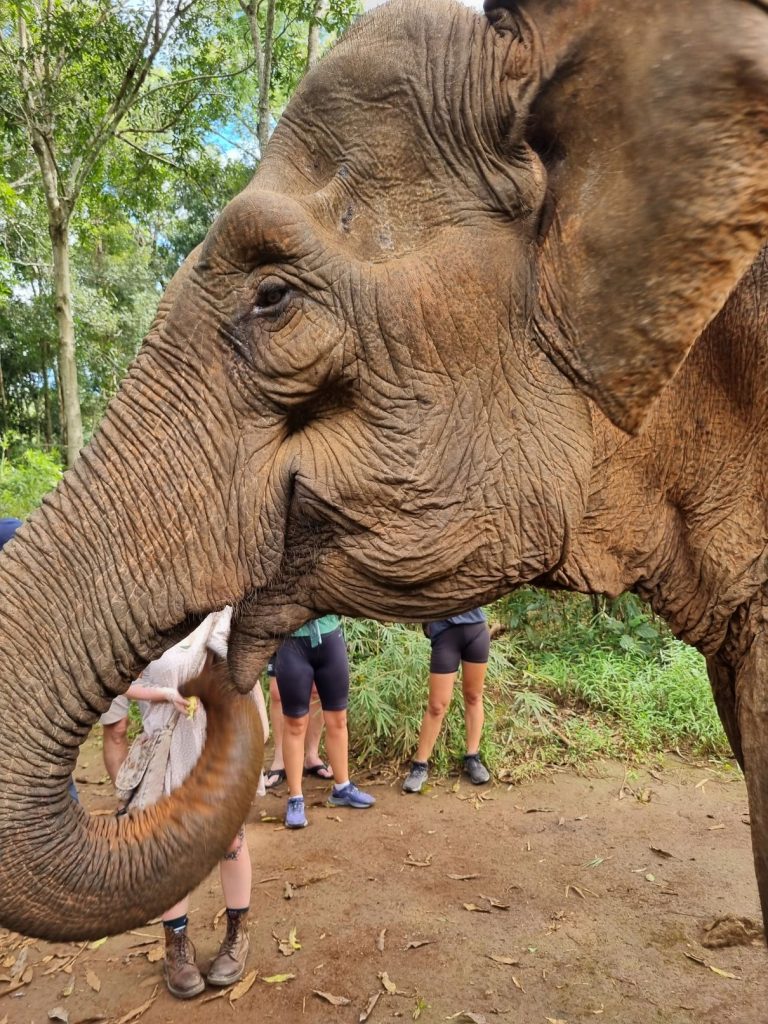
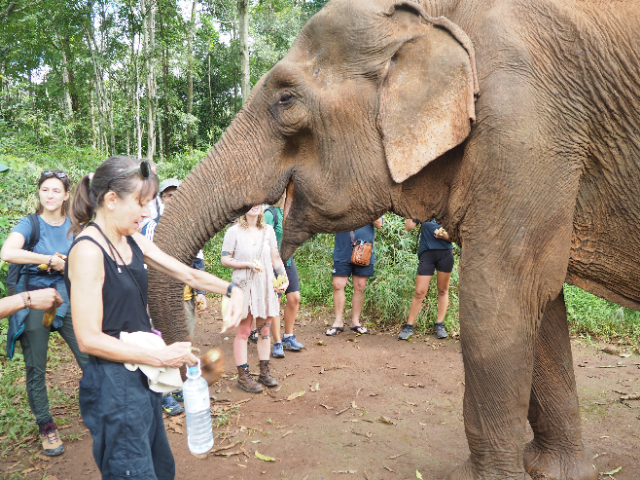
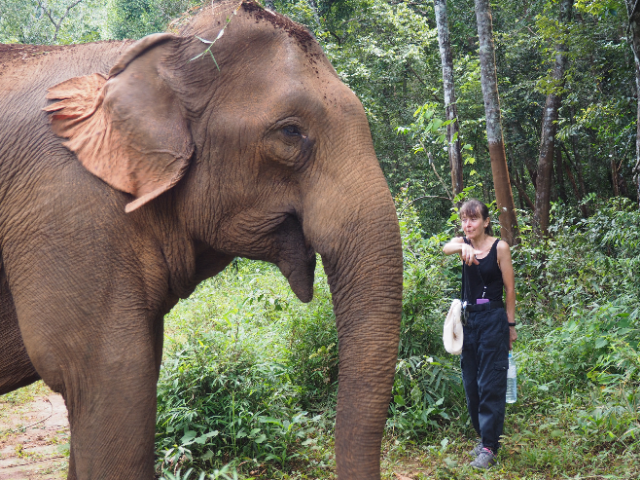
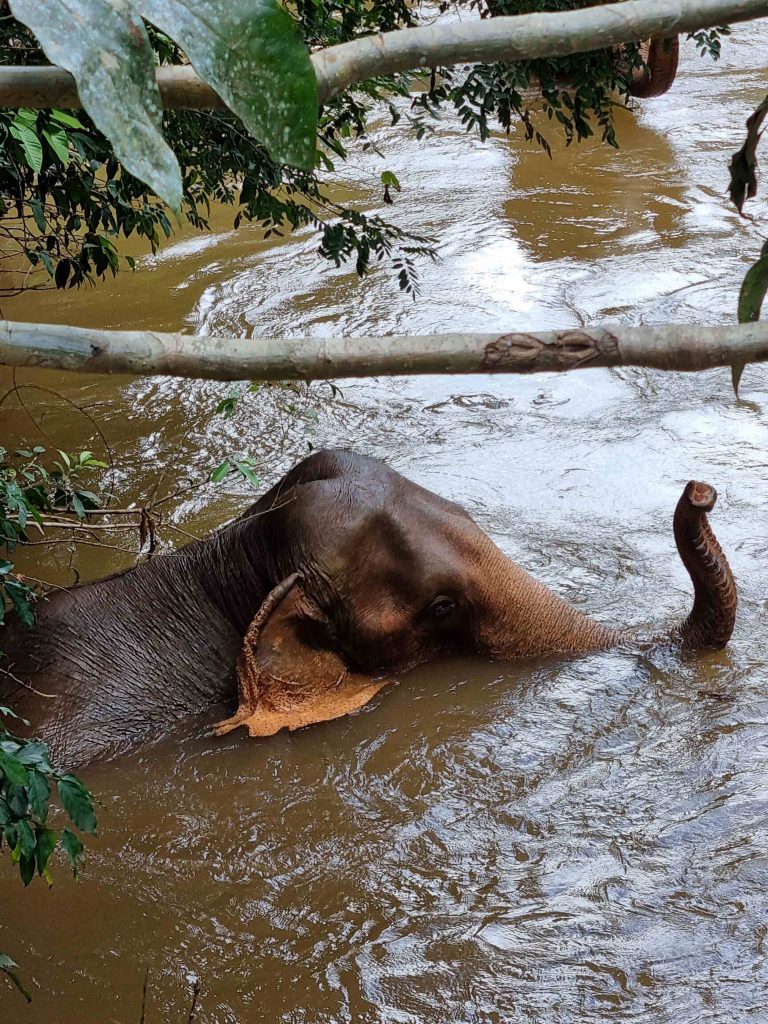
After lunch we again headed back into the jungle to see the elephants having a swim to cool off and we also had the opportunity to have a paddle.
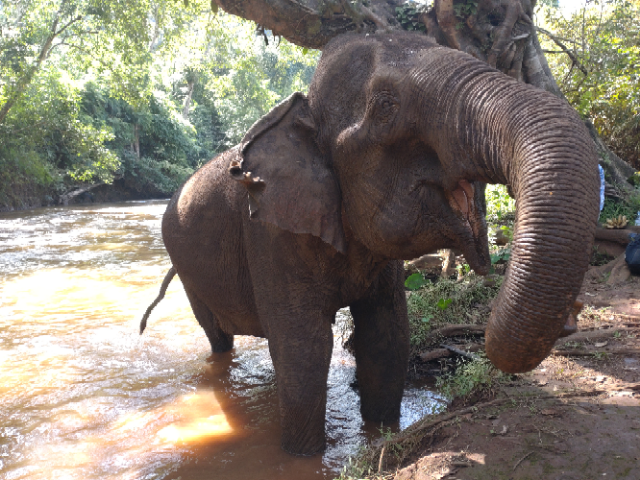

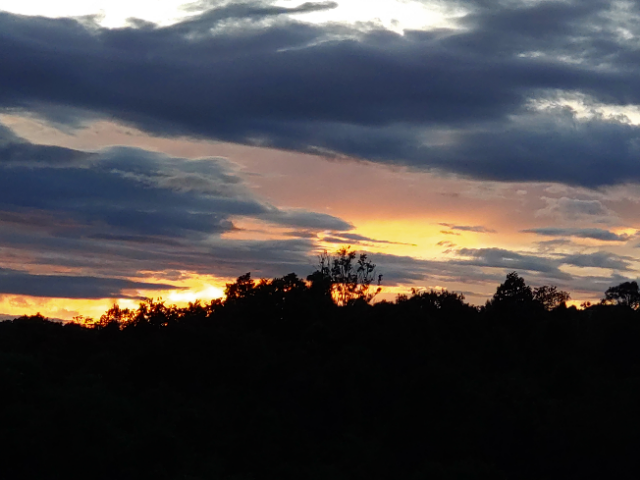
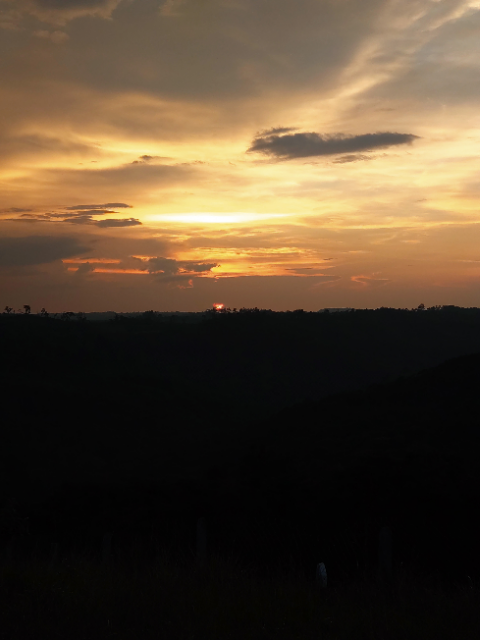
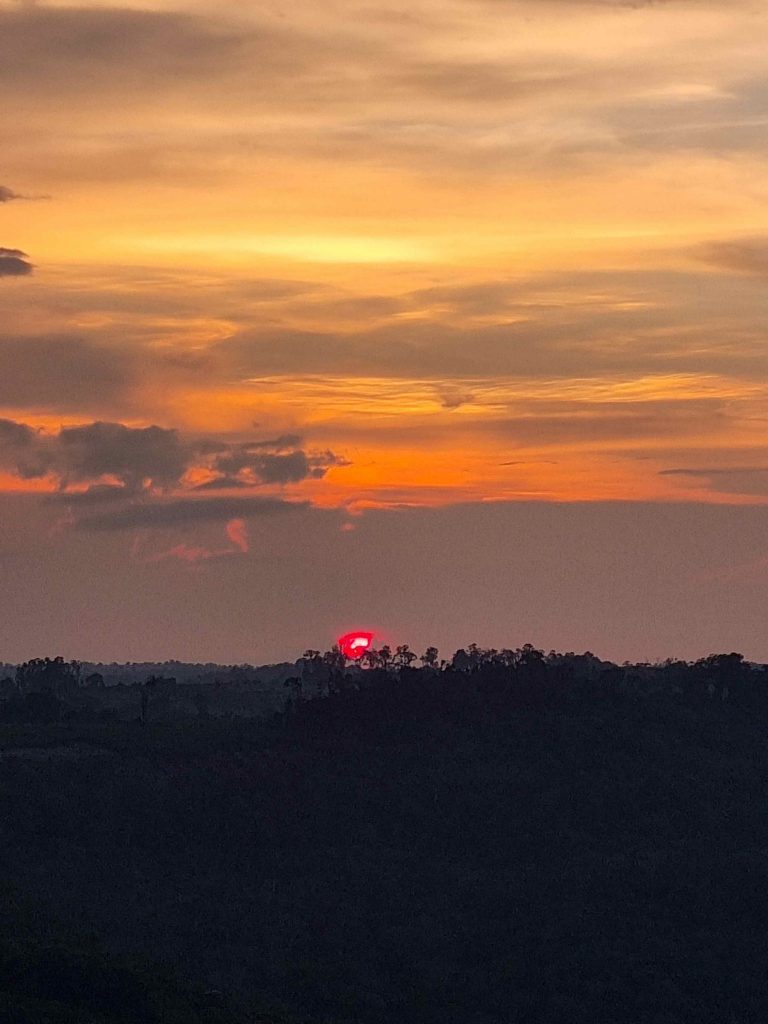
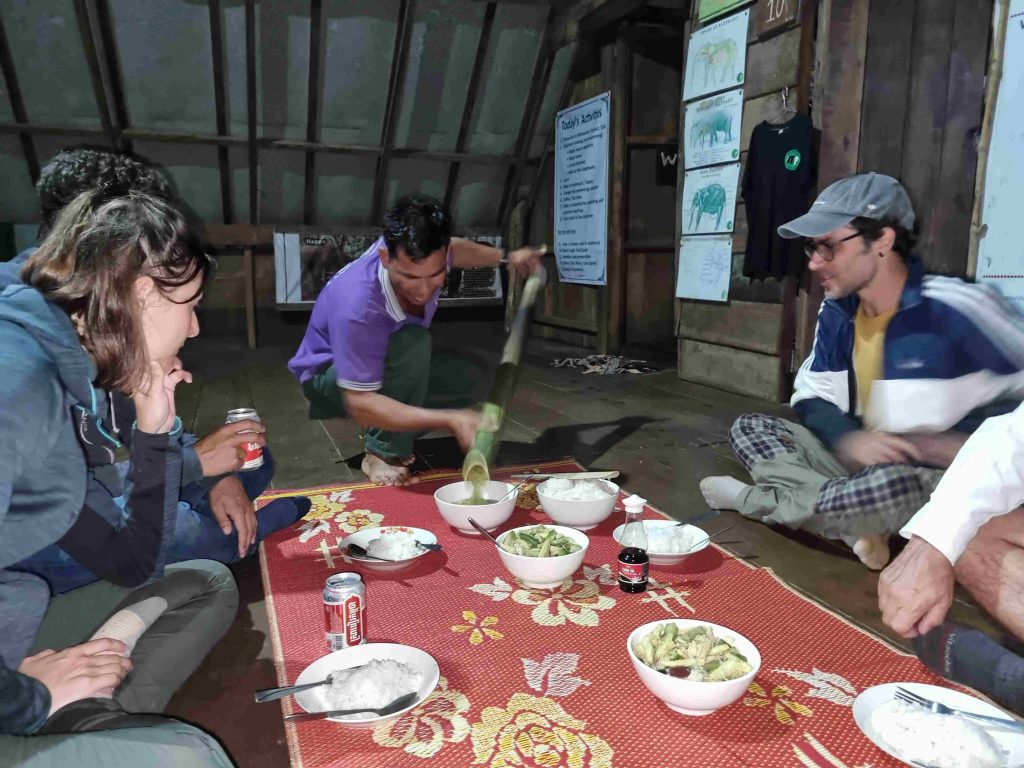
After a day with the elephants, our group divided and the remaining five of us met our guide for the following day, Lone, who cooked our evening meal, showing us how to make bamboo soup. Whilst this cooked, we all headed up the mountain for a spectacular sunset alongside the most incredible display of a lightening storm, accompanied by swifts and bats scooping up the dusk insects.

The evening meal was absolutely delicious and very welcome. Lone also introduced us to a drinking game in which whoever lost had to have a shot of ‘happy water’ (rice wine). Somehow, Dave and I just seemed to lose quite a lot, however, the drinking wasn’t obligatory – just as well as a headache the following day would not have made a happy day!!

Bed time seemed early – 8pm – but we all fell asleep quickly despite the doubts about sleeping in the open (albeit with a corrugated roof over us) in hammocks with mosquito nets. We needed our sleep as we had been warned that the next day was going to be tough.
Day two saw everyone up bright and early (cicadas make a great alarm clock). A breakfast of banana and pancakes with coffee set us up for the day and we headed off into the jungle, carrying all our belongings plus three litres of water each – we had been warned it would be hot.
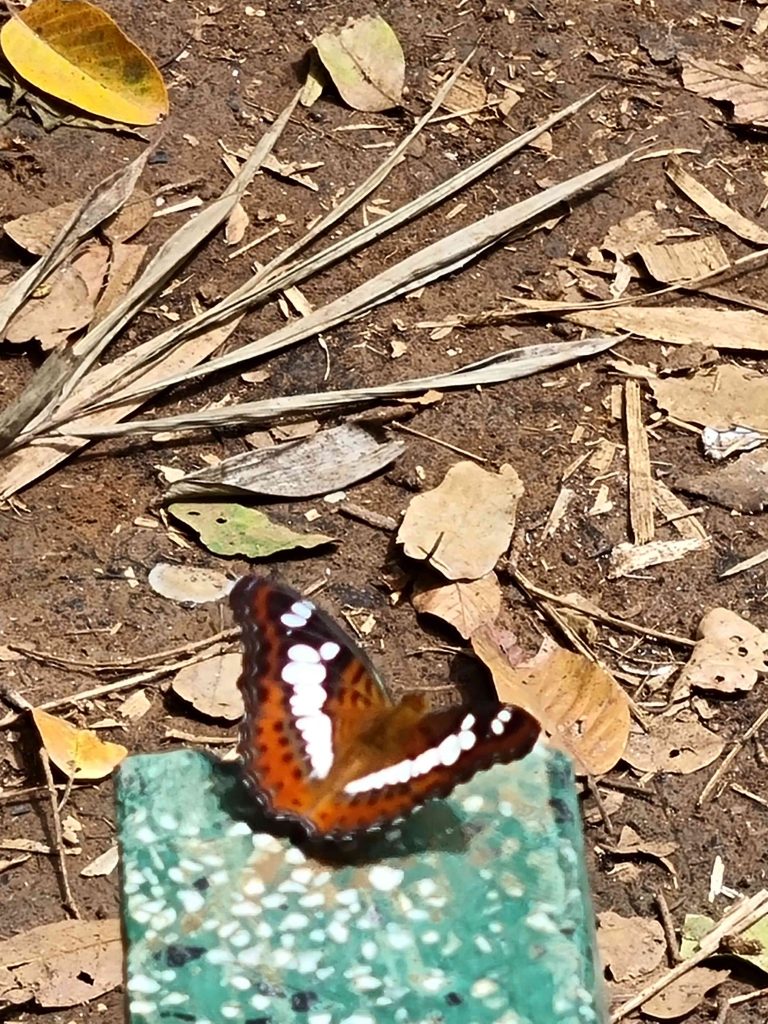
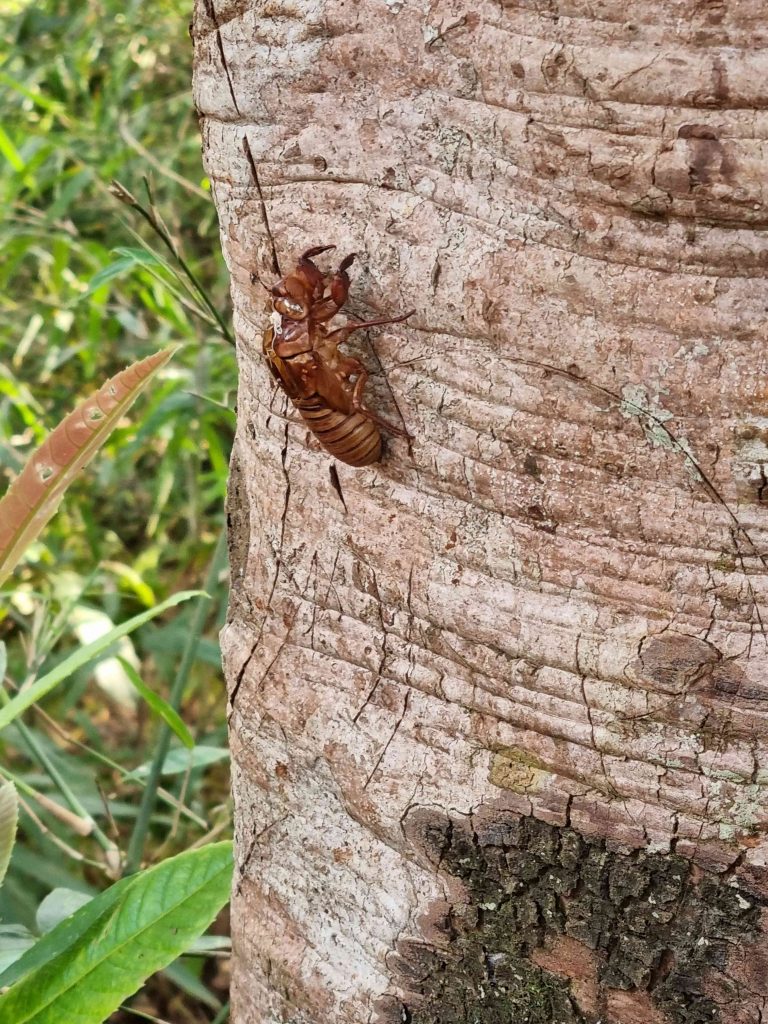
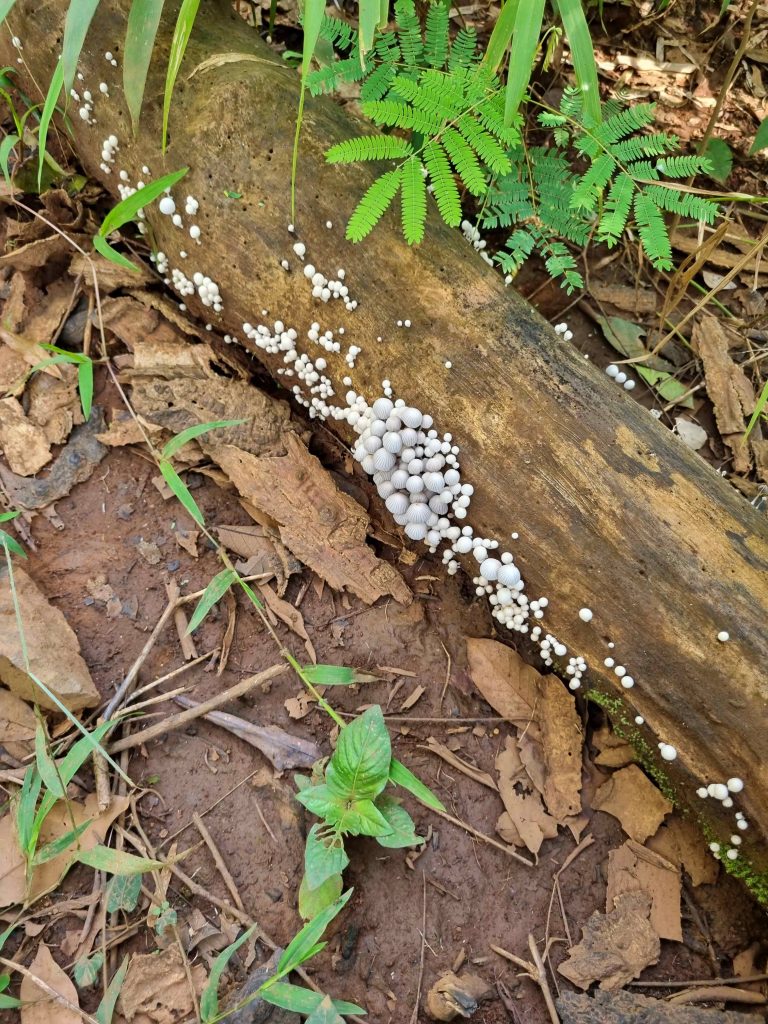
It was, indeed, hot, humid, lush, insect ridden and challenging walking, but it was beautiful and stunning and we were rewarded with awesome waterfalls, a swim, an introduction to some of the flora and fauna of the jungle as well as an insight into the lives of the villagers. It was a day we will never forget.
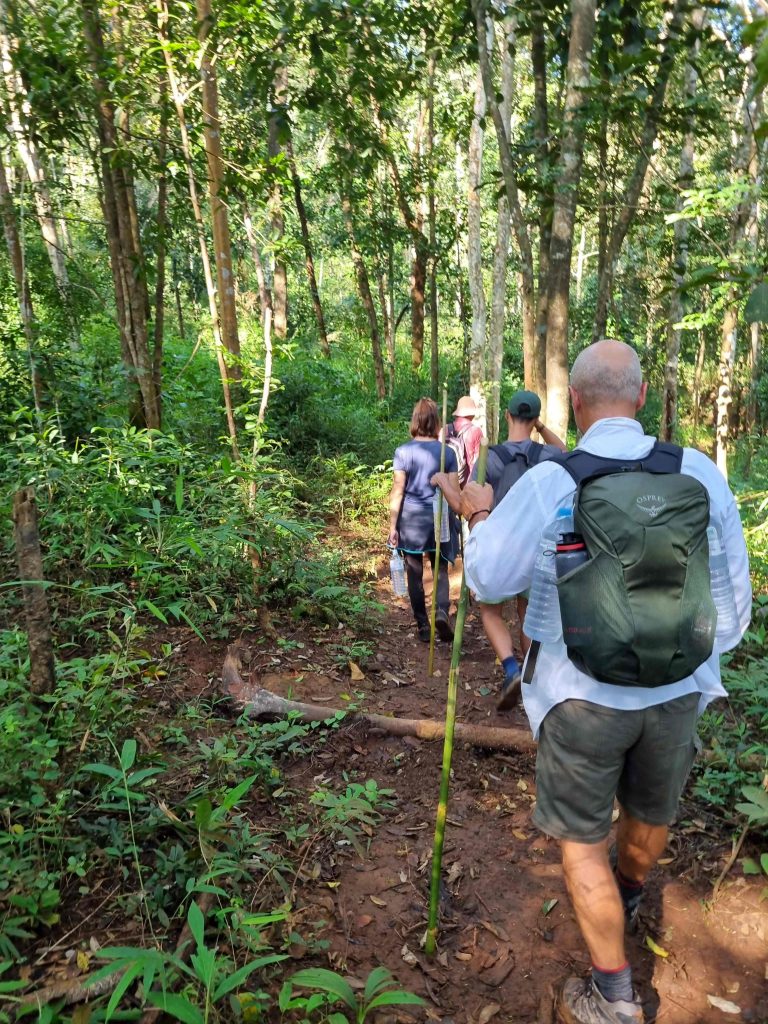
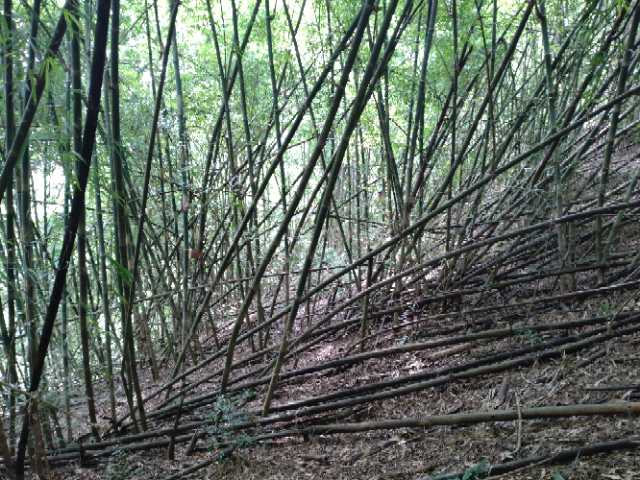
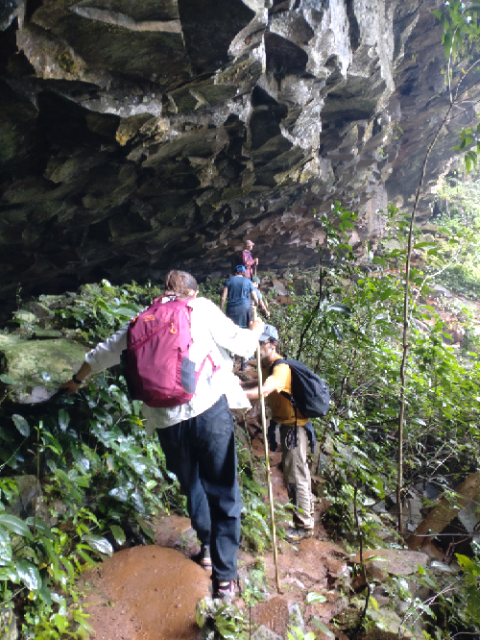
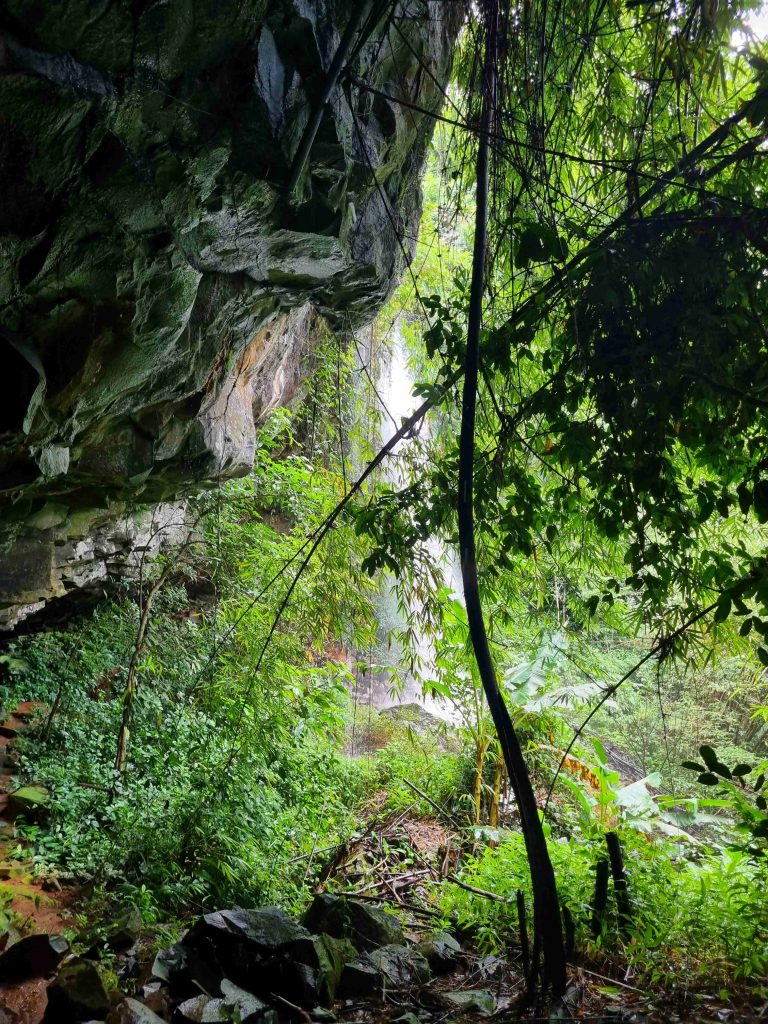


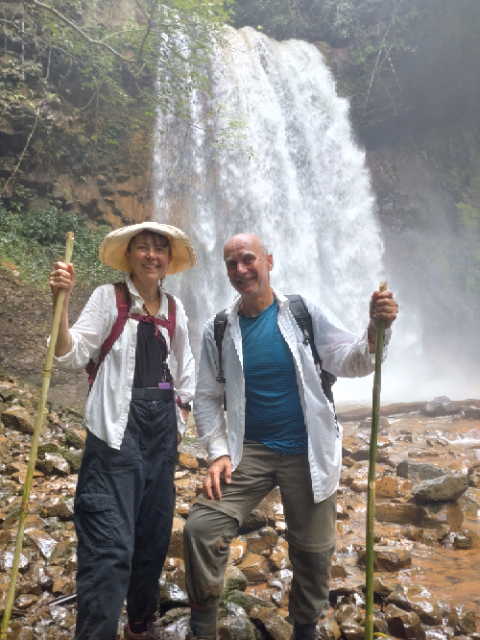
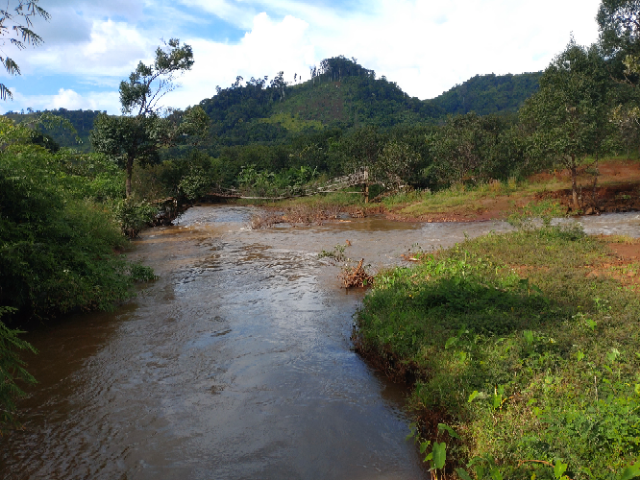
Journey’s end – Bunong Village – and a very much longed for beer before the pick-up took us back to our lodgings.

And so this is the end of our time in Cambodia. We did indeed head to Route 76 for dinner and Andrea confirmed he had organised our route from Sen Monorom through to the border crossing, a journey of about 5+ hours and three different vehicles, all from local operators. Tomorrow we head for Laos!