One of the problems with picking destinations on the fly, in a country where the culture is different and the language is not your first, is that occasionally (only very occasionally), things aren’t quite what you expect, or hoped for……..
ANTOFAGASTA
On leaving San Pedro de Atacama, we had no firm plan other than to explore a bit more of northern Chile, so should we travel to Antofagasta, the regional capital of the Atacama Desert region, or head further north up to Iquique, a previously prosperous saltpeter mining town and now a (probably equally prosperous) tourist destination which is a tax-free port area? Either way, our first destination was Calama, a mining town in the middle of the Atacama Desert. It probably has it’s charms somewhere, but we had been advised that it wasn’t really worth a visit. However, it is a bus hub for many destinations so every bus seems to terminate there. After a smooth couple of hours, we arrived at the terminal for our bus company and asked about onward journeys to either Antofagasta or Iquique. “No, not with us” was the reply and we were directed to a different bus company a few blocks away. The walk helped to cement our decision not to stay in Calama.
On arriving at said bus company depot we asked about our destinations and were told the bus to Antofagasta was leaving in 10 minutes, the one to Iquique was about an hour later. Perfect – fate was making the decision for us. We bought tickets, a sandwich and a drink and jumped on. Nice bus too. This was meant to be.
Approximately 3 hours later, we arrived in Antofagasta. During the trip we had been able to book a nice looking apartment with a sea view, having decided it would be lovely to see the Pacific Ocean and maybe stay a couple of days or so. It also had the benefit of being close to the bus station. Almost dark as we arrived, but we were able to find the apartment block without too much problem and managed to navigate through security (most apartment blocks in South America seem to have 24 hour security) and up to the apartment.
After some difficult translation exchanges with the host, we were finally able to gain access to the apartment itself. We dumped our gear and quickly headed out to buy some provisions from a supermarket that was in the small shopping arcade at the foot of the apartment block. Only, we couldn’t….. the supermarket was shut, as was the local restaurant, cafe, and everything. Even the Papa John’s Pizza was shut. The only open venue was a 24 hour veterinary practice.
Why? Fiesta Patras!!!! A two day national festival on the 18th and 19th September to celebrate ‘the proclamation of the First Governing Body of 1810 and marking the beginning of the Chilean Independence process’ (thank you Wikipedia), which is now a national holiday. Chileans seem VERY patriotic, and also seem to like to party, so this being the culmination of the two days everything was shut. The impact in San Pedro had been less noticable (although partying was clearly going on) because it is so focussed on tourism – Antofagasta is not! Fortunately, as long distance buses seem to operate at all times, irrespective, with inspired thought we dashed back to the terminal and yes, a food counter (just one) was open. So at least dinner was sorted, if only empanada and pizza – it was actually not that bad.
The apartment was not quite what we as advertised – much more jaded than the pictures and somewhat scant provision of things you expect in a rented appartment – left us somewhat disappointed. The perils of bookings on-line. However, we made the best of it, and at least it had a very comfortable bed and plentiful hot water for a decent shower.
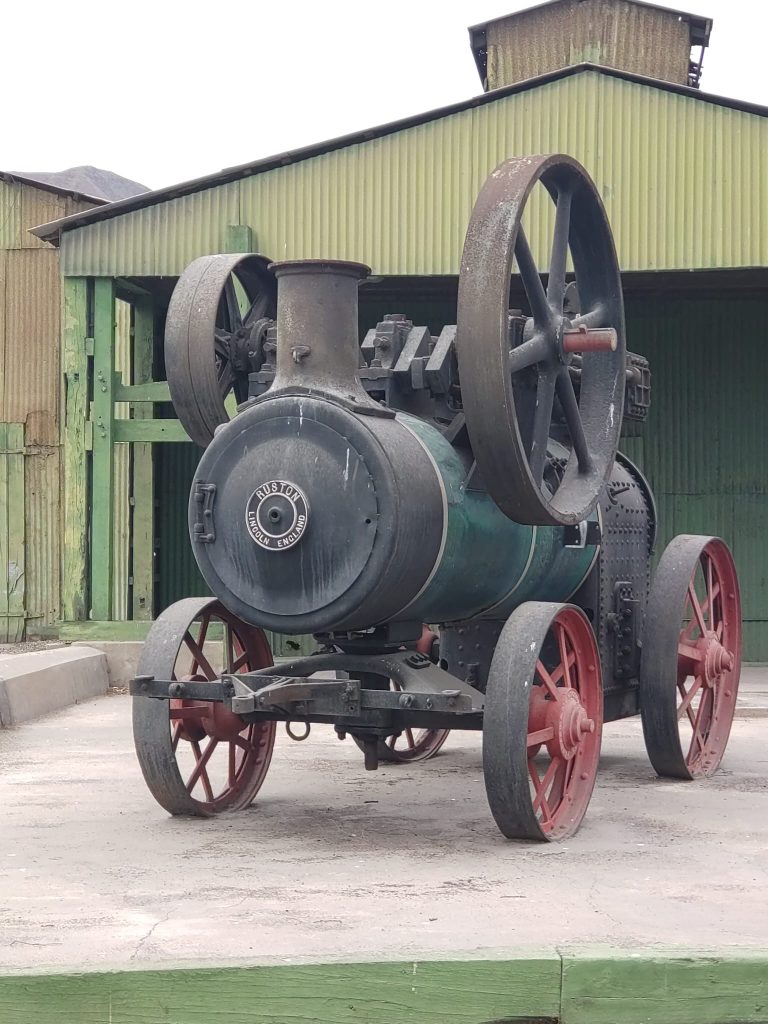
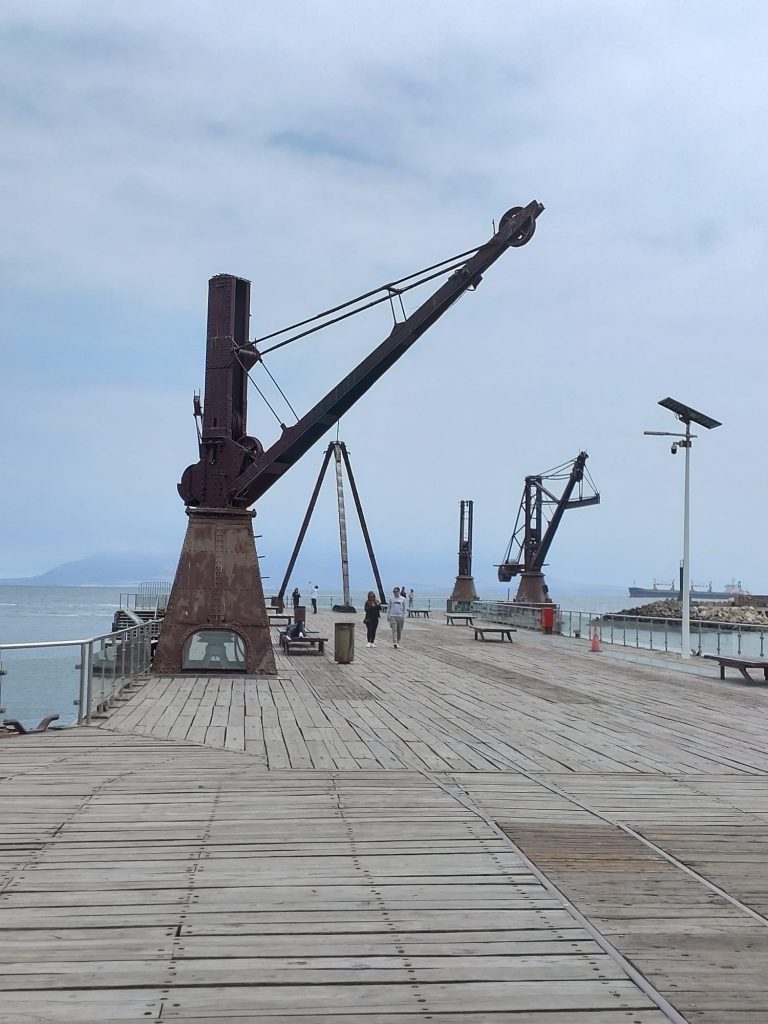
We decided to spend the next full day exploring Antofagasta. Sadly, somewhat like our apartment, it left something to be desired. Although it is a coastal city, and it was lovely to finally see the sea – huge waves rolling in and crashing onto rocks and the beach – the actual waterfront was somewhat run down, and bizarrely industrial along much of it.
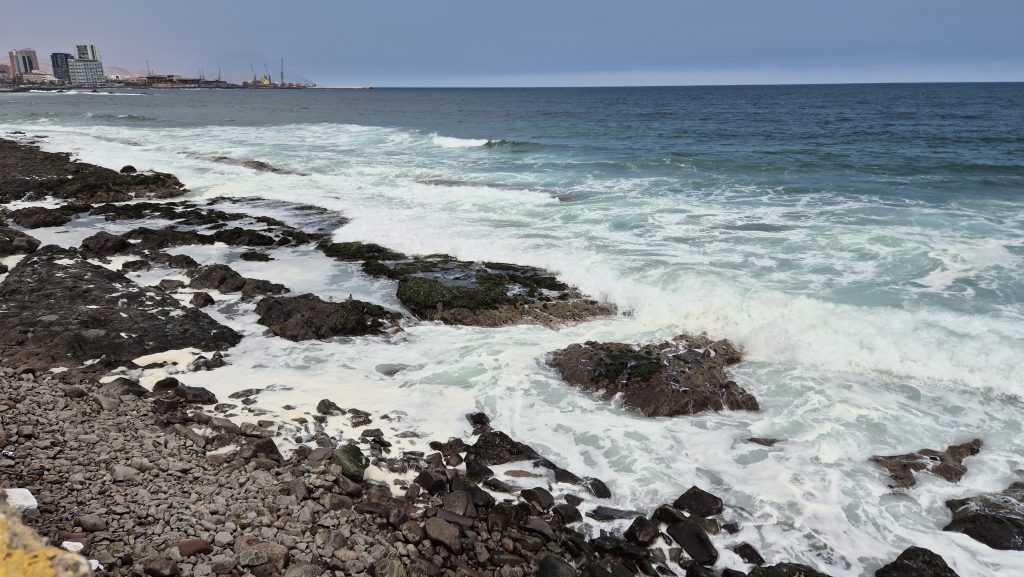
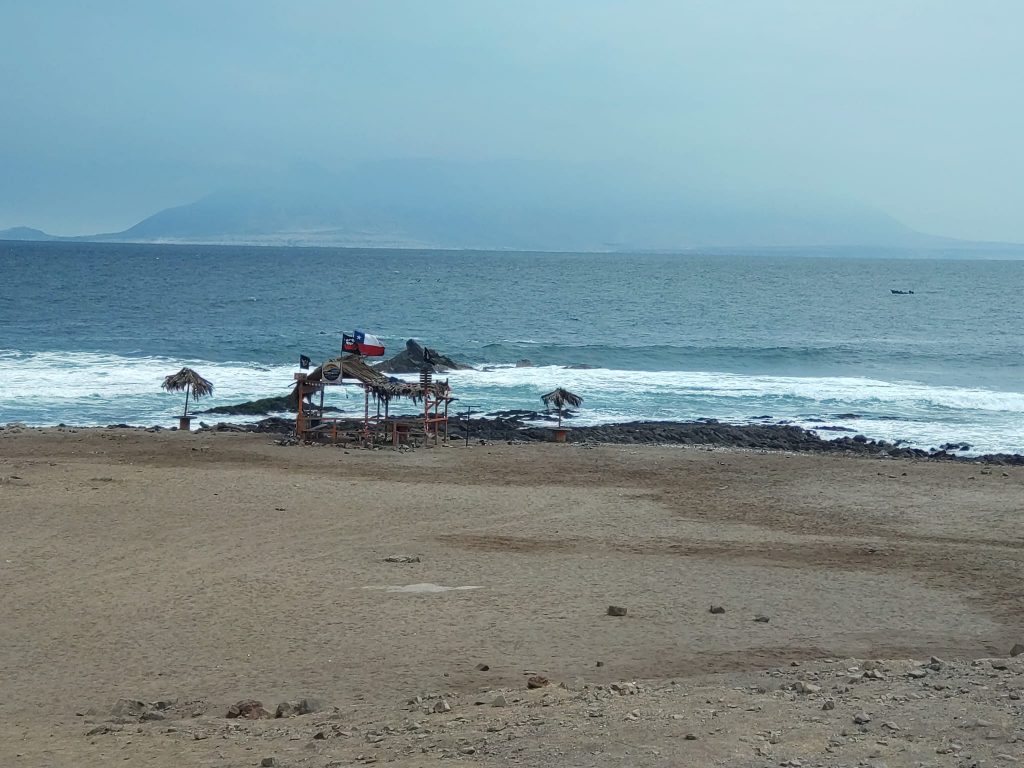
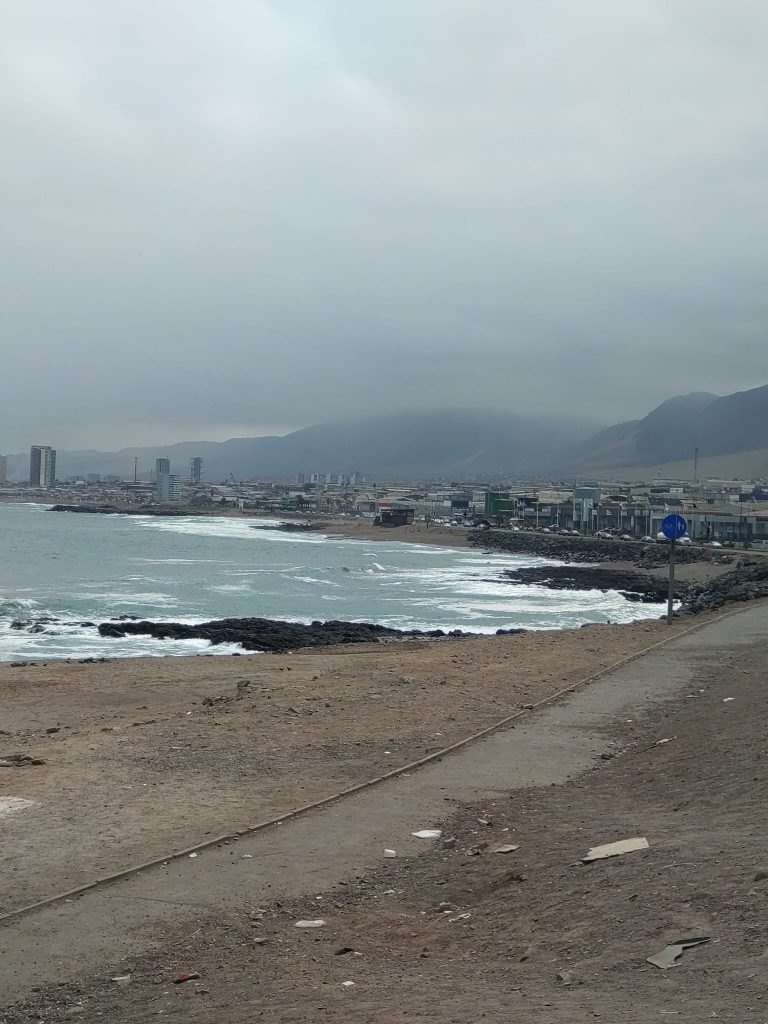
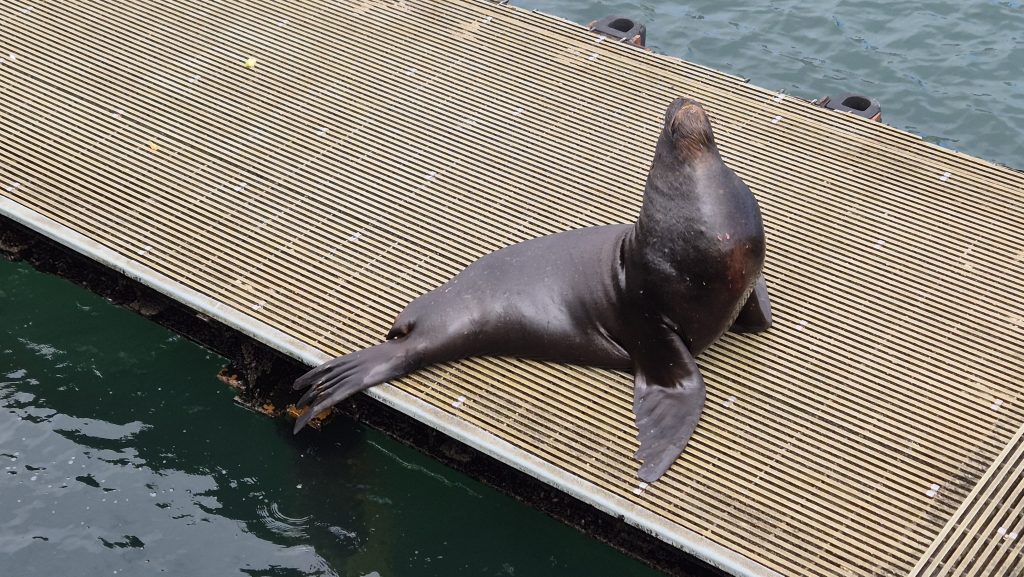
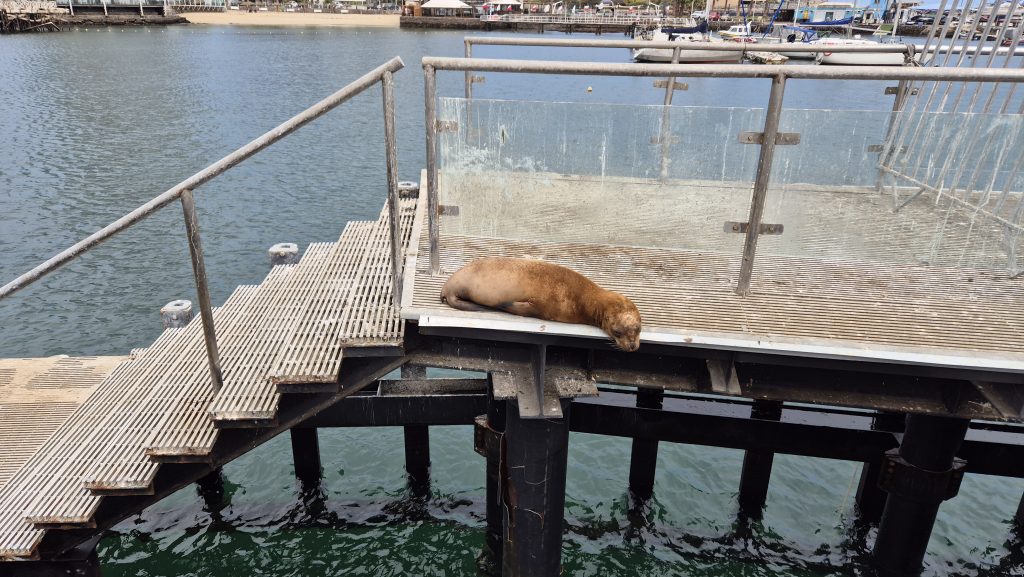
The streets further in were also lacking a little, but we came across a few nice historical houses and areas, reflecting a quite strong British influence from the past, particularly in mining railway development and also, completely unexpected, a sea lion protecting her pup which was resting on a set of steps on an old railway pier we had wandered onto.
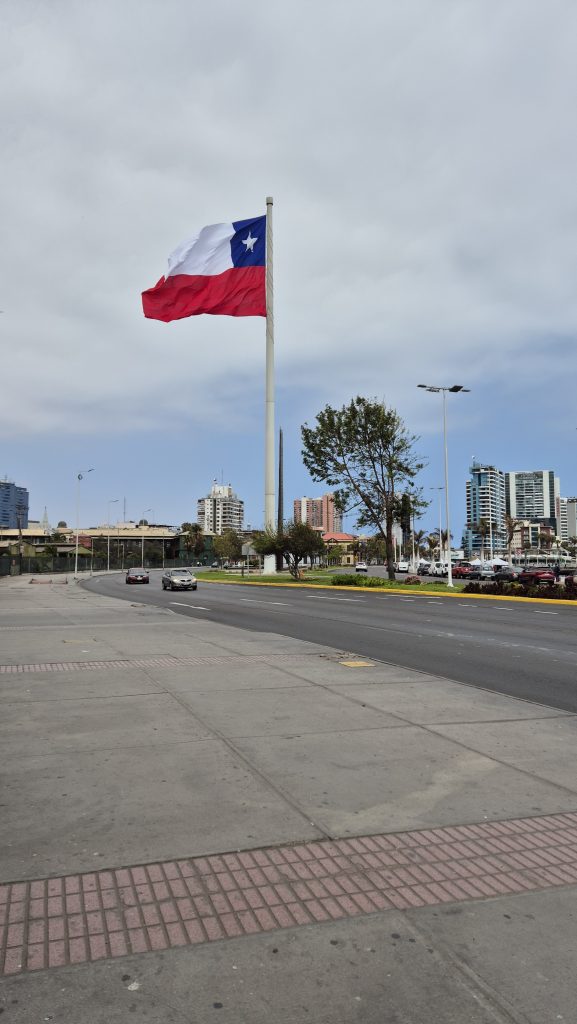
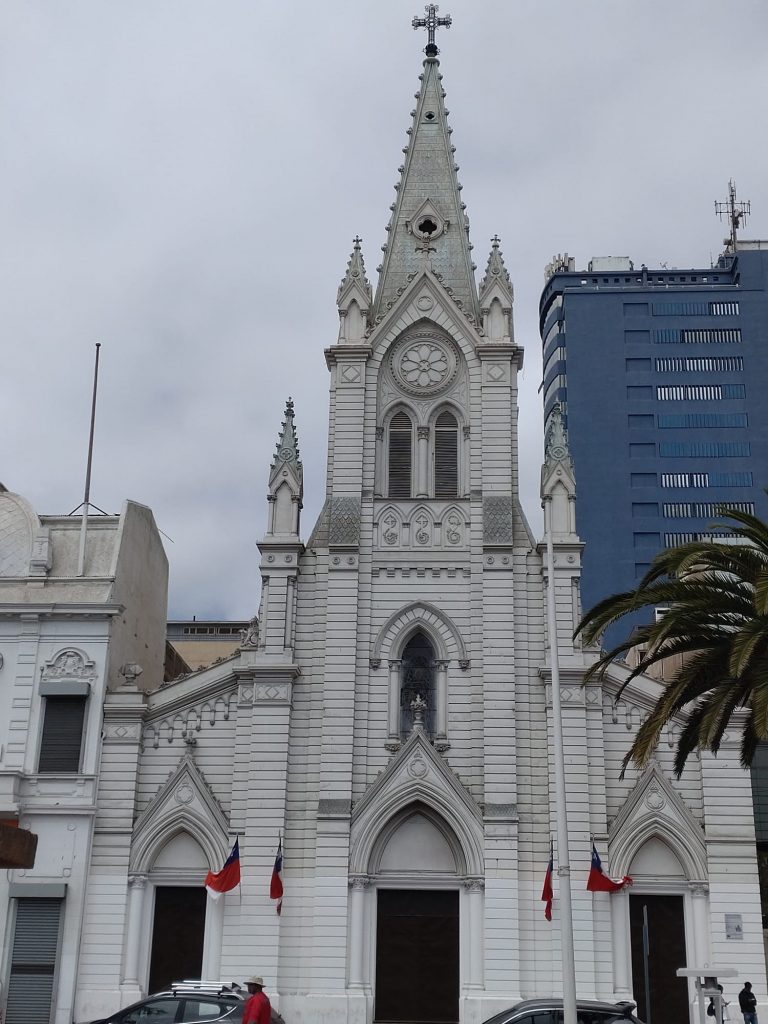
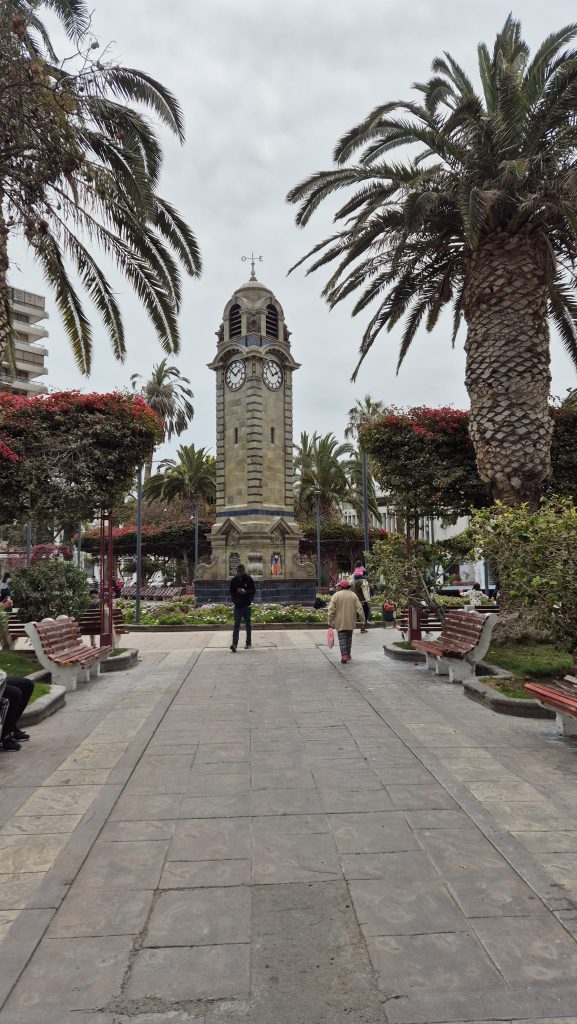
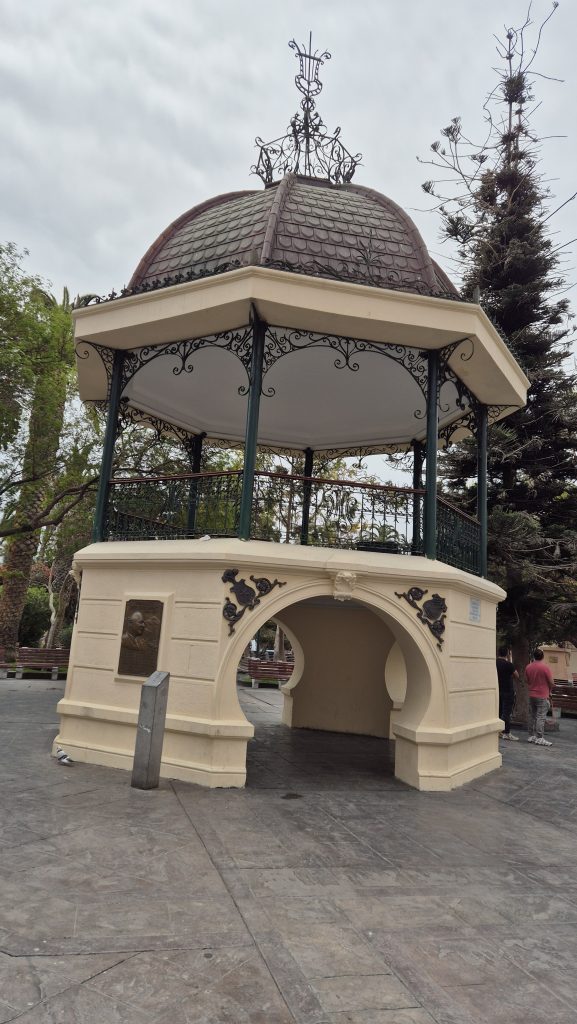
Having explored some of Antofagasta, we decided that one full day had revaled enough of its charms and we should explore further up the coast, so we hired a car and headed up Ruta 1 – the coast road.
IQUIQUE
The road to Iquique along the coast makes you feel a little insignificant. Huge mountains sweep down to the sea which pounds the rocks and beaches, with our strip of road winding it’s way between.
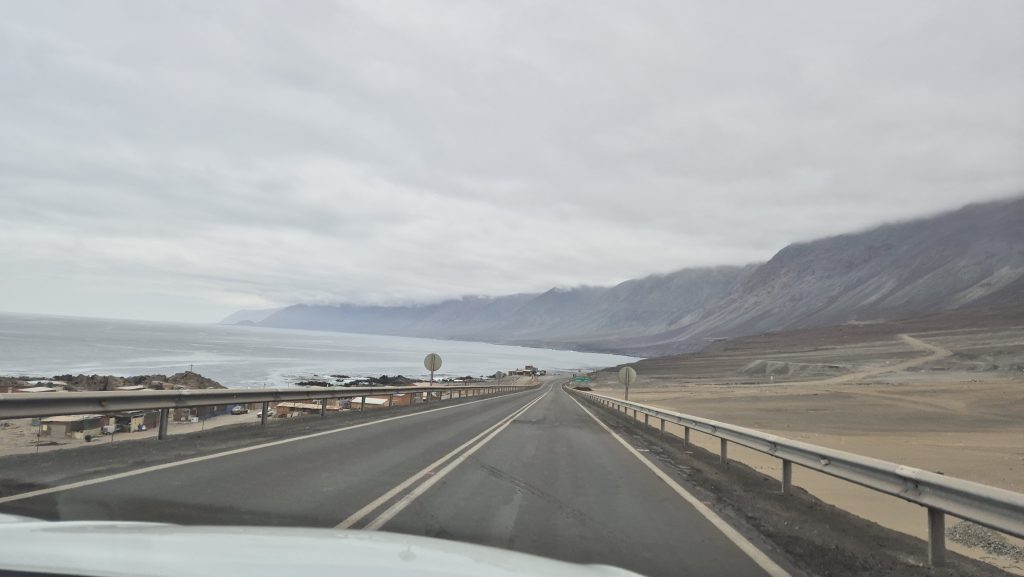
Strangely, en-route, we came across a customs control stop. There was no information to speak of but everyone had stopped and were dutifully queueing with document in hand so we took as much documentation as we could and joined the queue. It turns out that Iquique and it’s region is a free-port so duty-free. We were quickly passed through as that doesn’t affect us, but had we not stopped we were sure we would have been stopped quickly enough.
We had decided Iquique was to be for a little bit of a kickback and local exploring so chose a hotel with a view of the seafront rather than apartment. We were glad we did.
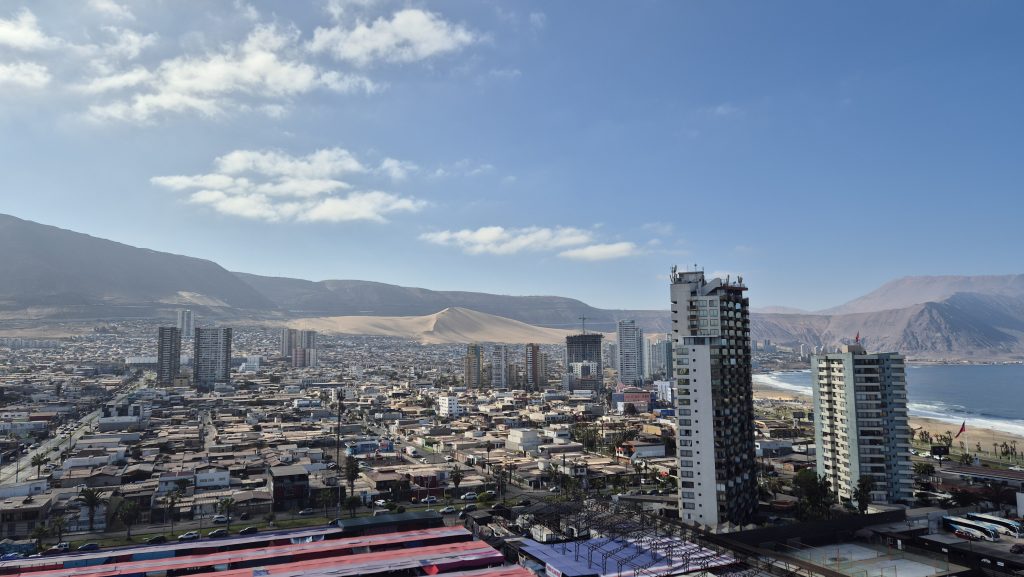
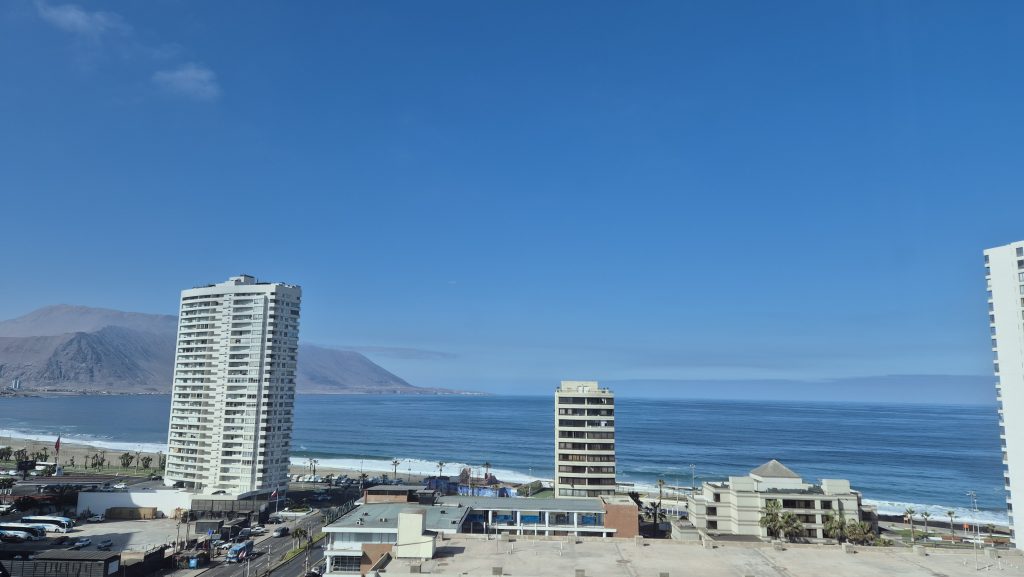
Iquique seems a relatively comfortably financed town. Not wealthy, but a smart seafront, tidy houses and an obvious sense of pride from it’s inhabitants who were constantly hosing over their cars, grass and frontages. Mind you, it is also a sand-dusty place, possibly due to the Cerro Dragon (Dragon Hill) which is the ‘largest relict urban dune on the planet’ (according to Wiki), relict meaning ‘a thing which has survived from an earlier period’. Apparently the dune originated about 20,000 years ago. It lies along the mountainside edge of the town and literally towers over it.
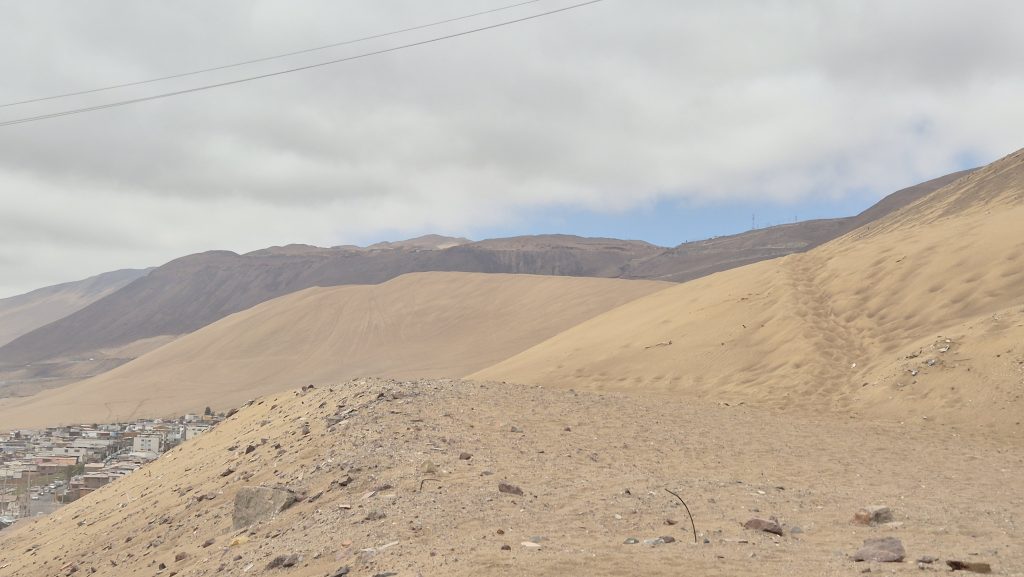
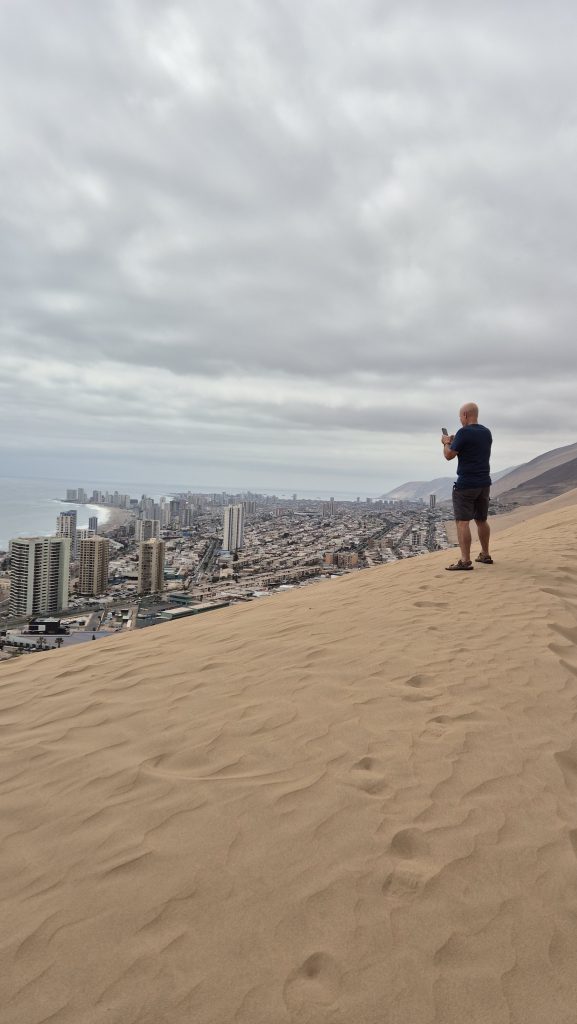
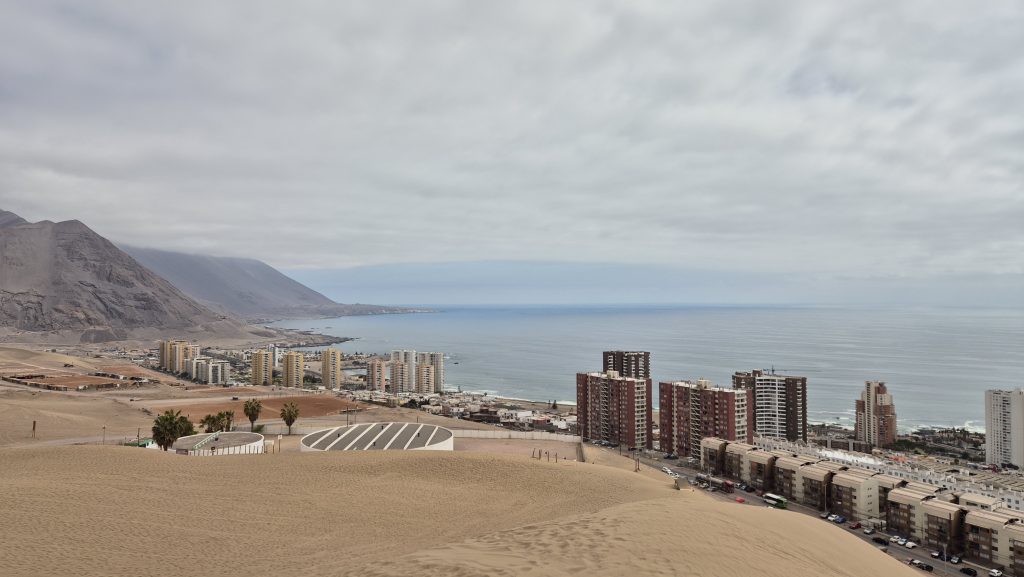
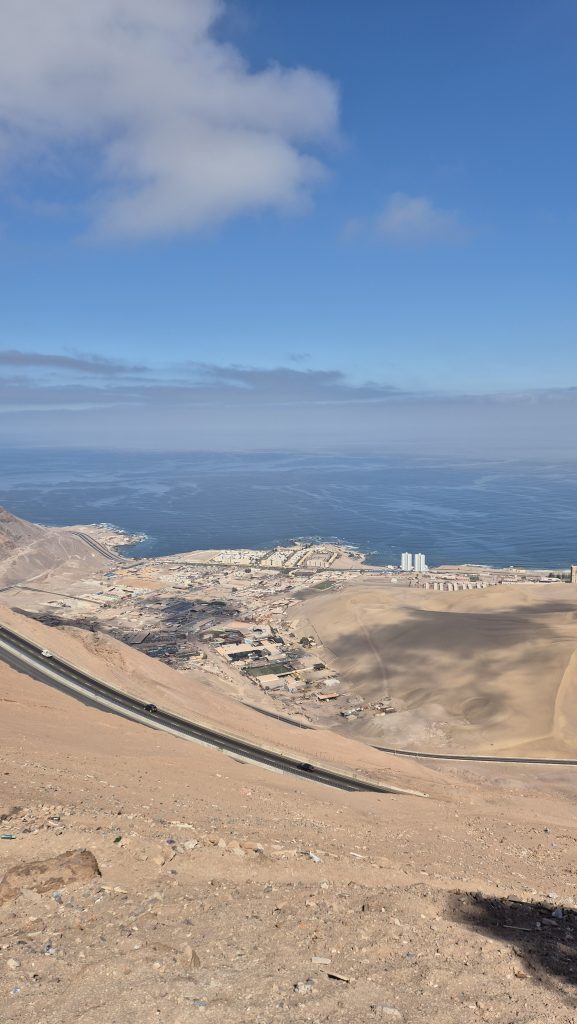
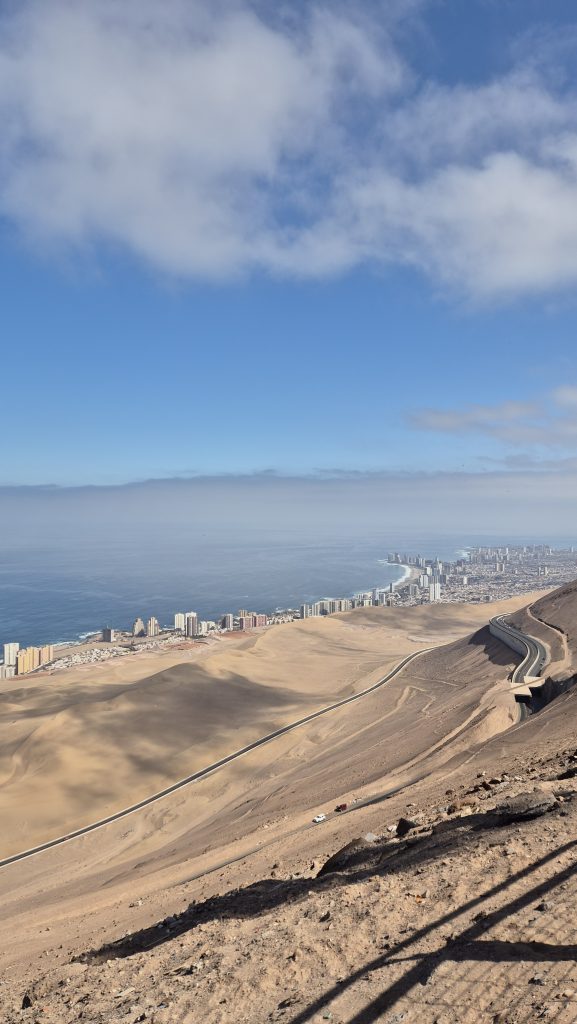
After a day exploring the town on foot, the next day we used the car to go further afield and visit a couple of landmark sites. A quick stop at a viewpoint on the way allowed us to see over the top of Iquique and once again appreciate the size of Cerro Dragon and the road that took us up into the desert.
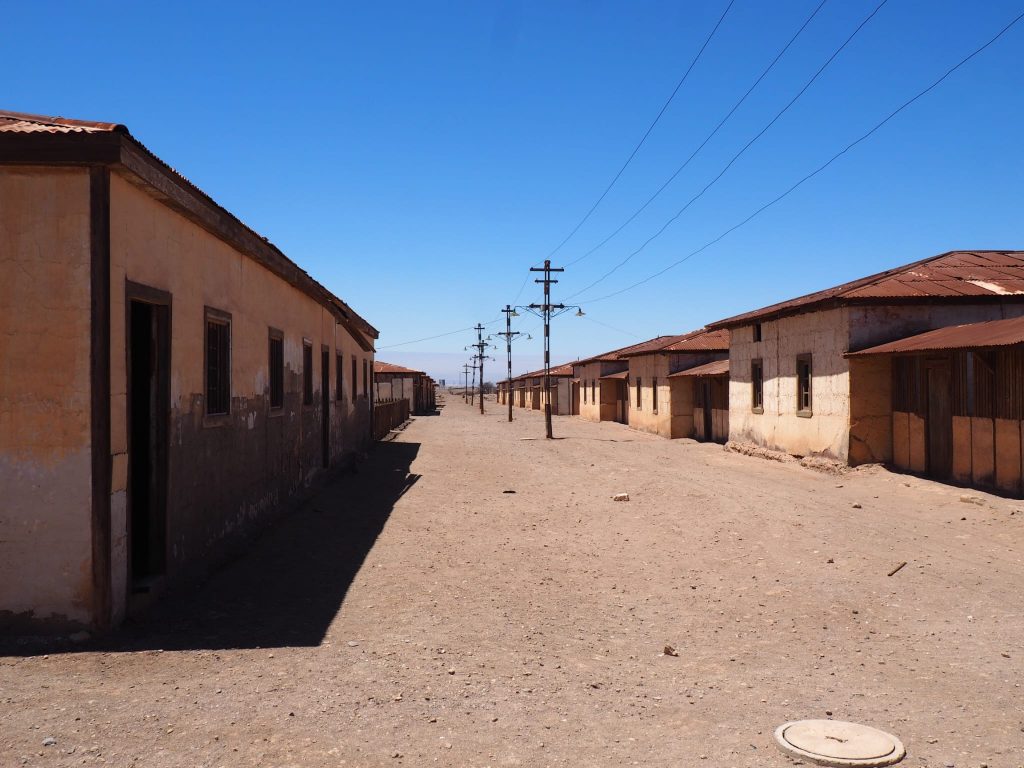
The next stop was Humberstone, a saltpeter mining town, founded in 1872 as ‘La Palma’ and then renamed Humberstone after the CEO James Humberstone, an English chemical engineer. It was abandoned about 50 years ago and is now a ghost town. It was both humbling and fascinating to be able to wander around what had once, until fairly recently, been an active and bustling town with a community of over 3000 people. It had been left pretty much as was. The site is run by a private museum who had done a great job of allowing it to look empty and abandoned but with areas set up to allow you to get a flavour of how life had been. It must have been very hard – a harsh, desolate landscape and back breaking work, but at the same time, a thriving and bustling community with (more latterly) a theatre, cinema, market place, town plaza, sport and music.
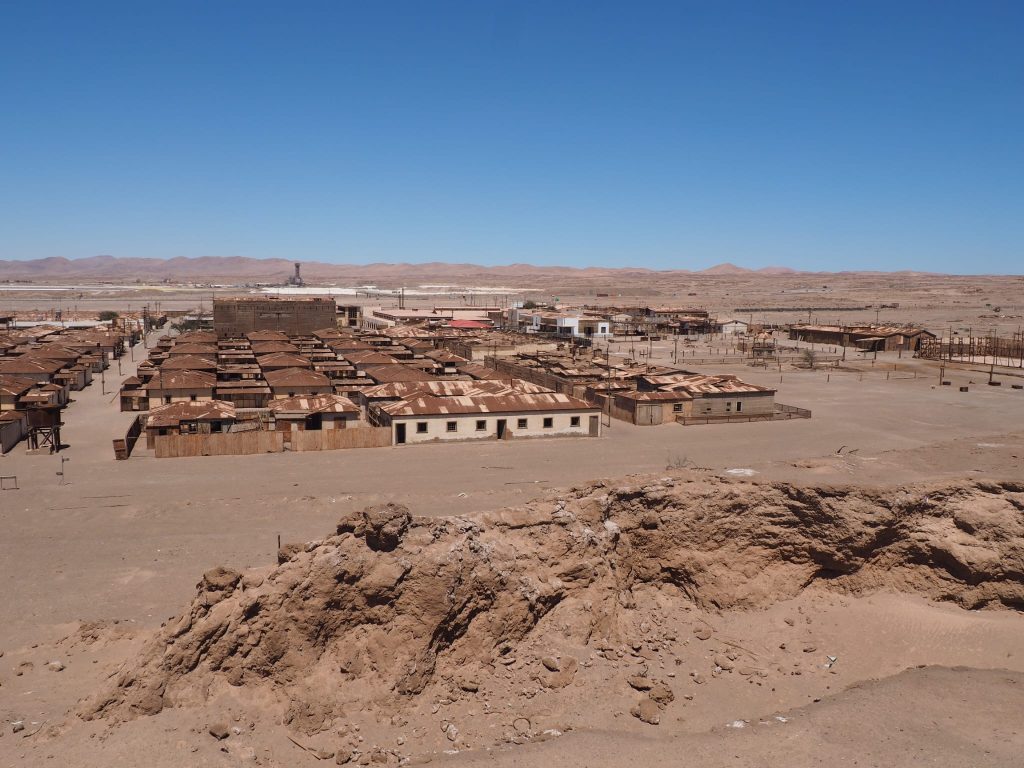
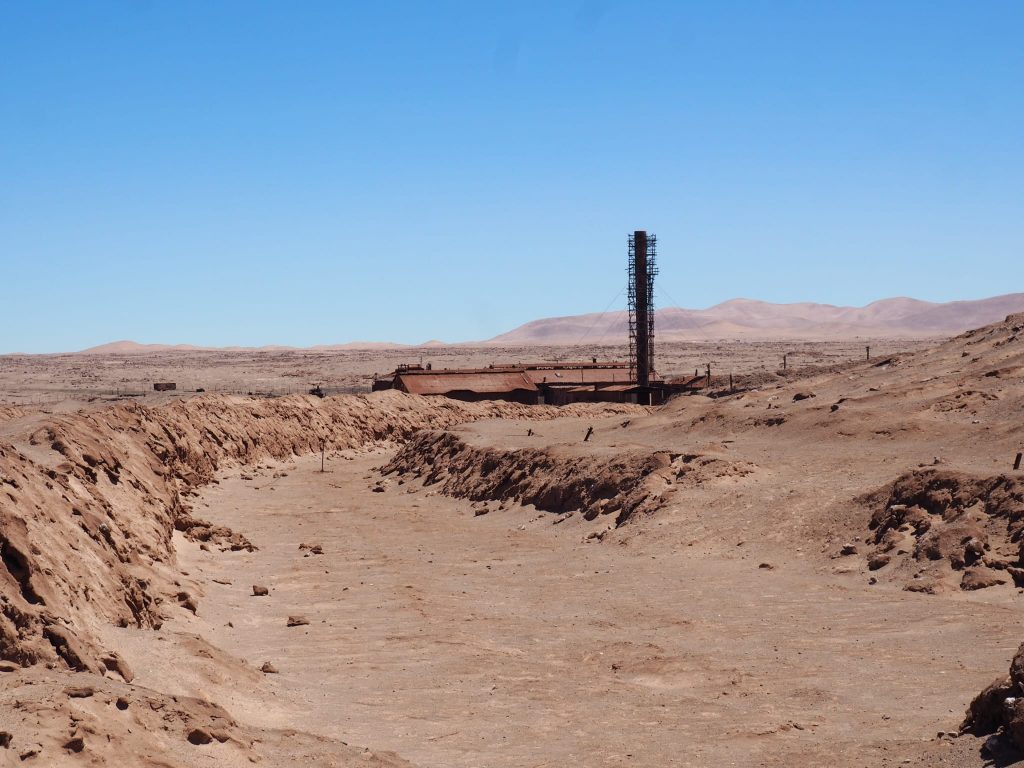
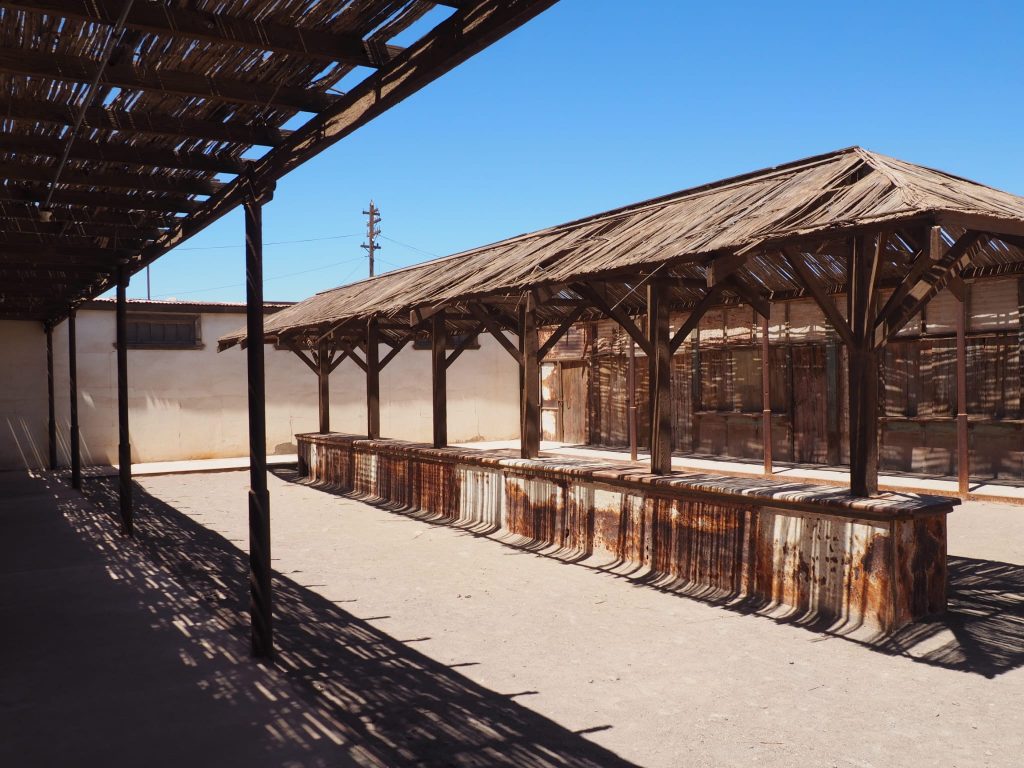
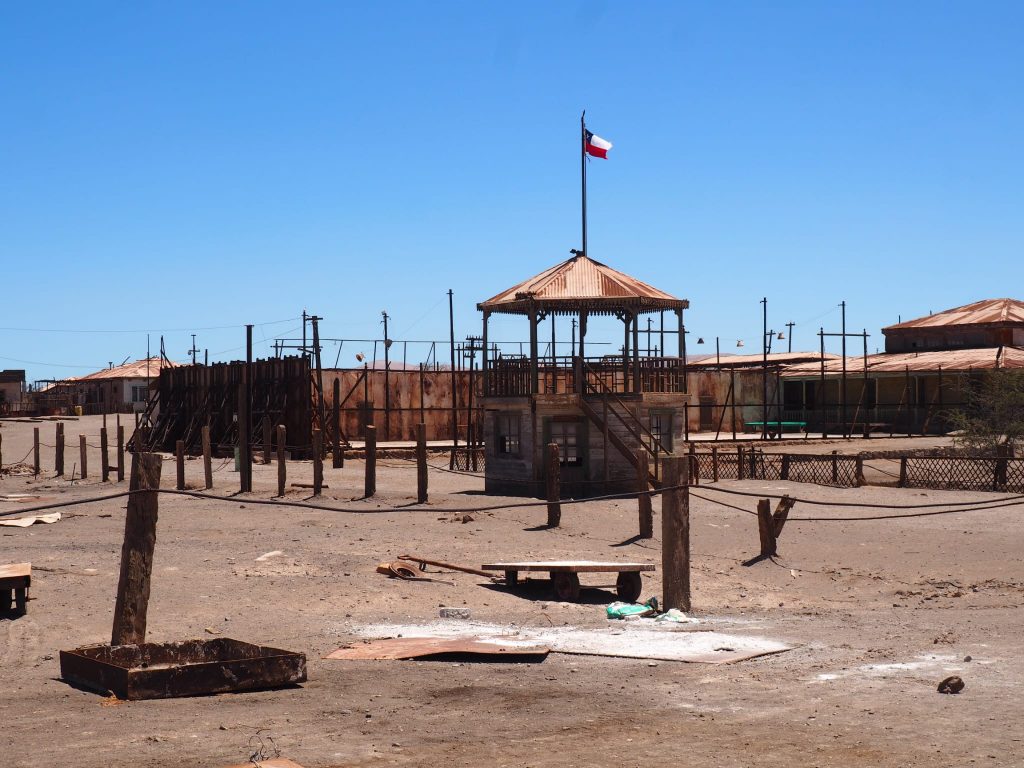
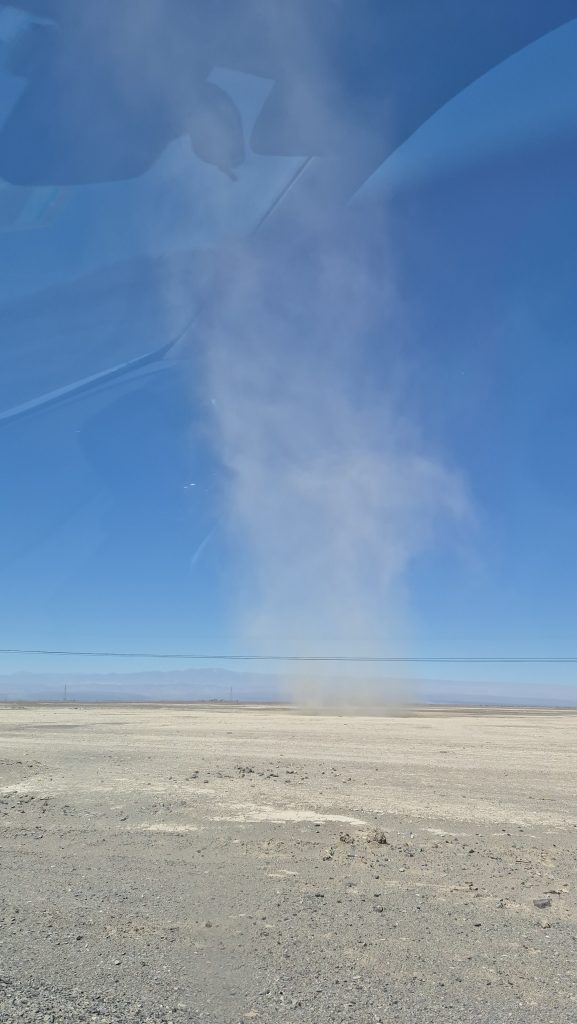
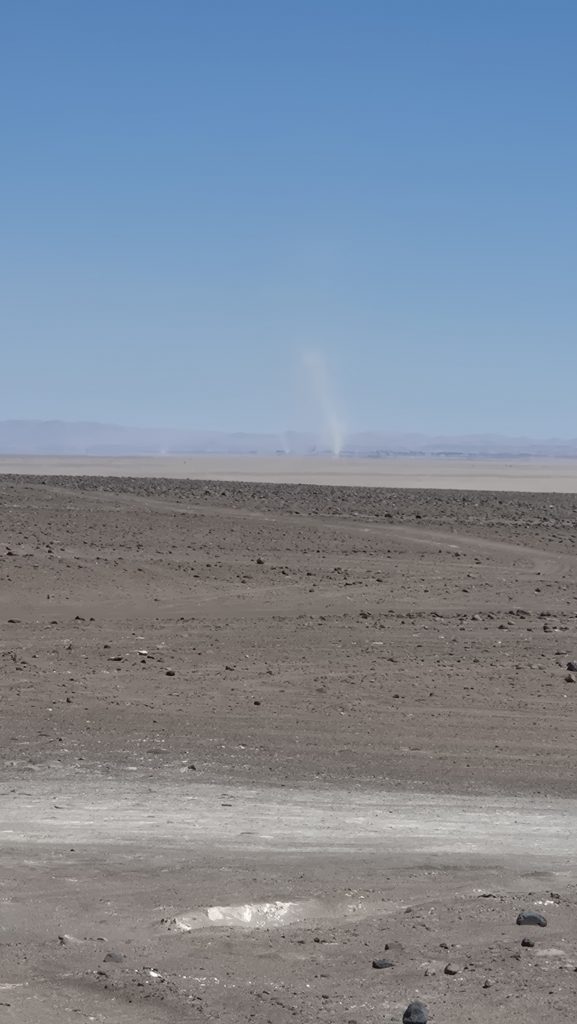
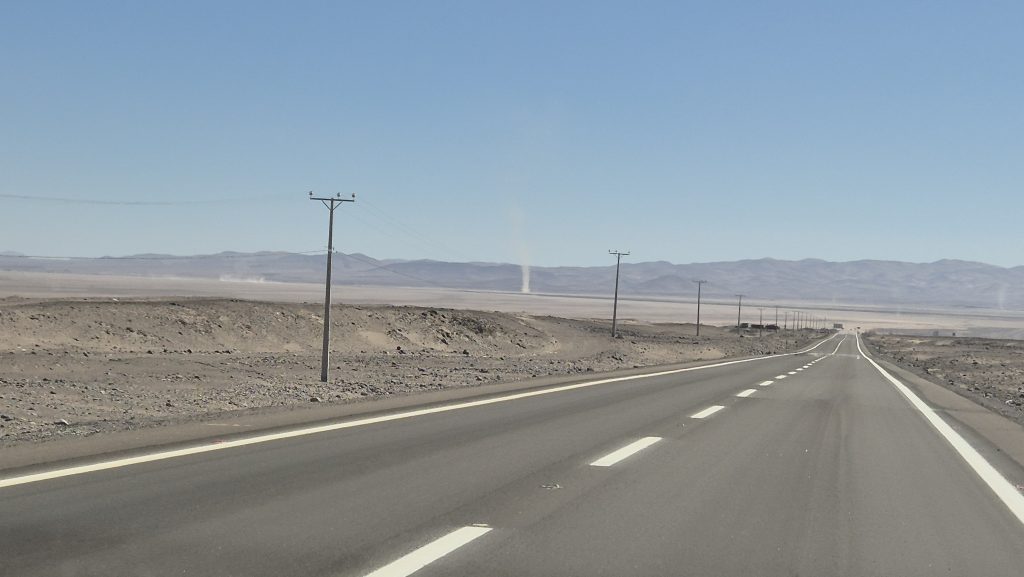
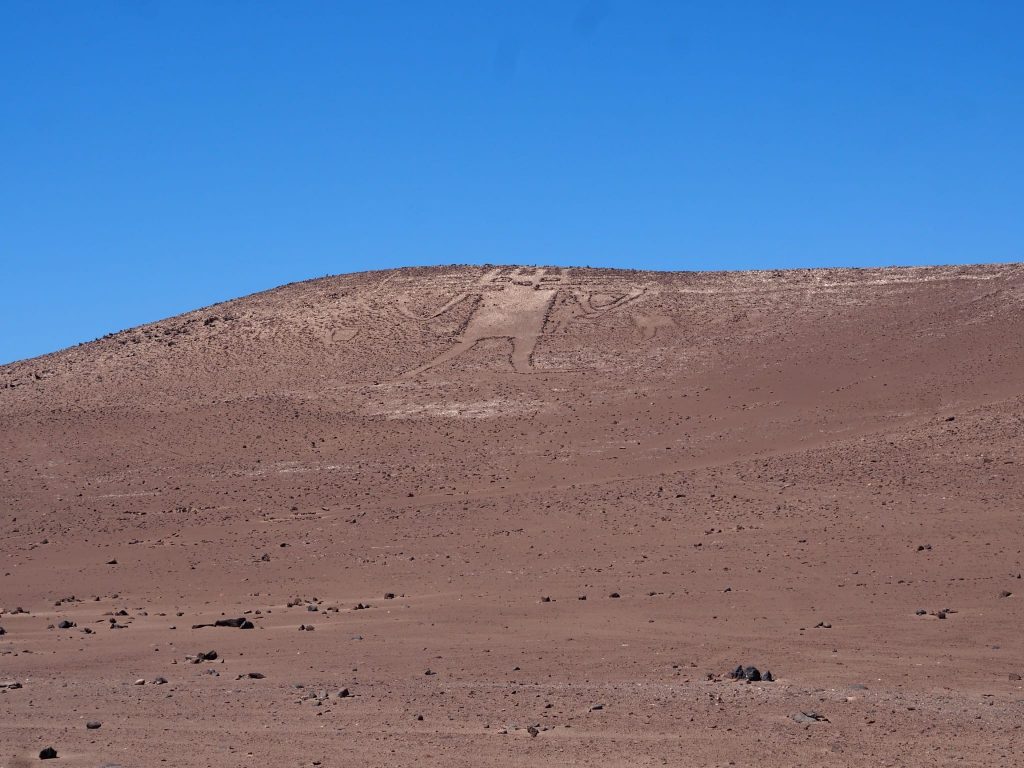
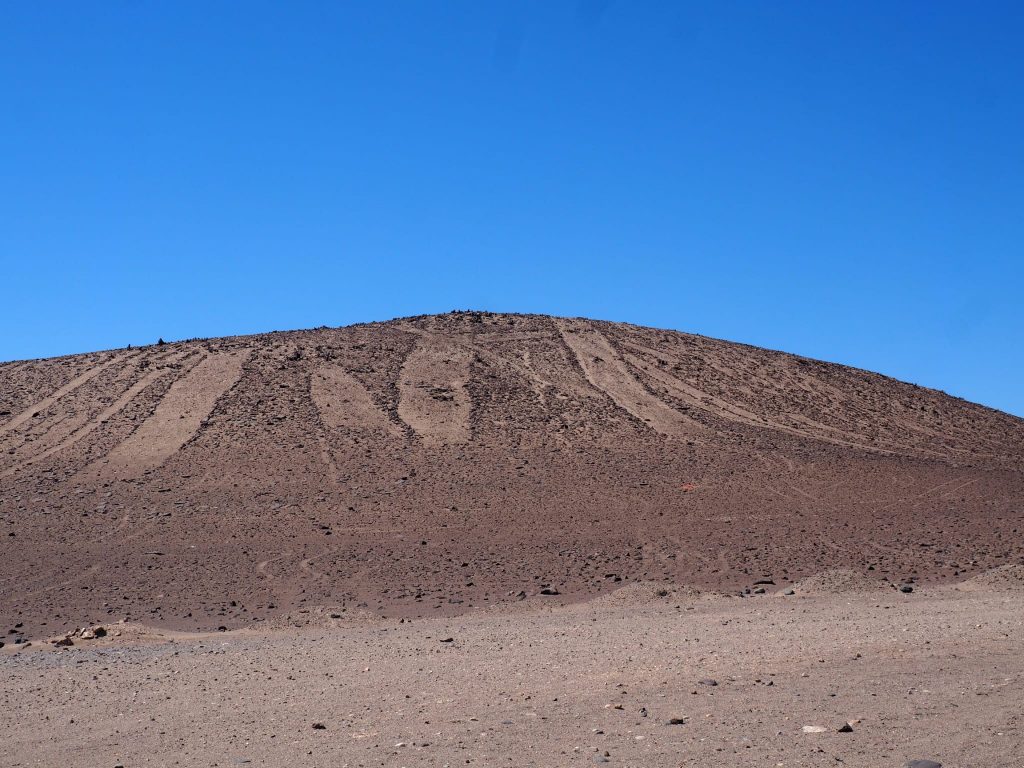
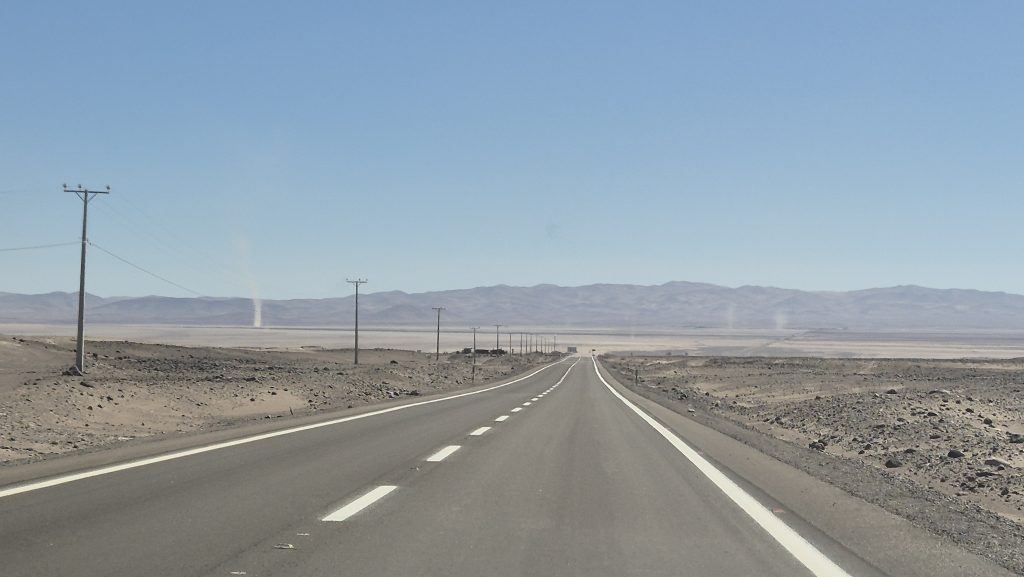
Our next stop was totally different – Gigante de Tarapaca, or, the Tarapaca Giant, a ‘pre-Inca anthropomorphic figure of 86 metres long’ drawn on a hill in what seemed like literally the middle of nowhere. On the way across the plain to the site, we noticed lots of what appeared to be mini ‘sand tornadoes’. A little research revealed that this area has the highest documented ‘dust devil’ formations rates in the world at around 30 to 40 devils per square kilometre per day (apparently).
The site itself was just off the main road, a hill on which we could see the outline of several images. We were the only visitors at that moment and on getting out of the car, the most noticeable thing, apart from the images themselves, was the absolute and total silence. Not a whisper, not a bird, no animals, no vegetation, no rustling, not even a whisper of a breeze (it was very hot). Total and absolute silence.
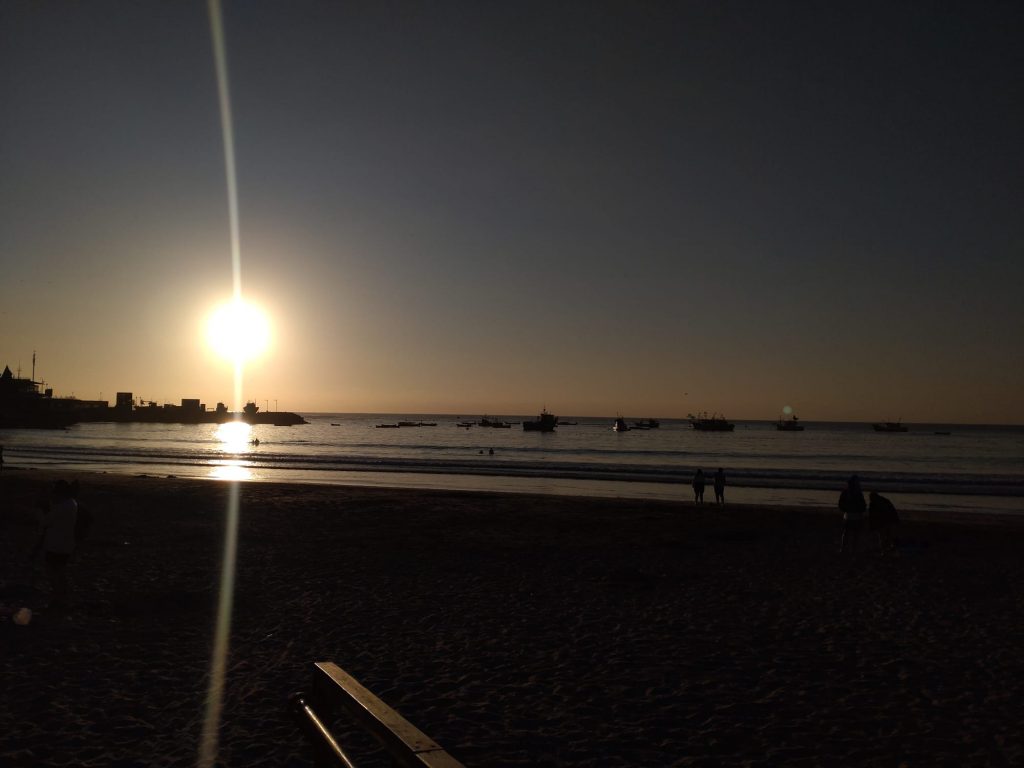
Our visit to Iquique ended with a stroll out for dinner along the seafront, with the opportunity to view the dropping sun.