Astronomy Tour
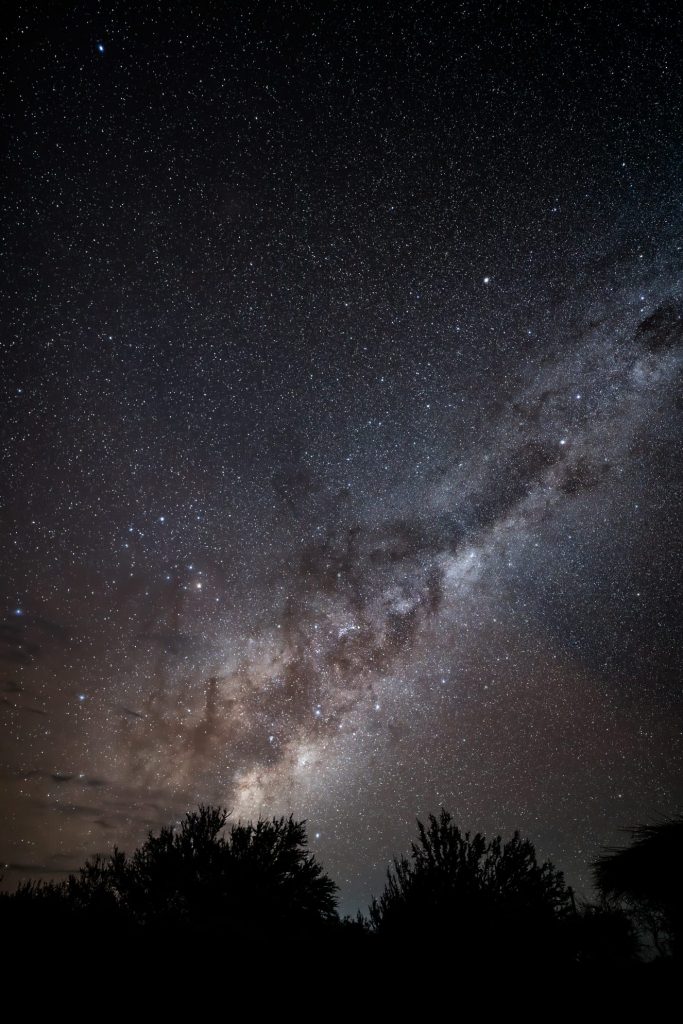
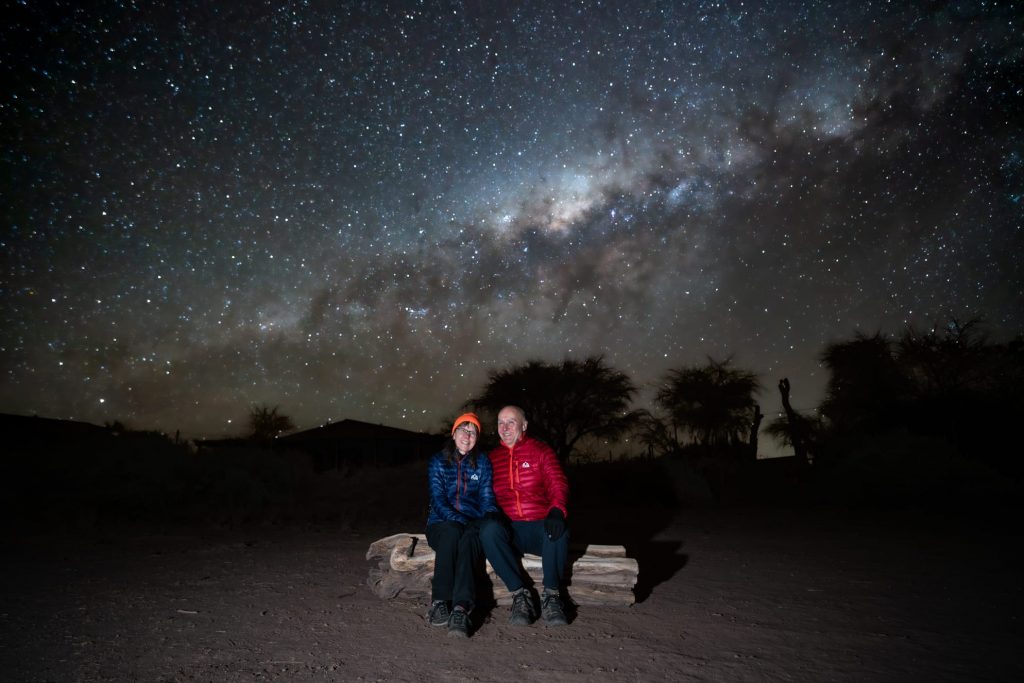
After a day exploring the town, then a quick rest at the hostal, we headed back in for an astonomy tour. This took us out of the town a few miles to an area with almost no light pollution whatsoever. We thought we’d seen dark before, but this was really dark. Our astronomy expert used red light to guide to reclining seats, and advised that over the course of the next 15 minutes we’d see more and more as our eyes became fully accustomerd to the total darkness. Over the next couple of hours we got to see more and more of the most incredible night sky: the scorpio constellation, the Big Magallan Cloud, and of course, the Milky Way. This we examined through the telescope revealing the enormity of what looks like a cloud in the night sky, then being shown Saturn and its moons, also through the telescope. We can’t claim credit for the pics below, but can reassure you that the one of us isn’t superimposed, but is a time exposure and flash at the end (for those of a curious photographic persuasion).
Lagunas Escondidas (Baltinache Lagoon)
The following afternoon a short journey brought us to a series of small lagoons on the salt flats of the Atacama surrounding San Pedro. The surface here is completely different to the salt flats we saw at Salinas Grandes, looking more like a badly ploughed field. Apparently, the miniscule amount of rainfall goes straight through the cracks and never has the opportunity to dissolve the surface so that it flattens, hence the salt crystals just keep growing up.
The final lagoon was set up to allow people to experience ‘completely weightless’ floating. After inching into the surprisingly cold water, which is 7 times more salty than the Dead Sea, we finally immersed ourselves and indeed floated ridiculously high in the water. In fact, it was impossible to do anything other than float on your back, as trying to swim on your front was nigh-on impossible.


Piedras Rojas (The Red Rocks)
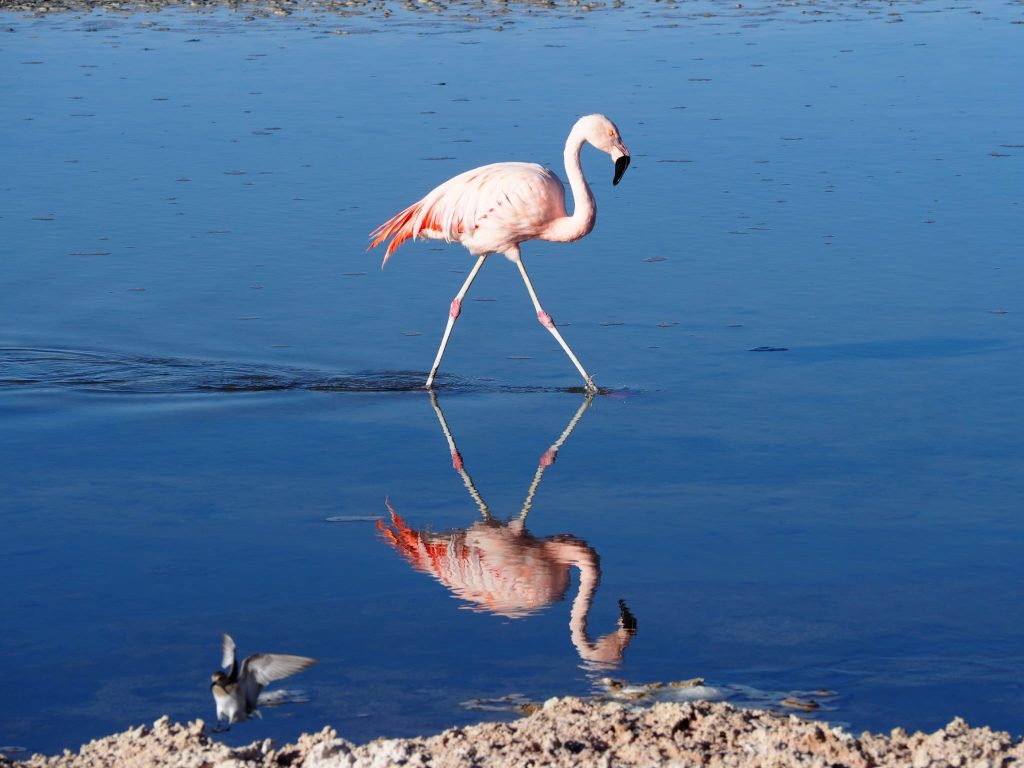
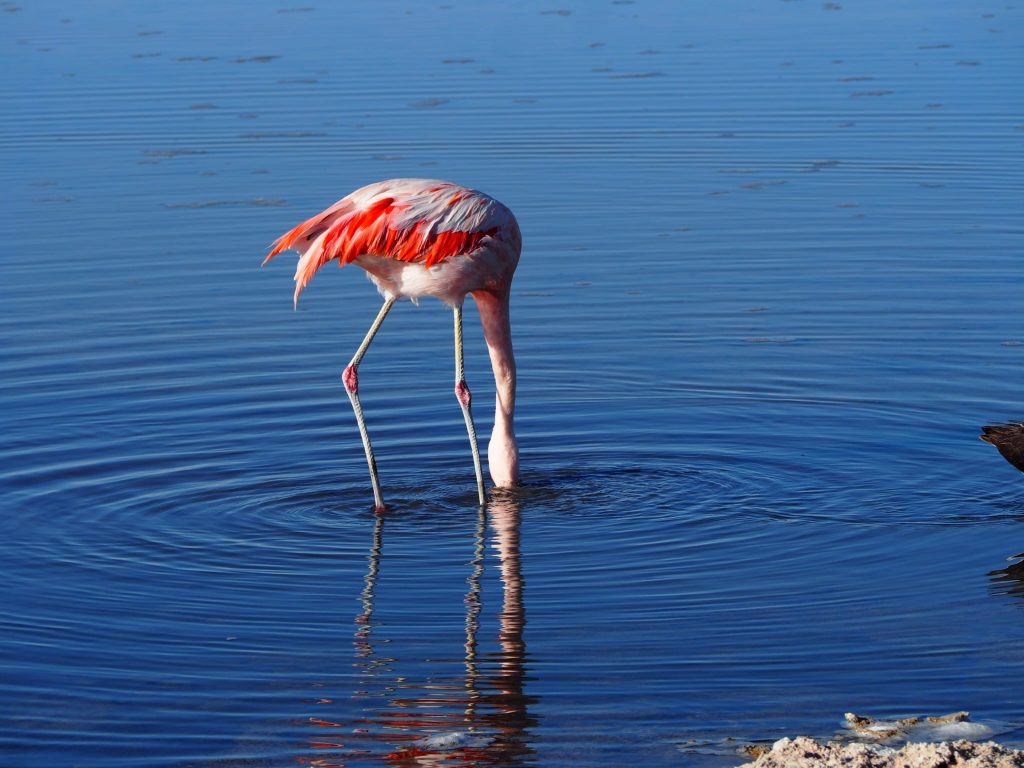
We were really fortunate on this tour in that only 4 people were booked on (including ourselves), so with two other companions plus guide we headed off in a 4×4 pickup truck for a full day of what was promised to be the best tour of all. We were not disappointed. First stop was Laguna Chaxa for our first sight of flamingos. There are two types of flamingo at this lagoon: Chilean, which have pink knees and “dance” to disturb the shrimps lurking in mud, which are their staple food; and Andean, which have some black feathers on their backs, and which stand still when feeding but scrunch the mud with their toes to disturb the shrimps. We had a fantastic close-up view of a Chilean flamingo. Sadly, most of the rest of them were feeding on the far side of the lagoon.
After a delicious breakfast at a small village en-route, our next stop was the Red Rocks themselves (so called because the terrain is rich in ferrous oxide and so appears red). Our guide asked us to close our eyes as we neared the lagoon, in order to fully appreciate the change in scenery, and the most incredible landscape that stretched before us.
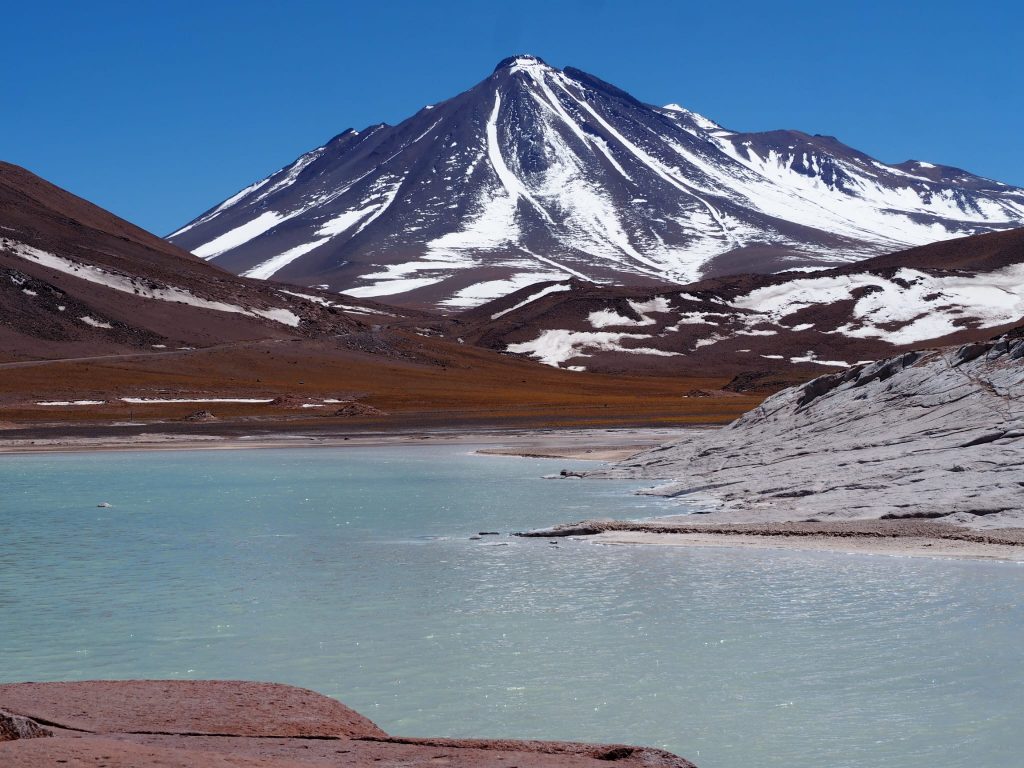


After tearing ourselves away we headed on to another lagoon which was actually two lagoons. Legend says this was originally one lagoon until a volcano (of which there are many in the Andes) errupted and split the lagoon into two. Whilst not Piedras Rojas, there were still equally beautiful and a feast for the eyes.


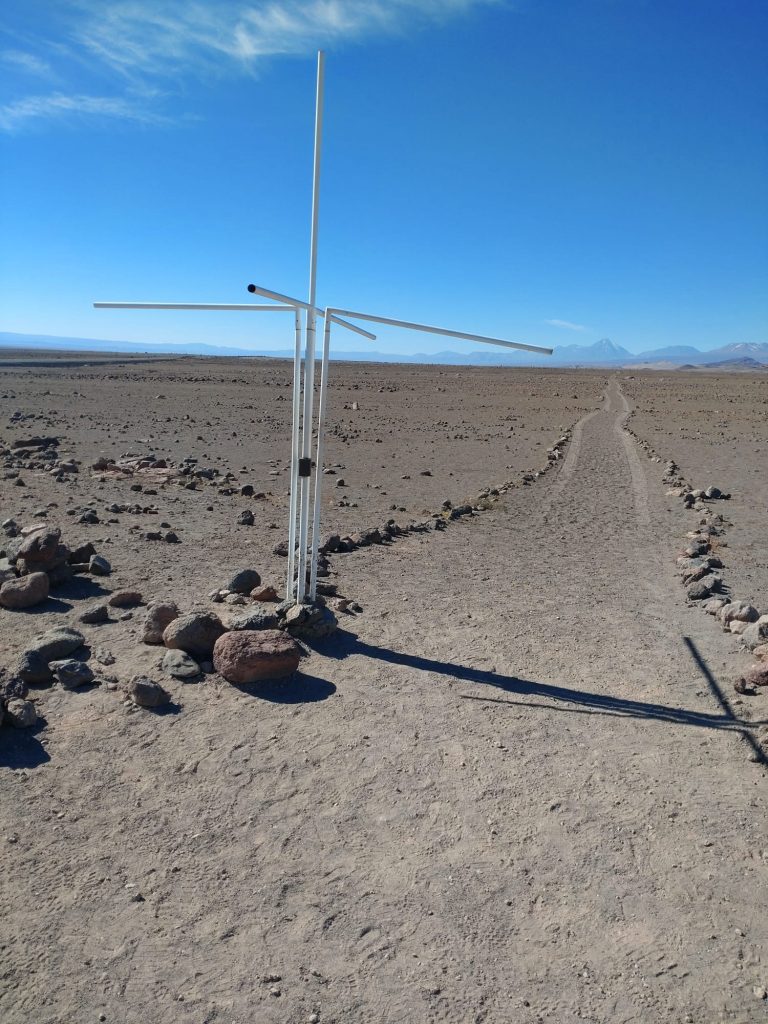
Moving on, we stopped briefly at the Tropic of Capricorn – the latitude at which the solstice occurs in the southern hemisphere. Apart from the roadsigns marking the area, there is a metal compass pointer to prove the point in shadow. Interestingly, one of the old Inca trails passes directly past this point, and is marked on the compass pointer. There are a range of broadly parallel Inca trails which remain visable in parts across the Atacama; this one is beleived to connect somewhere on the coast near Antofagasta to Machu Piccu in Peru – not on the agenda for this trip.

Finally, we headed back towards San Pedro de Atacama via Toconoa, a small village where the majority of the houses, including the church were made several hundred years ago from volcanic rock, the housing in the centre of the village are still restricted by regulations to adhere to using volcanic rock – good to know planning regulations are also “a thing” outside the UK!.
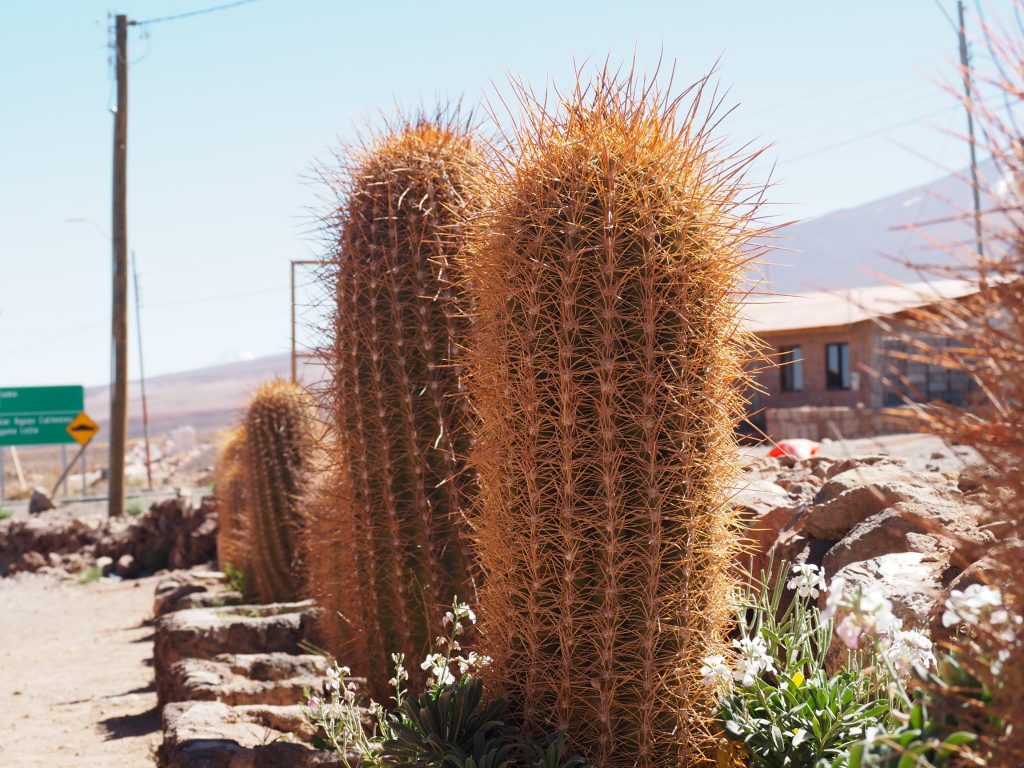
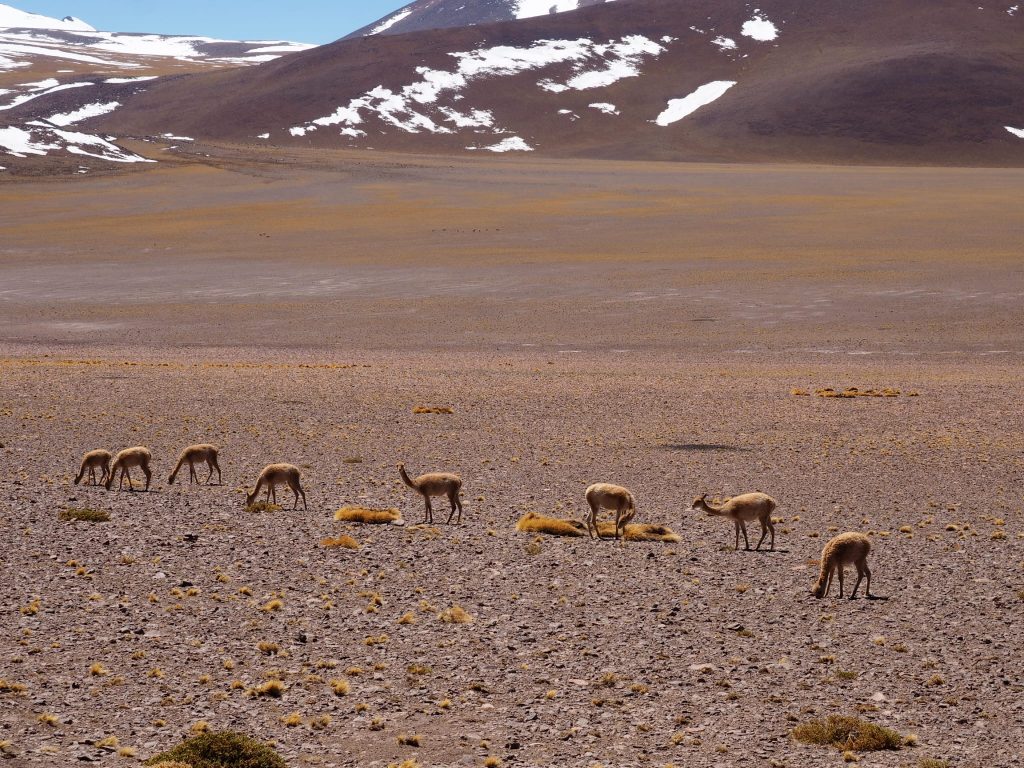
Throughout the day, not only were we treated to amazing scenery. We also saw a huge range of local flora and fauna; the most common flora being cacti – the ones below grow 1cm/year, and when they die naturally are harvested for their wood, which we saw used in many places in the villages. The most common of the fauna was the Vicunia, a relative of the Llama, which only lives in the Andes above 4000 metres.
Geysers del Tatio
Our final day in San Pedro was also the day of our final tour – the Geysers del Tatio tour (del Tatio is the name of the volcano that is the Geysers’ source). With an extremely early start and warnings to be well wrapped up, we headed out on the hour plus journey in the pitch black and very cold hours of pre-dawn. The arrival at the geysers worth the early start. Just as the dawn was breaking the steam was billowing eerily into the sky from the ground. At minus 6 degrees, we didn’t stand still for too long at each stop, but the guide gave us an insight into different types of geysers – conical and cyclical – allowing us to experiencing first-hand the sight of water bubbling up from the earth, accompanied by a sound not dissimilar to multiple giant kettles boiling.
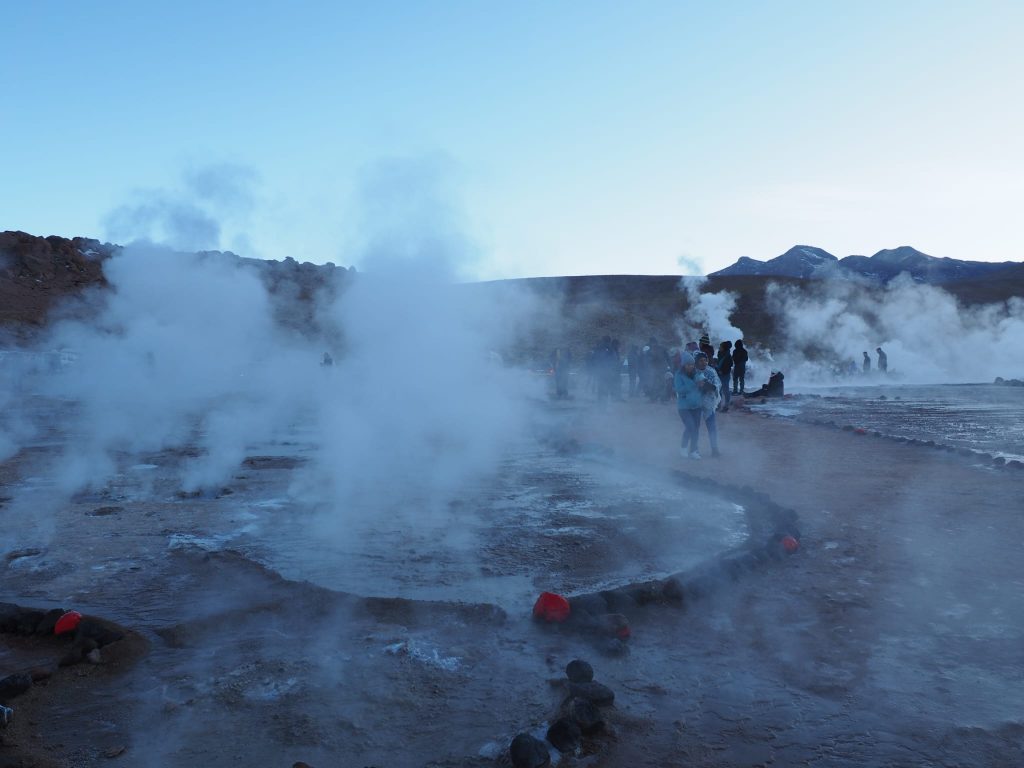
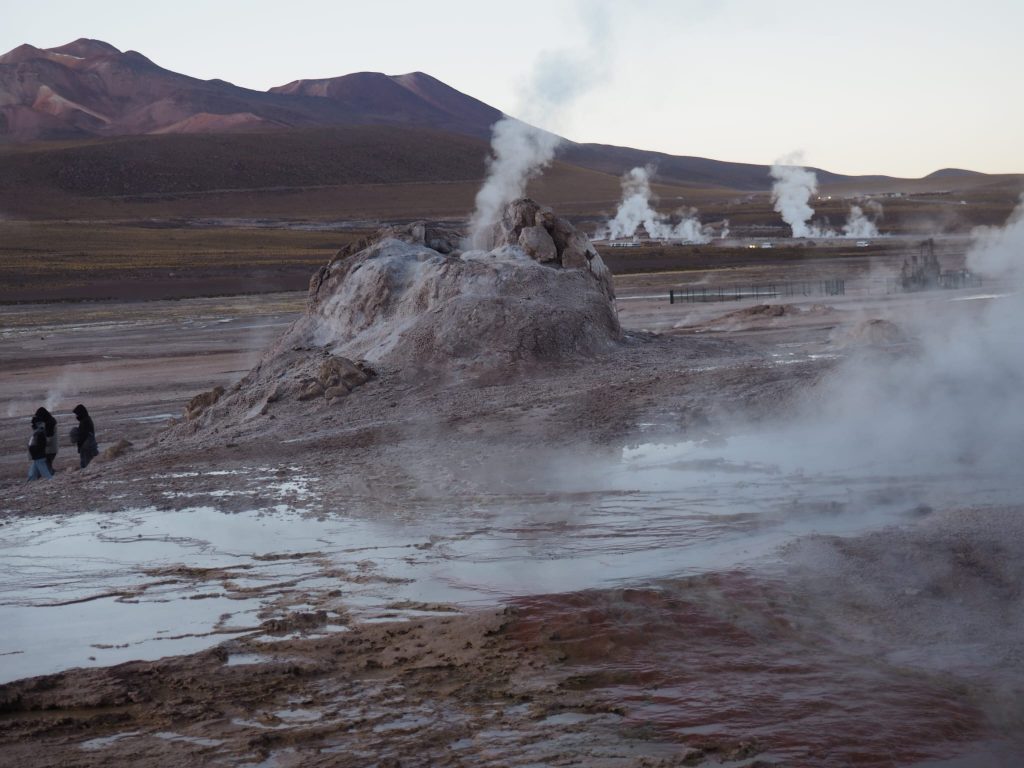


The tour continued with a visit to yet another and again, different, lagoon. This one was a really unexpected treat as not only did it give us an opportunity to see many more flamingos, including some displaying their mating dances, but we also spotted, with a bit of help from the guide, a couple of Viscacha. This small rabbit-like animal lives in burrows beneath the rocks in the Andean terrain, and is incredibly well camouflaged, as you’ll see in the pics below – or maybe not.
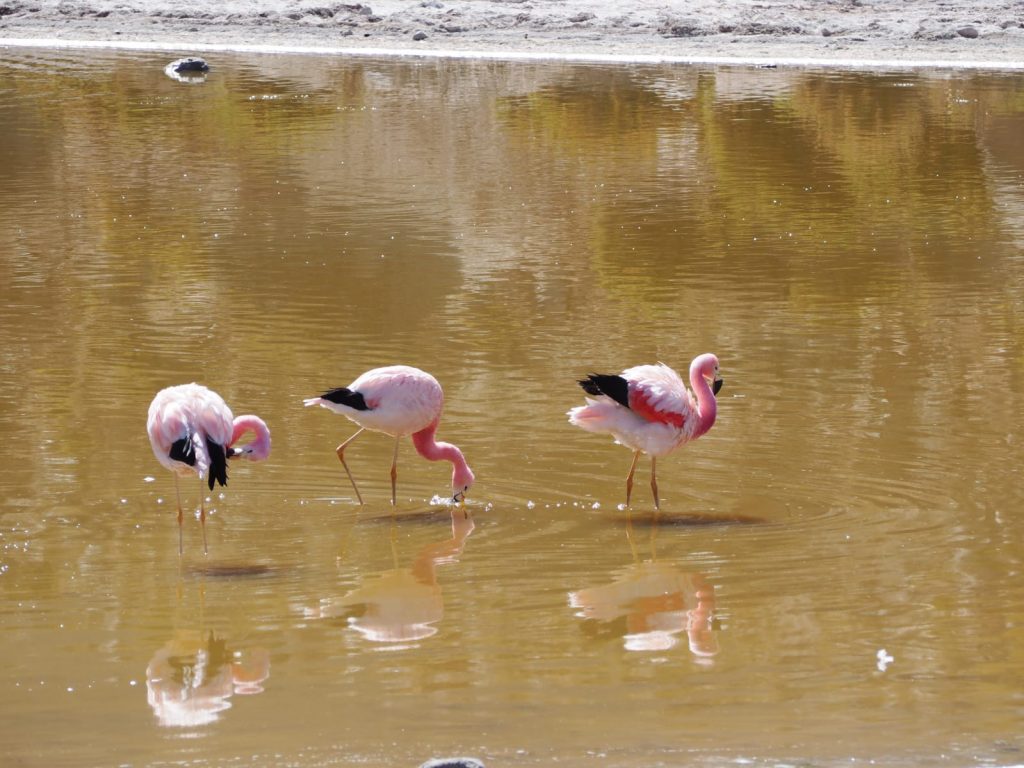
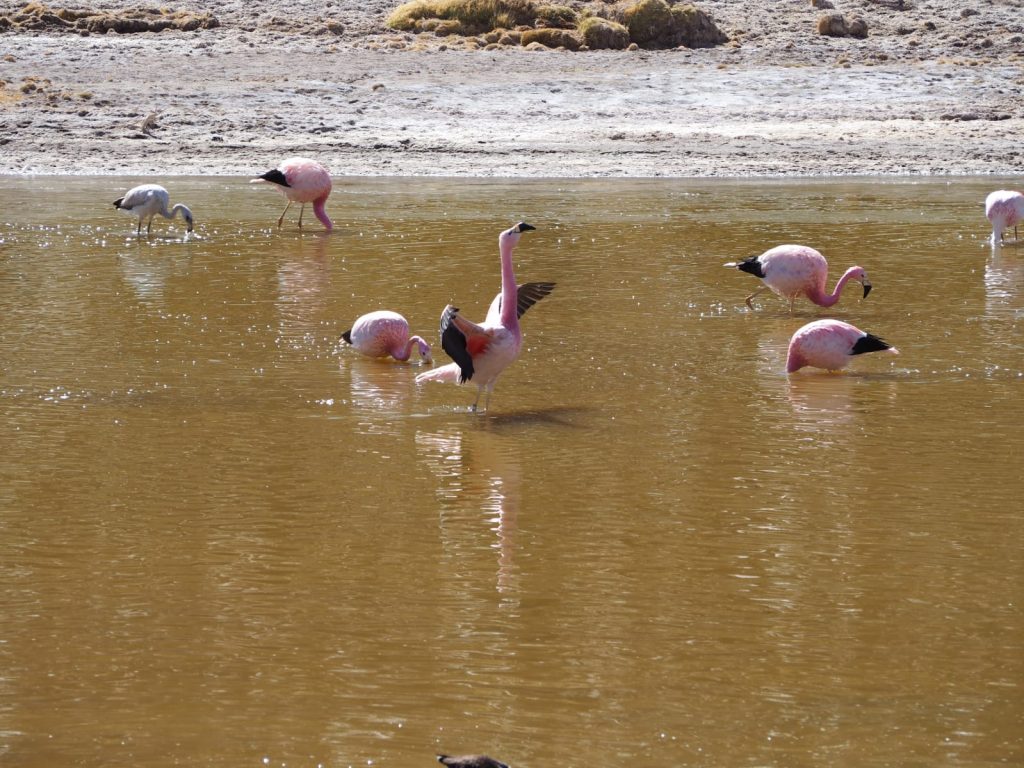


On finishing the tour, we headed back to the hotel and reluctantly collected luggage to head for the bus station and the next stage of our journey – heading towards the north Chilean coast.
Amazing pix – love the flamingoes